REVIEW · CITY TOURS
Eternal Rome: Exploring the city with Pantheon entry ticket
Book on GetYourGuide →Operated by Rome - Tour · Bookable on GetYourGuide
Pantheon is better with a local guide. You’ll get exclusive Pantheon entry and a small-group walk that strings together Rome’s most memorable stops in about 90 minutes. I love the way the tour pairs stories with what you’re standing in front of, and I especially like the included access to the Pantheon. One thing to plan for: this is mostly walking outdoors, and it isn’t suitable if you have mobility impairments.
The guide quality makes a real difference. In particular, names like Alma, Gabriela, and Camila come up for a reason: people highlight clear explanations, lots of details, and guides who answer questions without rushing you.
You’ll move at a comfortable pace, with short stays where the guide points out what most visitors miss. Bring comfortable shoes, and expect a few “look up” moments, especially in the church stop.
In This Review
- Key highlights worth your attention
- Piazza Venezia and Altare della Patria: where your Rome story starts
- Down the streets toward Trevi: Piazza dei Santi Apostoli and the rhythm of the walk
- Trevi Fountain legends: what to look for during your guided stop
- Chiesa Sant’Ignazio di Loyola: frescoes that reward looking up
- The Pantheon with your included ticket: dome scale and the story in the stones
- Why the guide quality matters (Alma, Gabriela, Camila, and quick Q&A)
- Price and value: is $53 per person a fair deal?
- Small-group pacing, languages, and what to bring
- Should you book Eternal Rome with Pantheon entry?
- FAQ
- How long is the Eternal Rome tour?
- Where do I meet the guide?
- What is included in the tour price?
- What languages are available for the live guide?
- Are there any dress or bag restrictions?
- Is the tour suitable for people with mobility impairments?
- Can I cancel for a full refund?
Key highlights worth your attention
- Exclusive Pantheon entry ticket included with the tour
- Small group pacing, so you can actually hear the guide
- Trevi Fountain legends plus the coin-toss tradition
- Sant’Ignazio di Loyola church with frescoes and intricate Baroque detail
- Pantheon context: the shift from pagan temple to Christian church
- Multilingual guides (Arabic, English, French, German, Italian, Portuguese, Persian, Russian, Spanish)
Piazza Venezia and Altare della Patria: where your Rome story starts

Most walking tours start with a map. This one starts with a feeling. You begin around Foro Traiano, then meet your guide at Le Domus Romane di Palazzo Valentini, and from there the route quickly lands you in the gravity of central Rome near Piazza Venezia.
This area is useful because it helps you understand the city’s layers fast. You’ll see the Altare della Patria, built as a tribute to Italy’s first king, and you’ll get a sense of how Rome isn’t only ancient ruins. It’s also national identity, monuments, and modern history sitting right next to older foundations.
The guide’s job here is practical: they help you get oriented before you walk into the smaller streets. That matters because once you leave the broad squares, Rome can feel like a maze unless someone explains how the pieces connect.
You can also read our reviews of more tours and experiences in Rome



Down the streets toward Trevi: Piazza dei Santi Apostoli and the rhythm of the walk

After Piazza Venezia, you continue to Piazza dei Santi Apostoli and then move toward Trevi Fountain through the kinds of lanes that make Rome feel like a living puzzle. The tour keeps the walking time light between stops, and that’s the point. You’re not sprinting across town; you’re building a mental route.
You’ll also notice how the guide treats the walk like part of the experience, not just a transfer. Expect them to connect what you’re seeing with stories, so the scenery stays meaningful. If you’ve ever felt lost in Rome, this is the opposite: you’re learning as you go.
A small consideration: you’ll be outdoors, and Rome streets can be uneven. Comfortable shoes aren’t optional here if you want to enjoy the pacing instead of fighting your feet.
Trevi Fountain legends: what to look for during your guided stop
Trevi Fountain is the star, but the best part is often what a guide points out around it. You’ll spend time there with a guided explanation and with the kind of legend-sharing that makes the site feel less like a photo backdrop and more like a tradition.
You’ll hear about the coin-toss ritual. It’s a simple act, but it’s also a great way to join the moment. When you toss a coin, you’re not just waiting for the fountain shot. You’re participating in the story people have carried for generations.
This stop is also where timing matters. Trevi draws crowds, so you’ll want to listen first, then take photos in a way that doesn’t slow the group. Your guide will help you focus on the details while the fountain is still more than a landmark to photograph.
If you hate standing in lines, you’ll appreciate the rest of the tour design: the time at Trevi is guided and purposeful, so you’re not stuck there wondering what you’re supposed to do next.
Chiesa Sant’Ignazio di Loyola: frescoes that reward looking up
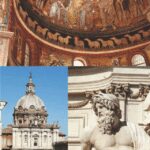
Next comes Church of Sant’Ignazio di Loyola (often called Sant’Ignazio). This is the “wait, Rome can be theatrical” stop. The church is famous for its stunning frescoes and intricate architecture, and your guide helps you see them the right way.
What makes this part valuable is the contrast. You’ve been outside, in squares and streets. Now you’re inside, and the guide pushes you toward the details that don’t show up in a quick glance.
You’ll uncover things within the church that feel easy to miss if you’re just rushing through. In a place like Sant’Ignazio, that’s everything. You can’t fake it with a phone screen. You need a slow look and a reason to notice what’s going on.
One practical note: dress rules matter in churches. The tour doesn’t allow sleeveless shirts or skirts, so plan accordingly if you’re joining this stop. Also, churches can be dim, so bring patience and use the guide’s cues.
The Pantheon with your included ticket: dome scale and the story in the stones
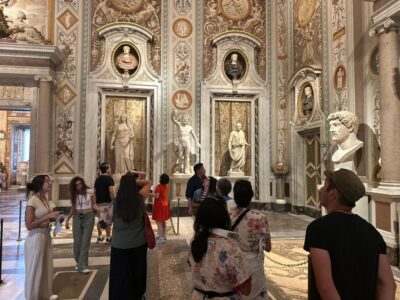
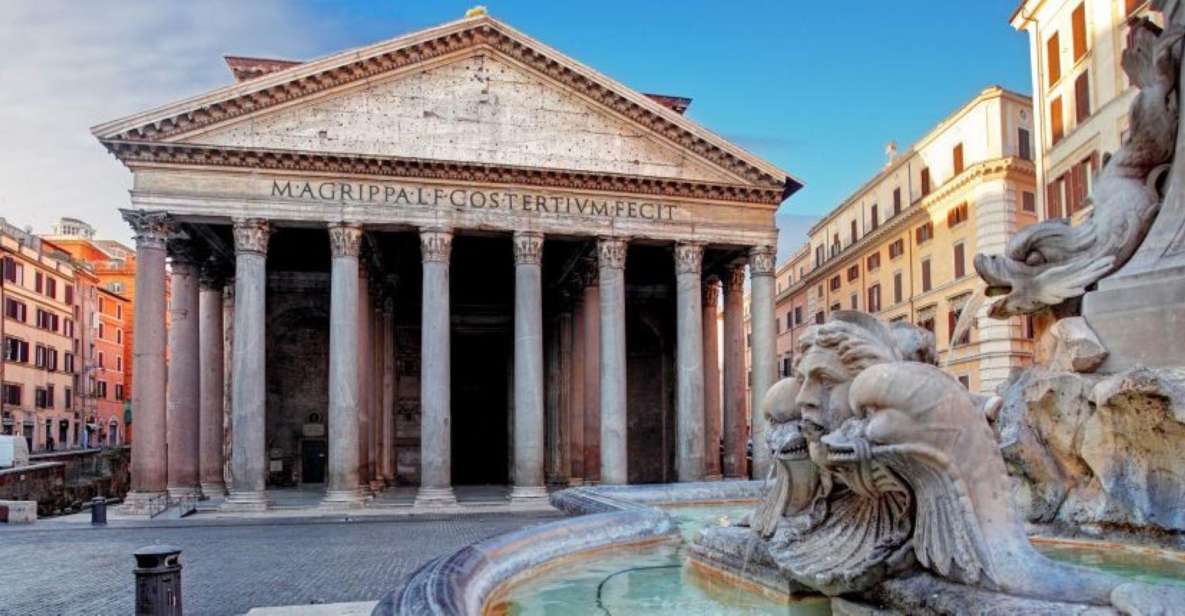
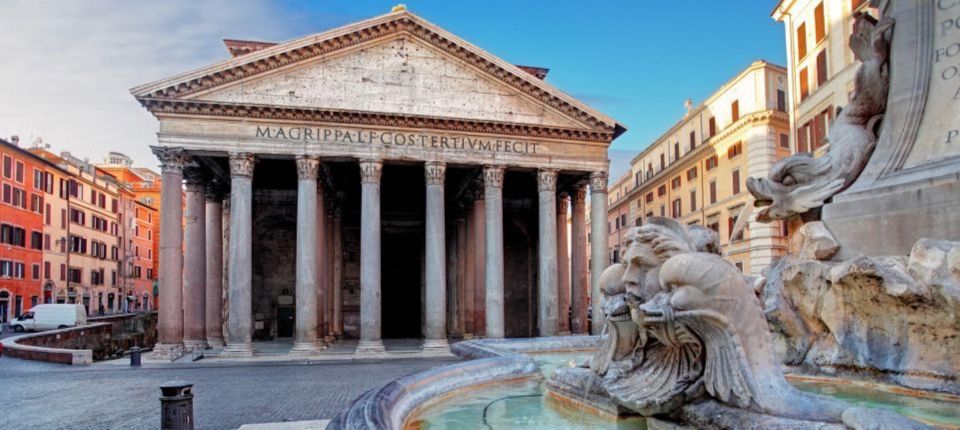
Then you reach the finale: the Pantheon, with your included entry ticket. This part is not just a bonus. It’s the anchor that makes the tour feel worth the price, because having access with your group saves time and turns the Pantheon visit into a guided experience instead of a solo scramble.
Your guided time here focuses on two big ideas:
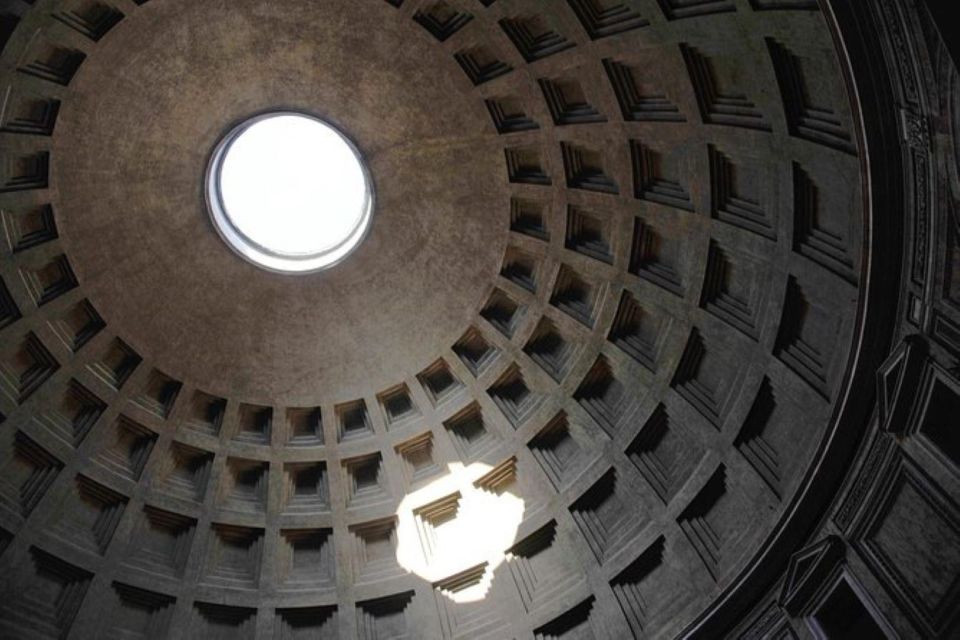
1) The architectural marvel: the Pantheon’s world’s largest unreinforced concrete dome.
2) The meaning layers: how it shifted from a pagan temple to a Christian church.
That mix is powerful. You’re not only learning what it looks like. You’re learning how power and faith changed in the space over time. And yes, you’ll hear about influential figures, including Raphael, who is laid to rest within the Pantheon.
During your visit, listen for how the guide connects the dome and interior space to the history. A dome can be impressive on its own, but it hits differently when you understand the concept behind it and the way later traditions took over the setting.
The Pantheon also rewards your attention to sound and proportions. Even in a short guided visit, the guide’s storytelling makes it feel like the building is doing more than holding up the roof. It’s shaping the experience.
You can also read our reviews of more city tours in Rome






Why the guide quality matters (Alma, Gabriela, Camila, and quick Q&A)
The most praised aspect of this tour is the guide. Several people mention the same core strengths: clear explanations, strong storytelling, and guides who respond to questions.
Names like Alma get called out for being excellent and very pleasant while explaining multiple details. Gabriela is highlighted for explaining everything with extra detail and answering questions. Camila comes up for passion and knowledge, and for making sure the group has a great time.
Even if you don’t know the names ahead of time, you can expect the style: fluent guidance in multiple languages, plus enough time at each stop for you to ask what you actually care about. That’s the difference between a walk-through and a guided “I understand what I’m looking at” experience.
Small-group format helps too. With fewer people, the guide can keep the group together, and you’re less likely to miss key explanations because someone blocked your view.
Price and value: is $53 per person a fair deal?
At $53 per person for a 1.5 to 2 hour experience, you’re paying for three things that usually cost extra on their own: guided time, a Pantheon entry ticket, and a local guide who handles the story and the pace.
If you’ve ever tried to plan a Pantheon visit solo, you know the reality: you can spend time figuring out logistics instead of enjoying the site. Here, your ticket is included, and your route is designed to keep moving without feeling rushed. That’s real value if you only have a short window in Rome.
You also get a tour that doesn’t end at the Pantheon. Trevi and Sant’Ignazio are included, so your money covers multiple “Rome moments” in one block of time. You’ll still need to budget for your own food and drinks, since nothing is included there, but the sightseeing portion is clearly the focus.
Small-group pacing, languages, and what to bring
This is set up for people who want a focused experience without tour-fleet chaos. It’s described as a small group, and it also offers private or small-group options, depending on availability.
Language coverage is wide: Arabic, English, French, German, Italian, Portuguese, Persian, Russian, Spanish. If you want to relax and listen instead of reading signs, this matters. It’s one of the easiest ways to get more out of the Pantheon and the church stops without translating everything yourself.
What to bring is simple:
- Comfortable shoes
And what not to bring or wear:
- no luggage or large bags
- no sleeveless shirts
- no skirts
Also keep expectations realistic on mobility. This activity is not suitable for people with mobility impairments, likely because of the walking and the way stops are accessed.
Should you book Eternal Rome with Pantheon entry?
I’d book this if you want a short Rome walk with a clear payoff: Pantheon access plus guided context. It’s a good fit if you care about stories, details, and understanding why the city looks the way it does, not just ticking off famous places.
Skip it if you need step-free routes or you can’t handle a mostly walking itinerary. Also, be ready for the church dress rules and the fact that Trevi can be crowded, even with a guide.
If you’re aiming for a tight schedule and want the Pantheon visit to feel like a real experience instead of a self-guided checkpoint, this one makes a lot of sense.
FAQ
How long is the Eternal Rome tour?
The duration is 1.5 to 2 hours, depending on the starting time availability.
Where do I meet the guide?
Your guide waits in front of Le Domus Romane di Palazzo Valentini, holding a sign with the name of the company.
What is included in the tour price?
You get an entry ticket to the Pantheon, a small group format, and an expert local guide.
What languages are available for the live guide?
The live guide is offered in Arabic, English, French, German, Italian, Portuguese, Persian, Russian, and Spanish.
Are there any dress or bag restrictions?
Yes. You can’t bring luggage or large bags, and you shouldn’t wear sleeveless shirts or skirts. Comfortable shoes are recommended.
Is the tour suitable for people with mobility impairments?
No. This activity is not suitable for people with mobility impairments.
Can I cancel for a full refund?
Yes. You can cancel up to 24 hours in advance for a full refund.