REVIEW · DAY TRIPS FROM ROME
Ostia Antica: Archaeological Guided Private Tour
Book on GetYourGuide →Operated by Blue Cat Tours · Bookable on GetYourGuide
Roman ruins that feel readable.
This private tour of Ostia Antica is built for understanding, not just sightseeing: you’ll follow the Decumanus Maximus and use an expert archaeological guide plus professional graphic reconstructions to picture what the city looked like when it was alive. I also love that the focus stays on daily Roman life, from mosaics to shops and even public toilets. One thing to plan for: it’s a walking tour, and in winter the mosaic floors can be covered for preservation, so you may not see them.
What makes it work especially well is the way the guide connects spaces to real routines. I like that you’re guided through major landmarks like the Capitolium and the Forum Square, then you get human-scale details in the insulae and domus that help the place click. If you’re visiting with kids or a mixed group, the experience can be tailored; Francesca, one guide name mentioned in reviews, was described as very accommodating and able to adjust the tour to adult and children needs. A minor consideration: the tour is only 2 hours, so you’ll leave with a strong overview rather than a slow, linger-everywhere pace.
In This Review
- Key highlights to look for
- A private 2-hour walk that makes Ostia Antica click
- Following Decumanus Maximus and using reconstructions to understand the city
- Baths of Neptune mosaics: where Roman art meets daily routine
- The Capitolium and Forum Square: where civic life and religion met
- Teatro di Ostia: watching the city’s entertainment culture take shape
- Insulae and domus: seeing apartments and elite homes as a spectrum
- Thermopolium and latrines: the everyday stops most tours skip
- How the stops fit together in your head
- Price and value: what $155.20 buys you here
- Who should book this Ostia Antica private tour
- Winter vs warm months: manage expectations about mosaics
- Small practical tips to get the most in 2 hours
- Should you book Ostia Antica with a private guide?
- FAQ
- How long is the Ostia Antica private guided tour?
- What is the price per person?
- Is it a private tour?
- What’s included in the price?
- What is not included?
- What languages are available for the guide?
- Will I be able to skip the ticket line?
- Where do I meet the guide?
- Is the tour wheelchair accessible?
- Are mosaics visible in winter?
Key highlights to look for
- Decumanus Maximus (main street) route that gives the city a natural flow
- Capitolium and Forum Square for a clear picture of religion and civic power
- Theatre of Ostia for scale and visual storytelling, including marble-mask decoration
- Baths of Neptune mosaics as a big, scenic anchor (and a winter note)
- Everyday-life stops: insulae, domus, thermopolium, and latrines
A private 2-hour walk that makes Ostia Antica click
Ostia Antica sits in Lazio at the mouth of the River Tiber, and it’s not a small site. It was the first Roman colony, founded in the seventh century BC, and it’s still described as the largest archaeological site on the planet. On a map, that sounds overwhelming. On this private guided format, it feels manageable.
The rhythm is simple. You start at the meeting point where the guide holds a sign with your name, then you walk the key parts of the ancient city with a live guide in English or Italian. In two hours, you’re not trying to cover everything. You’re learning how to read what you’re seeing, which is what most people really want.
I like the way the tour uses professional graphic reconstructions. When you’re standing in open air with fragments and floor remnants, it’s easy to see only emptiness. Reconstructions help you connect those spaces to what people actually did there.
You can also read our reviews of more guided tours in Rome

Following Decumanus Maximus and using reconstructions to understand the city
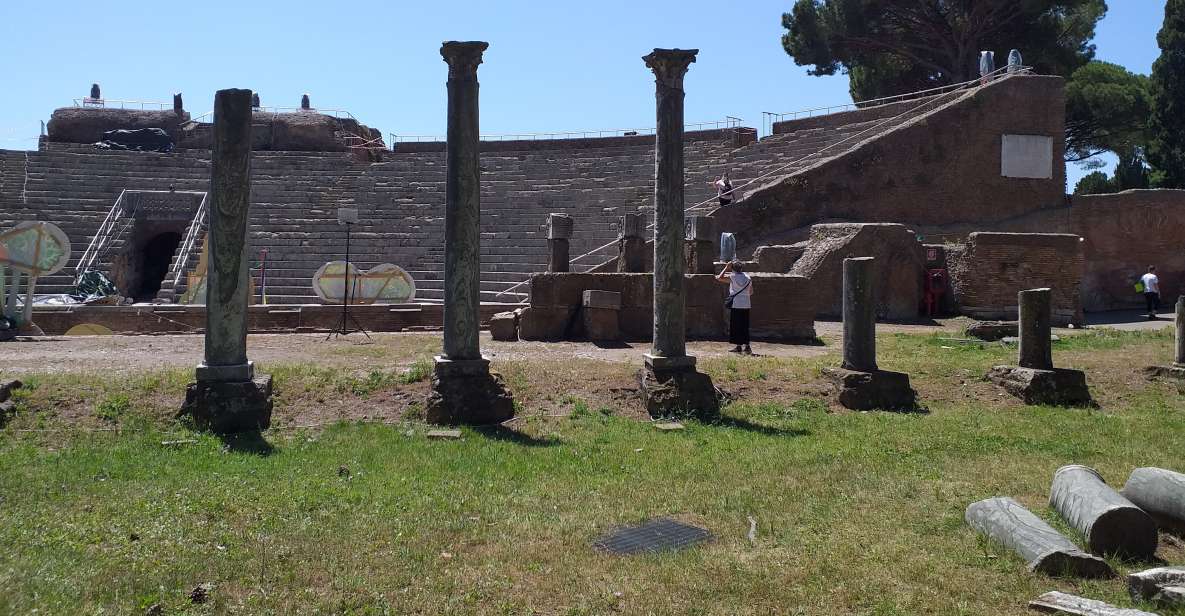
A big strength here is that the guide takes you along the Decumanus Maximus, the city’s main street. Streets are more than “where you walk.” In Roman urban planning, they organize how neighborhoods work, how crowds move, and where public life gathers. So when your route follows the main axis, the whole city starts to make sense as one system instead of scattered ruins.
You’ll also get help from those graphic reconstructions, which are meant to show what areas looked like when the city wasn’t abandoned in the ninth century. You’ll be walking through different kinds of spaces—public buildings, civic sites, and private-ish neighborhoods—so you’ll constantly be switching between scales. The reconstructions make those transitions easier to understand.
This is also where the tour format shines for real people, not just archaeology fans. In reviews, Francesca was described as accommodating to groups of adults and children and as tailoring the tour to interests. That kind of flexibility matters if you don’t want the guide to talk like a textbook the whole time.
Baths of Neptune mosaics: where Roman art meets daily routine
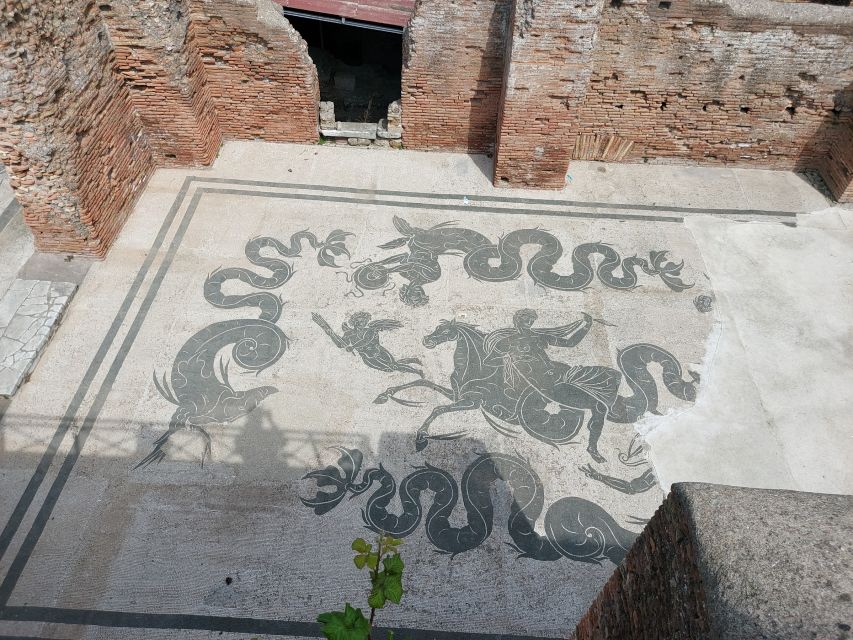
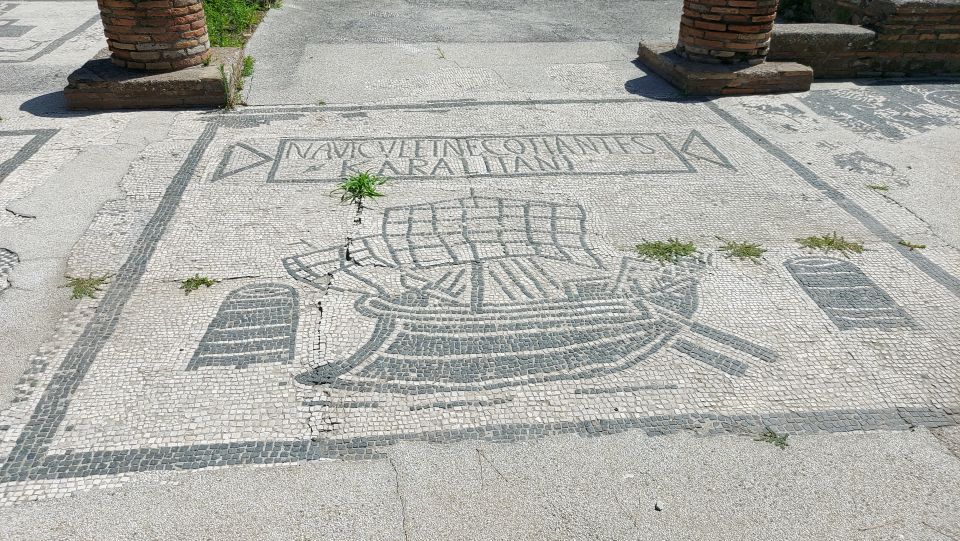
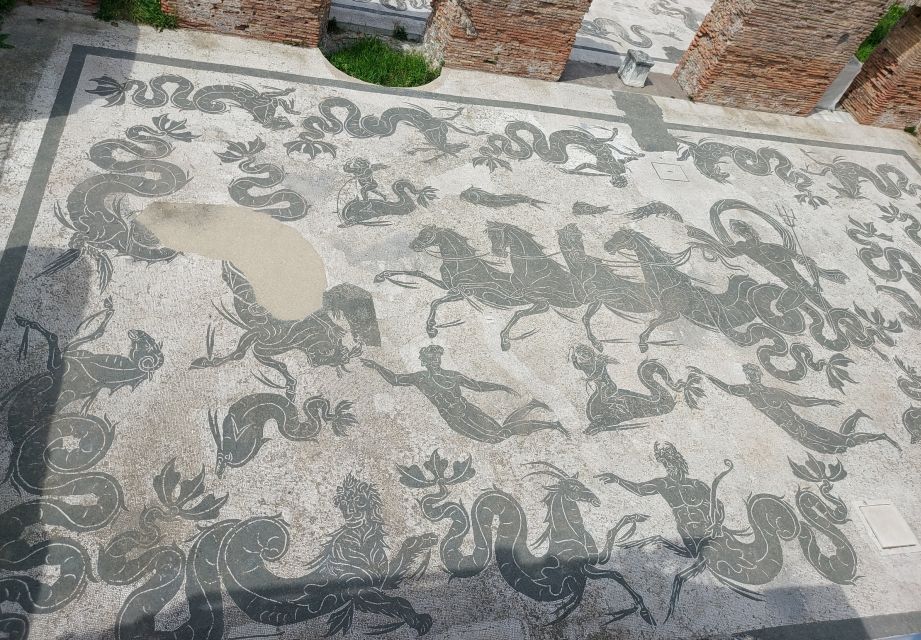
One of the most memorable stops in the itinerary is the Baths of Neptune. The reason is practical and visual. Mosaics can look impressive from a distance, but what makes them stick is when you understand where they sat in a space people used for relaxation and routine.
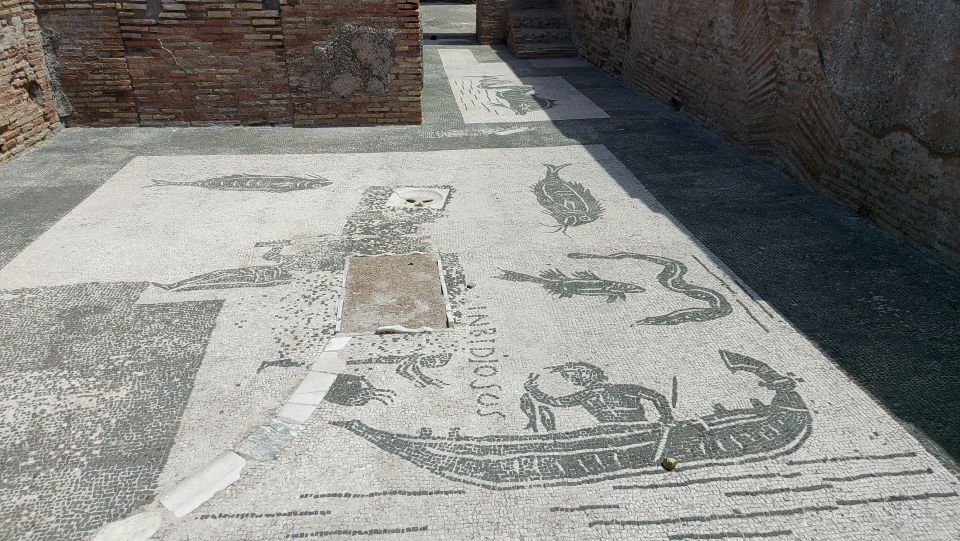
You’ll admire the splendid mosaic floors there, and the tour’s guided explanations help you connect the art to what a bath environment was supposed to do. Baths weren’t just for cleanliness; they were part of social life. Seeing mosaics in that context makes them feel less like decorative proof and more like a lived experience.
Now, the winter note is important for planning. In winter season, mosaic floors are covered for preservation reasons, so they are not visible during visits in winter. If mosaics are your top priority and you’re traveling in colder months, you should treat that as a real possibility, not a surprise. You’ll still learn a lot, but the visual payoff shifts.
The Capitolium and Forum Square: where civic life and religion met
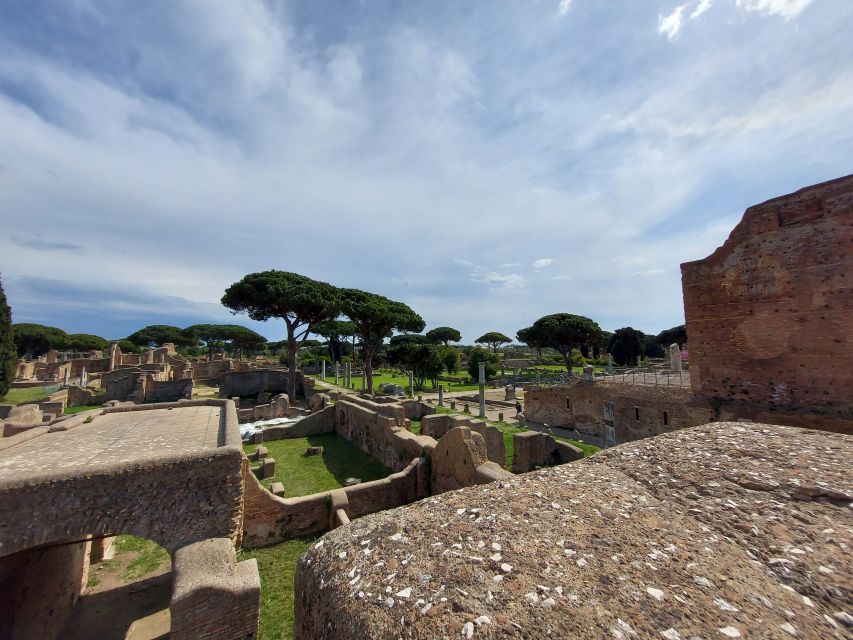
If you want the “big message” of Roman city life, aim your attention at the Capitolium and the Forum Square. This area is dominated by the Capitolium, a temple dedicated to the most important gods of Rome: Jupiter, Juno, and Minerva.
Standing here is a different kind of learning. In many ruins, it’s tempting to focus on the stones and try to guess the story. Here, the tour helps you read the story: a civic center built around religious importance. That’s a key part of how Roman life operated. Public power wasn’t separate from the gods; it was tied to them.
The Forum Square also gives you context for why these buildings mattered. A forum isn’t only an open space. It’s where people gather, talk, conduct business, and witness public signals. When your guide explains what you’re looking at, the forum becomes a stage rather than a patch of flat ground.
Teatro di Ostia: watching the city’s entertainment culture take shape
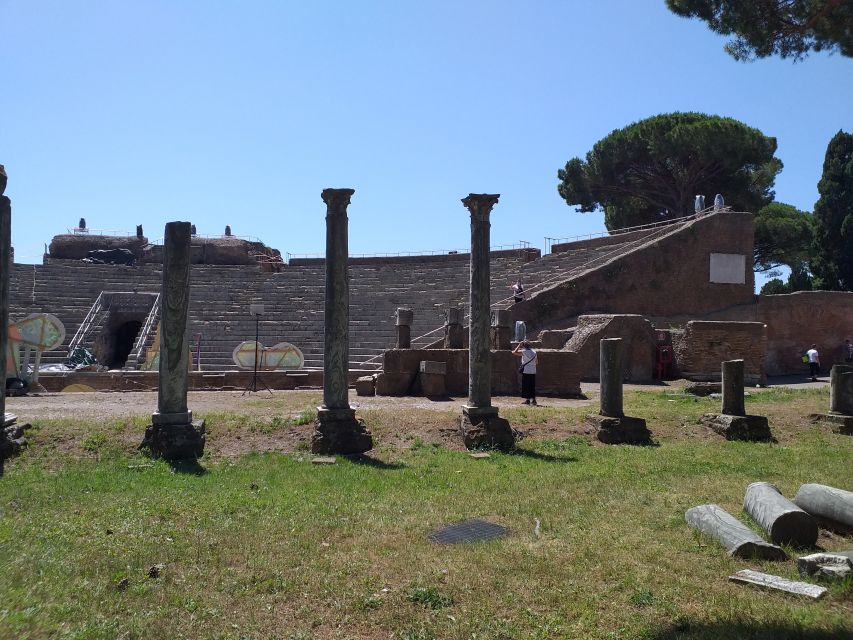
Next up is the Teatro di Ostia, and this stop has a built-in wow factor. The theatre is described as majestic and decorated with marble masks, which suggests how much thought went into visual impact.
Even without every element intact, a theatre communicates its purpose fast. It’s built for performance and for an audience gathering in a controlled space. When you connect that to what a city like Ostia Antica offered day to day, the theatre shifts from “cool ruin” to “window into Roman leisure.”
The tour’s guided approach matters here because theatre spaces can be hard to interpret on your own. You might recognize the general function, but you won’t automatically understand how design and decoration shaped what spectators felt. A guide can point out the specific details you’d miss if you just walked through.
You can also read our reviews of more private tours in Rome



Insulae and domus: seeing apartments and elite homes as a spectrum
Here’s a big reason this tour feels like more than a monument list. You won’t just hit the civic and entertainment sites. You’ll also explore the insulae and the domus.
- Insulae are the ancestors of our apartment buildings, so they help you picture dense, everyday urban living.
- Domus are richer villas of the patricians, which gives you contrast: how elite households were set up and how the city’s social levels separated.
This is where the expert guide earns their keep. It’s one thing to be told there were apartment blocks and rich homes. It’s another to look at the site and understand what those categories imply for noise, privacy, routine, and status.
If you like tours that teach you how to interpret what’s in front of you, this portion is one of the most valuable.
Thermopolium and latrines: the everyday stops most tours skip
If you’ve ever wondered what Romans ate on a normal day or what public services looked like, this tour answers those questions in a grounded way.
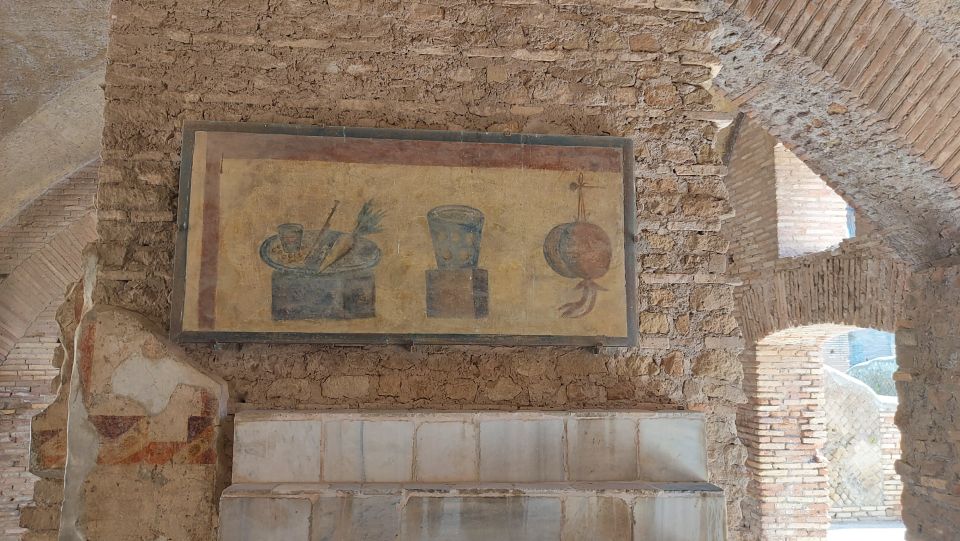
You’ll visit ancient shops and restaurants, including a thermopolium, which is described as similar to our fast-food restaurants. That comparison is handy because it gives you a quick mental model: a place where you could get hot ready-to-eat food without waiting for a full meal cooked for you.
Then you’ll see the latrines, the public toilets. That’s not everyone’s favorite topic on paper, but it’s one of the most honest. Public infrastructure shows what a city cared about, and it also helps you imagine how crowded life actually could be.
These stops turn Ostia Antica into a city again, not a museum floor plan. They’re also exactly the kind of “daily life details” people tend to remember after the trip.
How the stops fit together in your head
To get the most from this tour, think of it as three connected layers:
- Public spine: Decumanus Maximus ties the city together as you move through it.
- Civic power: Capitolium and Forum Square show where authority and religion met.
- Human routines: baths, theatre, apartments, elite homes, shops, and latrines make daily life feel specific.
The guide’s job is to connect those layers so you don’t walk away with separate facts. From what’s described about how the guide adjusts for different interests, including groups with both adults and children, you’ll likely get explanations shaped to keep attention and build understanding.
Price and value: what $155.20 buys you here
At $155.20 per person for a 2-hour private tour, you should evaluate value based on what you’re actually getting, not just the cost.
What makes it feel reasonable is the combination of:
- a live private archaeological guide,
- entry tickets included,
- and the fact you’re not touring randomly. You’re getting key sites in a focused order with reconstructions to interpret what you see.
For some destinations, entry-ticket-only guidance would be a disappointment. Here, the main value is learning to read the ruins. Private format also helps, especially if your group is mixed in interests or ages. In the reviews, Francesca was specifically noted as accommodating and able to tailor the experience for adults and children, which is a real benefit when you’re paying for personalized time.
If you’re the type who loves big-picture summaries and wants a strong understanding fast, this price can make sense. If you prefer wandering alone at your pace for hours, then you’d likely prefer a self-guided visit instead.
Who should book this Ostia Antica private tour
This experience is a strong fit if you:
- want a guided understanding of Roman life, not just photos of stones,
- enjoy reconstructions and explanations that make ruins feel readable,
- are visiting with kids or a mixed group and want the guide to adapt,
- prefer a focused route over a long, exhausting all-day crawl.
It’s also a good choice if you’re already in the Lazio area and want a high-value, time-efficient activity. Two hours is short enough to feel efficient, while still long enough for a tour to connect themes.
Winter vs warm months: manage expectations about mosaics
If you’re traveling in winter, the tour includes the Baths of Neptune mosaics as a planned stop, but you should know the floors may be covered for preservation. That means you can’t rely on seeing those mosaic details in their full visual glory during winter visits.
In warm months, you’ll likely get the visual payoff the tour description is aiming for. Either way, you’ll still get interpretive value from the guide’s explanations and the reconstructions, but your photo plan should be flexible.
Small practical tips to get the most in 2 hours
- Wear shoes made for walking on uneven ground. This is a walking tour.
- Give your guide a bit of your priorities at the start, especially if you’re traveling with kids.
- Take a moment at each stop to look first, then listen. It helps the explanation “attach” to what you’re seeing.
If you do those simple things, the reconstructions and the Roman-life details land faster.
Should you book Ostia Antica with a private guide?
I’d book this if you want the clearest, fastest path to understanding Ostia Antica. The biggest selling points are the expert guidance, the graphic reconstructions that help you picture a living city, and the thoughtful mix of sites—civic power, entertainment, and everyday life.
I wouldn’t book it as a top priority if your travel style is mainly wandering and you don’t enjoy guided explanations. Also, if you’re visiting in winter and mosaics are your main goal, just expect that the mosaic floors may be covered.
If you want a guided route that turns a massive archaeological site into a coherent story, this private 2-hour tour is a smart bet.
FAQ
How long is the Ostia Antica private guided tour?
The tour lasts 2 hours.
What is the price per person?
The price listed is $155.20 per person.
Is it a private tour?
Yes, it’s a private group experience.
What’s included in the price?
The tour includes a private guided tour and entry tickets.
What is not included?
Food and drinks are not included.
What languages are available for the guide?
The guide is available in English and Italian.
Will I be able to skip the ticket line?
Yes, the tour includes skip-the-ticket-line entry.
Where do I meet the guide?
The start meeting point is where the guide will have a sign with your name on it.
Is the tour wheelchair accessible?
Yes, the activity is wheelchair accessible.
Are mosaics visible in winter?
In winter season, mosaic floors of the archaeological site are covered for preservation reasons, so they are not visible during winter visits.