REVIEW · FOOD & WINE TOURS
Jewish Rome District, Old Ghetto and Trastevere Private Tour
Book on GetYourGuide →Operated by Crazy4rome srls · Bookable on GetYourGuide
Jewish Rome in three clean hours. This private walk connects the oldest Jewish community in the Western world, the old Ghetto, and Trastevere, so you understand how Rome’s streets changed around the Tiber. I like how the route ties big dates to real corners, especially at Fabricio Bridge (62 B.C.) and the Great Synagogue of Rome built between 1901 and 1904.
One catch: you’ll cover a lot in 3 hours, and you’ll be moving on city streets with cobblestones, so bring grippy shoes and expect a steady walking pace.
In This Review
- Key highlights you’ll feel fast
- Why this Jewish Rome private tour fits 3 hours so well
- Price and what you’re really paying for ($456.21 per private group)
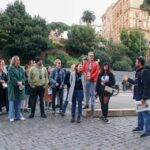
- Meeting near Teatro di Marcello and getting your bearings
- The Jewish Ghetto: forced location, later citizenship, and what you’ll notice on the walk
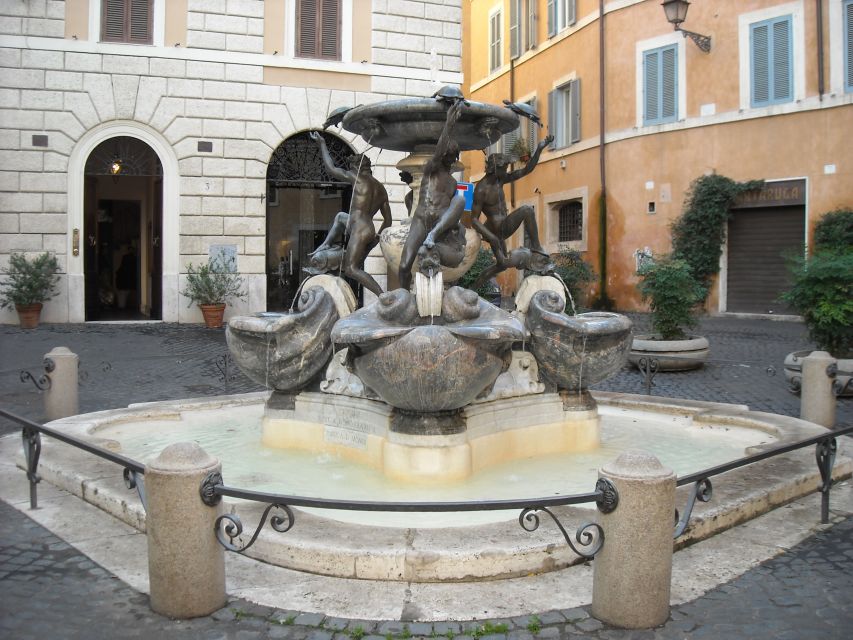
- Piazza Mattei: a quick stop that resets your eyes
- Portico d’Ottavia: boundaries and atmosphere you can feel in a guided walk
- Via della Reginella: the street maze feeling, with explanations attached
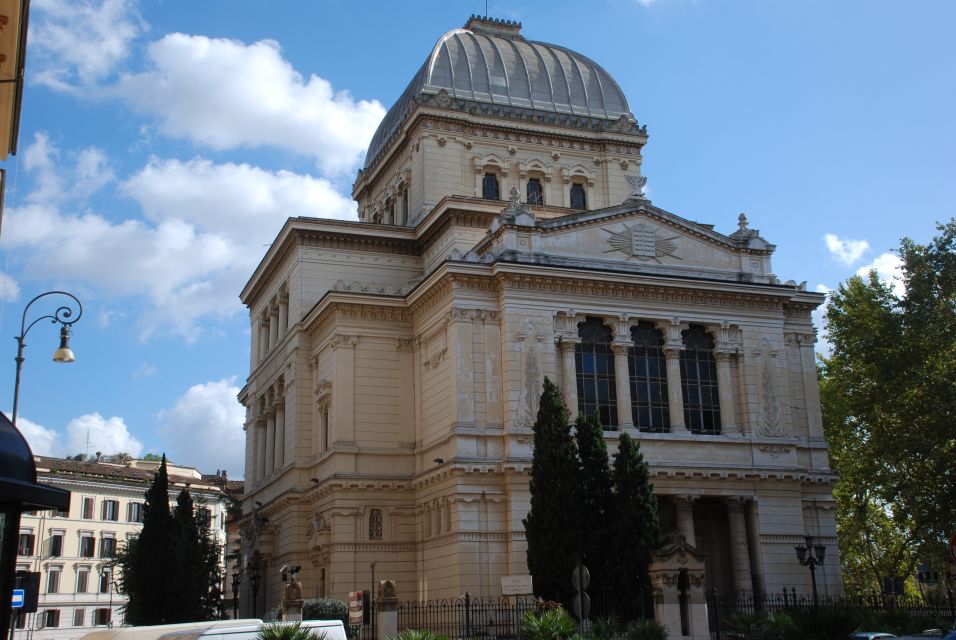
- Great Synagogue of Rome: separate entrance, major dates, and why it’s the anchor
- Fabricio Bridge (62 B.C.) and Tiber Island: a date you can look at
- Trastevere: cobblestones, old houses, and finishing near Piazza Trilussa
- Pacing, language, and what to expect from your private guide
- Practical stuff: shoes, bags, and comfort on Roman streets
- Should you book this Jewish Rome and Trastevere private tour?
- FAQ
- How long is the Jewish Rome District, Old Ghetto and Trastevere private tour?
- Where does the tour start?
- Where does the tour end?
- What are the main stops on the route?
- Is this a private tour?
- Do I need tickets for the sights?
- What languages are available for the guide?
- Is the tour wheelchair accessible?
- What should I bring, and what is not allowed?
- What is the cancellation and payment policy?
Key highlights you’ll feel fast
- Old Ghetto + Trastevere in one route: you get both the constrained history and the everyday street maze feel
- Piazza Mattei, Portico d’Ottavia, and Via della Reginella: short guided stops that keep momentum
- Great Synagogue visit with a separate entrance: designed to help you skip the usual slowdown
- Fabricio Bridge and Tiber Island: anchored by the bridge’s 62 B.C. date
- Jewish community timeline from 2nd century B.C. to the 1900s: dates explained in the places you see
- A true private guide: you choose the pace and your language, with Spanish, English, French, German, Italian, Portuguese, and Russian available
Why this Jewish Rome private tour fits 3 hours so well
This is the kind of tour I recommend when you want accuracy without spending an entire day on paperwork and ticket lines. In just 3 hours, you move through the Jewish district and then cross into Trastevere, with guided time at each stop (mostly 20 minutes, with one longer orientation-style segment in the Ghetto area).
The value here is the way the guide connects eras: the Jewish community of Rome is described as dating back to the 2nd century B.C., then the Ghetto period (created between 1555 and 1870) is tied to the streets you’re standing on. After that, you’re shown how things changed once Rome became the capital of Italy, with the dismantling of the old Ghetto and the granting of citizenship. That timeline matters because it turns a collection of landmarks into a story.
Also, it’s private. That means you’re not “touring” in the group herd sense. You can ask follow-up questions when something catches your attention, like the meaning of the Ghetto area or why the synagogue became such a central point in the district.
You can also read our reviews of more private tours in Rome

Price and what you’re really paying for ($456.21 per private group)
The price listed is $456.21 per group (up to 1). For a private guide, that can be a deal if you’re traveling solo or as a pair and want personalized routing and language control. If you were to book a shared group tour, you’d likely pay less, but you’d give up that small-group attention.
What you do get here is not just “walk and listen.” You’re guided through multiple named sights across the Jewish quarter and into Trastevere: Piazza Mattei, Portico d’Ottavia, Via della Reginella, the Great Synagogue, and stops that include the bridge and Tiber Island. Plus, the tour includes a separate entrance approach for the synagogue experience, which can make a big difference when time matters.
So my practical take: if you want a focused, guided, historically grounded Jewish Rome and Trastevere loop without losing half your morning to logistics, the price is easier to justify. If you’re price-sensitive and happy to wander on your own, you might compare it with self-guided options.
Meeting near Teatro di Marcello and getting your bearings
You start near Via del Teatro di Marcello, 42, at the exit of Antico Caffè del teatro di Marcello. This is a smart starting spot because it’s central to the old-city flow, and it places you close to the neighborhoods you’re going to explore next.
Before you even reach the heart of the Jewish quarter, the guide’s job is to set context: where you are in relation to Capitoline Hill, how the Ghetto was created at the foot of that hill, and how the district developed on the right bank of the river. When your guide gives that framing early, the rest of the walking becomes easier to follow, especially when the route includes both “history landmarks” and ordinary streets.
One small practical note: the tour requires comfortable shoes, and the walking is continuous enough that you should treat this as a stroll with purpose, not a museum line-up.
The Jewish Ghetto: forced location, later citizenship, and what you’ll notice on the walk
The tour begins its core story at the Jewish Ghetto area with a guided segment (about 30 minutes). This isn’t just an overview. It’s built to make you look at how a district functions when a community is restricted, then later freed into citizenship and civic life.
From what you’re taught, you’ll connect three big phases to the streets around you:
- The community’s roots go back to the 2nd century B.C.
- The Ghetto itself was created between 1555 and 1870, where Jewish residents were forced to live
- After Rome became the capital, the old Ghetto was dismantled and Jewish people were granted citizenship
That sequence helps you understand why this area feels different from other Roman neighborhoods. Even when you’re looking at modern storefronts and everyday corners, the guide keeps reminding you of the district’s role as both a home and a landmark for the Jewish community.
You’ll also hear about the district’s modern-day texture, including shops and kosher restaurants, which is important because it keeps the story from feeling frozen in the past. When a neighborhood still functions as a community center, history stays relevant.
Piazza Mattei: a quick stop that resets your eyes
Next comes Piazza Mattei (about 20 minutes). I like this kind of stop because it gives your brain a break. After the density of the Ghetto streets, a square functions like a visual rest area: it helps you reset, then re-enter the walk with better orientation.
Even though the time is short, this stop is useful. The guide typically uses these small anchor points to connect the surrounding lanes back to the larger story you’re tracking. Think of Piazza Mattei as a waypoint for your mental map.
If you get distracted easily in Rome (and who doesn’t), these quick squares are a gift. They keep you from spiraling into “look at that, look at this” without understanding where you are in the overall route.


Portico d’Ottavia: boundaries and atmosphere you can feel in a guided walk
At Portico d’Ottavia (about 20 minutes), you’re positioned at a place that’s closely tied to the old district’s geography. The tour frames it in the way the Jewish district developed along the right bank of the river, with merchants, sailors, fishermen, and foreigners contributing to the mix of people moving through here.
Even if you’re not a “the stones have a story” person, guided time matters at a portico like this. It’s easy to walk past covered architectural spaces without noticing how they shape movement and social life. With a guide, you’ll get a clearer sense of why a sheltered area mattered when the district was defined by legal and social boundaries.
Via della Reginella: the street maze feeling, with explanations attached
Then you move to Via della Reginella (about 20 minutes). This is one of the streets that makes the route feel like real life, not a checklist. The description you get going in is that Trastevere looks like a maze of narrow, winding streets and still maintains its old character with cobblestones and ancient houses. You’ll start sensing that texture even before you fully “arrive” in Trastevere.
This stop is valuable because it’s a bridge between “landmark sites” and the kind of Roman streets you’ll be walking for days on your own afterward. You’ll learn to read what you’re seeing: the shape of alleys, the feel of the neighborhood, and why those details matter when you’re talking about community history.
Great Synagogue of Rome: separate entrance, major dates, and why it’s the anchor
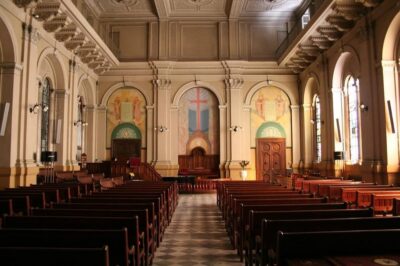
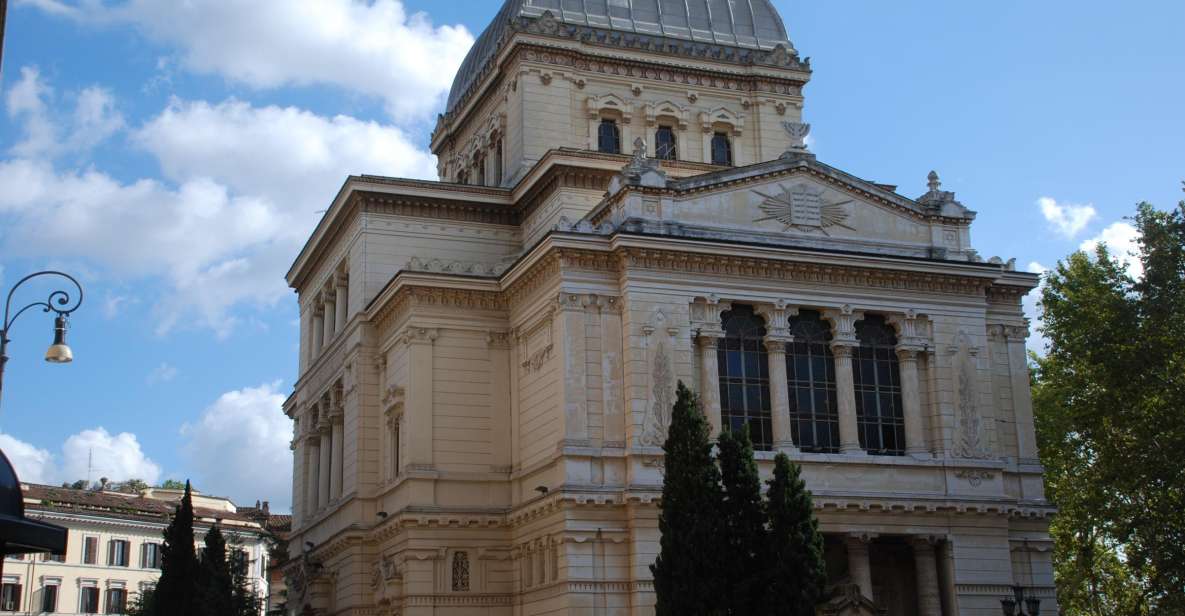
The biggest specific site stop on the route is the Great Synagogue of Rome (about 20 minutes). Two facts matter here, and your guide will build from them:
- It was built between 1901 and 1904
- It was built to celebrate the granting of citizenship, and it’s still the main Jewish temple in Rome
This is the kind of landmark where the timeline feels tangible. The earlier story of the Ghetto’s creation and later dismantling isn’t just a paragraph anymore. You’re at a monument tied directly to a turning point: civic belonging.
Also, you get a practical advantage: the tour mentions skip the line through a separate entrance. I appreciate this because the synagogue experience can be slowed by ordinary waiting patterns. Your guided time is timed to keep your tour flow strong without wasting your whole session standing around.
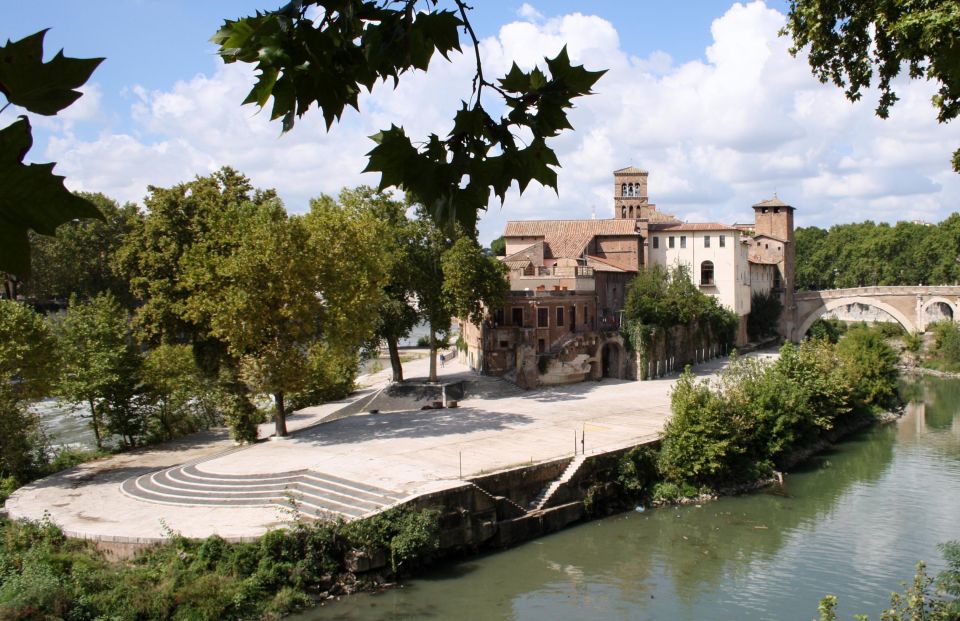
Fabricio Bridge (62 B.C.) and Tiber Island: a date you can look at
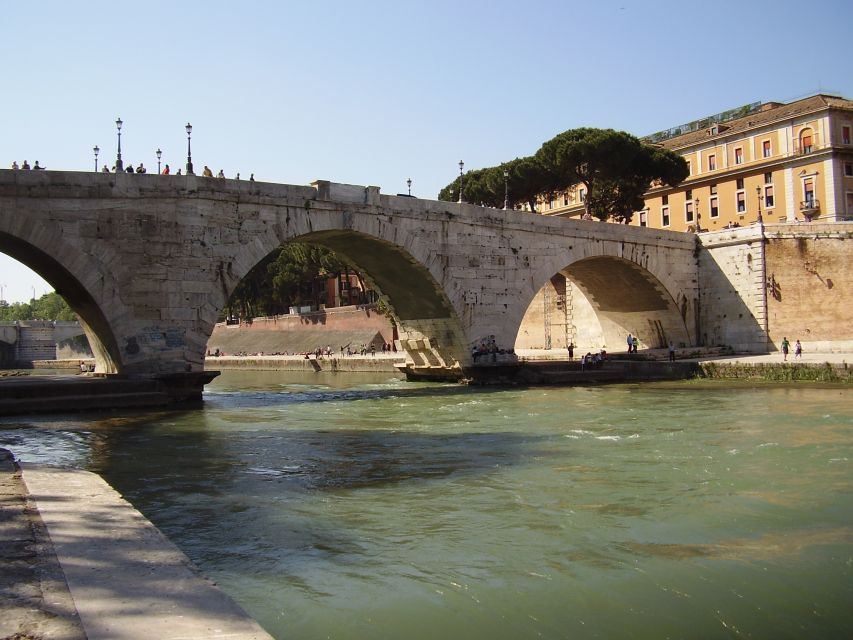
Next is Tiber Island (about 20 minutes), reached by crossing Fabricio Bridge (62 B.C.), described as the oldest bridge left in Rome. This is one of those moments where a single detail changes how you look at the river crossing. Instead of just “a bridge,” you’re standing in a spot tied to a specific ancient date.
From here, the tour moves you from the Jewish district’s right-bank context to the direction of Trastevere. The guide’s explanation helps you see why the river mattered for how Rome’s districts developed, including merchants, sailors, fishermen, and foreigners in the area you’re walking through.
If you like photo moments, this section gives you both: the bridge date story and a river-island view that naturally pulls the camera out.
Trastevere: cobblestones, old houses, and finishing near Piazza Trilussa
Finally, you reach Trastevere (about 20 minutes), described as a maze of narrow, winding streets that keeps its old character, with cobblestones and ancient houses. This is where the tour becomes more about atmosphere, in a good way.
After all the historical framing of the Jewish Ghetto and the Great Synagogue, Trastevere gives you a contrast. The neighborhood’s street layout makes it easy to understand why people love wandering here, but the guided time ensures you’re not just drifting without context.
The tour ends at Piazza Trilussa. The tour data also indicates the activity ends back at the meeting point near Teatro di Marcello, so treat Piazza Trilussa as the walk-out moment where you’re released into Trastevere’s immediate street life, then finished back on the route.
Either way, it’s a nice way to close: you finish in an area that’s lively enough to keep you going on foot afterward.
Pacing, language, and what to expect from your private guide
One reason this tour scores so high is the simple thing: a great guide can make a short walk feel like a full chapter. With a private setup from the Crazy4rome team, you’re not stuck listening through someone else’s pace.
You also get language flexibility: the guide can operate in Spanish, English, French, German, Italian, Portuguese, and Russian. That matters because when history is involved, nuance gets lost when translation is weak.
Time allocation is another built-in expectation: the route includes guided segments of about 30 minutes for the Jewish Ghetto and around 20 minutes for the other named stops. That structure is ideal if you want to cover many places without turning the tour into a long, exhausting marathon.
Practical stuff: shoes, bags, and comfort on Roman streets
Bring comfortable shoes. You’ll be walking through parts of Rome where cobblestones and narrow passages are common, and the tour’s value is tied to keeping the walking rhythm.
The tour also notes no luggage or large bags. If you’re traveling light, you’re fine. If you’re carrying a big daypack, plan to keep it small enough for a walking tour.
Wheelchair access is listed as available, but if mobility is an issue for you, I’d still confirm your comfort with the street surfaces before booking so you’re not surprised by the feel of the route.
Should you book this Jewish Rome and Trastevere private tour?
Book it if you want a guided, time-efficient Jewish Rome route that connects the Old Ghetto era to the Great Synagogue and then transitions naturally into Trastevere. It’s especially worth it when you care about dates and meaning, but you don’t want to spend hours piecing together different sites on your own.
Skip or reconsider if you’re hoping for a slow, relaxed “sit and soak it up” day. This is structured and moving, and you’ll feel the walking in your feet.
If you’re the type of traveler who likes your Rome with a clear thread—where one stop explains the next—this private tour is a strong match. And the separate entrance approach at the Great Synagogue is a small but real bonus for keeping your 3 hours focused.
FAQ
How long is the Jewish Rome District, Old Ghetto and Trastevere private tour?
It runs for 3 hours.
Where does the tour start?
The meeting point is at the exit of Antico Caffè del teatro di Marcello, at Via del Teatro di Marcello 42.
Where does the tour end?
The activity ends back at the meeting point. The route includes finishing around Piazza Trilussa.
What are the main stops on the route?
You’ll see the Jewish Ghetto area, Piazza Mattei, Portico d’Ottavia, Via della Reginella, the Great Synagogue of Rome, Tiber Island, and Trastevere, with the walk finishing at Piazza Trilussa.
Is this a private tour?
Yes. It’s a private group tour.
Do I need tickets for the sights?
No tickets are required. The tour also notes a skip-the-line approach through a separate entrance.
What languages are available for the guide?
The guide can work in Spanish, English, French, German, Italian, Portuguese, and Russian.
Is the tour wheelchair accessible?
Wheelchair accessibility is listed as available.
What should I bring, and what is not allowed?
Bring comfortable shoes. Luggage or large bags are not allowed.
What is the cancellation and payment policy?
You can cancel up to 24 hours in advance for a full refund. The option to reserve now and pay later is also offered.