REVIEW · ROME
Rome: Saint Paul Outside the Walls Tour
Book on GetYourGuide →Operated by Mykhailo Hevko · Bookable on GetYourGuide
A Holy Door in Rome feels oddly personal. This small-group visit to San Paolo Fuori le Mura is interesting because you enter through the Jubilee Holy Door, then get the story behind the art that crowds the interior—especially the golden mosaics. I love how the guide ties the church’s rebuilding after the 19th-century fire to what you’re seeing now, and I love the calm way this place lets you slow down. One possible drawback: the main tour is short (about 0.5–1 hour), so if you want lots of quiet time, you’ll likely want the optional cloister add-on.
I also like that it’s not a giant crowd situation: the group is limited to 6, and the guide is available in Italian, English, and Ukrainian. The tour is wheelchair accessible too, and the guide (Mykhailo Hevko) is praised for being friendly, answering questions, and even giving extra consideration to visitors with mobility needs. Just plan your outfit carefully—shoulders and knees must be covered, since this is a sacred site.
In This Review
- Key things to know before you go
- San Paolo Fuori le Mura and the Jubilee Holy Door
- Where the tour starts: Parco Schuster and meeting your guide
- Inside highlights: golden mosaics, the arch, and popes’ medallions
- Saint Paul’s tomb: what you’ll see and how to use the moment
- The cloister option: extra art time for 4€ and a longer visit
- Dress code and on-site rules you should plan for
- Small-group pacing, guide skills, and language choices
- Price and value: what $28.47 buys you in Rome
- Who should book this tour (and who might skip)
- Should you book Saint Paul Outside the Walls?
- FAQ
- How long is the Rome: Saint Paul Outside the Walls Tour?
- Where do I meet the guide?
- Which languages are available?
- Is the cloister included?
- What should I wear for this tour?
- Is the tour wheelchair accessible?
- What if my plans change?
Key things to know before you go
- Jubilee Holy Door entry: you’ll see the symbolic entrance and hear what it means for grace and renewal
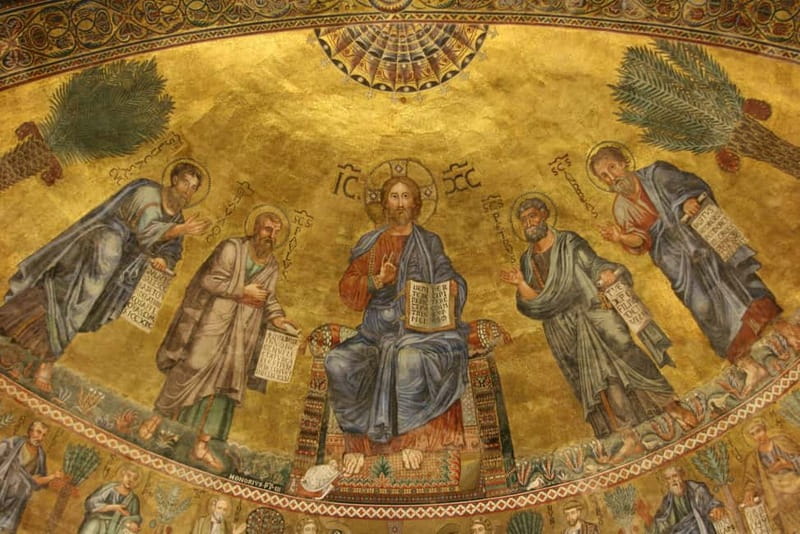
- Golden mosaics and the triumphal arch: you won’t just look—you’ll understand what they’re trying to say
- Medallions of the Popes: a long line of faces helps you place the basilica in a wider Catholic timeline
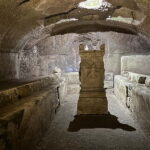
- Saint Paul’s tomb location: it’s visible beneath the main altar, where pilgrims come to pray and reflect
- Optional cloister visit (4€ extra): you can extend the experience without committing to it up front
San Paolo Fuori le Mura and the Jubilee Holy Door
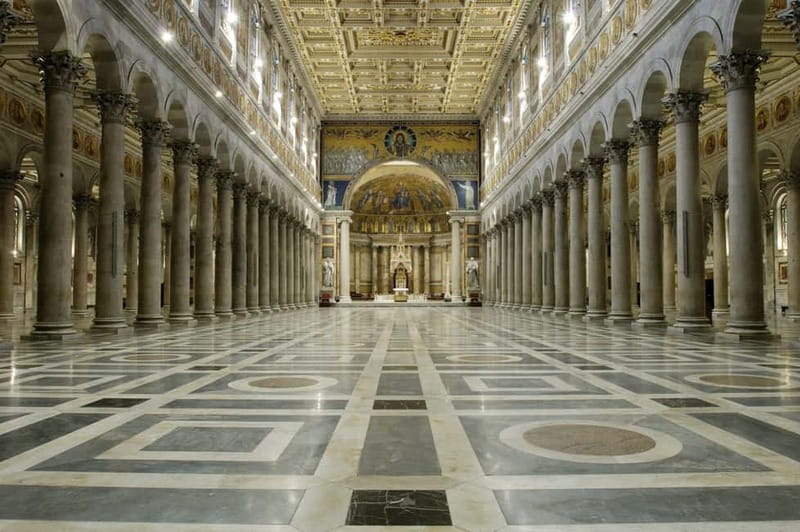
San Paolo Fuori le Mura is one of Rome’s four major papal basilicas, and this tour is built around a very specific moment: entering through the Holy Door opened for the Jubilee Year. That matters, because the tour isn’t only about architecture facts. You’ll get a clear sense of the spiritual symbolism attached to the door—grace, renewal, and a kind of physical “threshold” moment.
The church itself sits over the burial site of Saint Paul the Apostle. That single connection shapes the whole visit. Before you even get lost in the details, your guide helps you understand that the basilica’s purpose is both memorial and living worship, not a museum-style stop.
You’ll also hear how the building was rebuilt after a devastating fire in the 19th century. When you look up at the interior after that context, it’s easier to feel what “reborn from the ashes” means in real, architectural terms, not just in a slogan.
You can also read our reviews of more tours and experiences in Rome.
Where the tour starts: Parco Schuster and meeting your guide
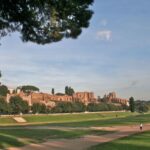
This tour meets at the park called Parco Schuster near the basilica. Plan to arrive 10–15 minutes early, since you’ll be sent instructions on how to find and recognize the guide.
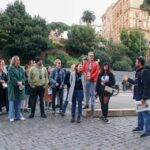
Because the group is capped at 6 participants, you won’t be shuffled through like you’re on a conveyor belt. In practical terms, that also means questions are more likely to get answered in the moment. I like that because church art can feel overwhelming if you’re left to guess.
The tour ends back at the same meeting point, so you don’t have to worry about changing neighborhoods or figuring out a second pickup location. That simplicity is a real value in Rome, where time can evaporate fast.
Inside highlights: golden mosaics, the arch, and popes’ medallions
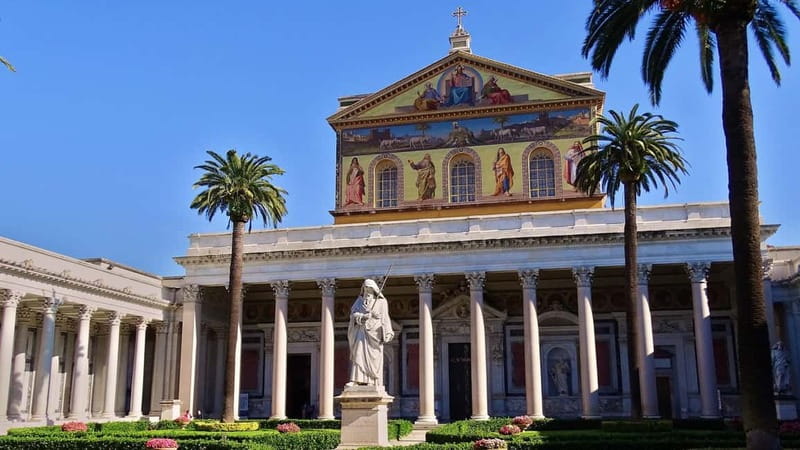
Once inside, you’ll focus on the parts that make this basilica feel both huge and strangely serene. The interior is described as vast and luminous, and it’s the kind of space where your eyes need a minute to recalibrate from daylight outside.
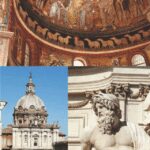
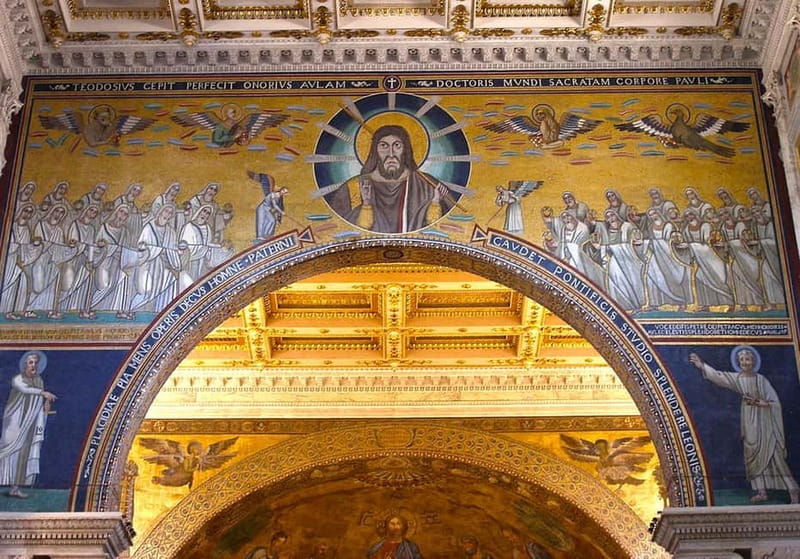
Your guide points you toward the golden mosaics, which is one of the strongest reasons to come with context. Gold in church art isn’t just decoration—it’s tied to ideas about light, holiness, and spiritual atmosphere. When someone explains what you’re looking at, those glowing panels stop feeling like random ornament.
You’ll also see the imposing triumphal arch. This is where the guide’s storytelling helps most. The tour frames it as a visual statement—almost a boundary between sacred “zones” of meaning—so you’re not just passing under it.
Then there are the long line of medallions depicting all the Popes, from Saint Peter up to the present. Think of it as a guided timeline you can walk past. It gives you an easy way to connect the basilica to the broader tradition of the Church, especially if you don’t already know the chronology.
Saint Paul’s tomb: what you’ll see and how to use the moment
One of the most direct emotional anchors on this tour is the tomb of Saint Paul beneath the main altar. Pilgrims come here to pray and reflect, and that fact changes the tempo of the visit. You’ll be encouraged to treat it as a place for quiet attention, not a quick photo stop.
Here’s how I’d use the moment if you’re the reflective type: pause and let your guide finish the key points first, then step back a little. Sacred sites often feel more meaningful when you give yourself room to absorb rather than trying to capture everything at once.
If you’re more “practical traveler,” you’ll still appreciate this stop because it connects the basilica’s art and rebuilding history to the core reason it exists. The mosaics and arches make more sense when you remember you’re inside a memorial site.
And if you’re traveling with someone who needs a slower pace, you’ll likely appreciate what the guide has been praised for—especially being attentive to mobility needs. That personal care can make the difference between feeling rushed and feeling welcome.
The cloister option: extra art time for 4€ and a longer visit
Your main guided portion covers the basilica interior and its major features. You can also choose to visit the cloister as an optional add-on.
The cloister visit includes medieval art and can extend your tour beyond the standard timeframe. The extra entrance fee is 4€, so it’s an easy decision if you enjoy lingering with art and atmosphere rather than only “ticking off” the big interior highlights.
If your schedule is tight, you can treat the cloister as a bonus you add only when you have the time. But if you like medieval details—lines, symbols, and small-scale storytelling—this is often the part that feels quieter and more human-sized after the grand interior.

Dress code and on-site rules you should plan for
This is a sacred-place visit, and the tour asks for practical respect: cover shoulders and knees. That means skip short skirts and plan ahead if you’re wearing something summery. Rome is hot in many seasons, so you might want a light scarf or layer you can fold away after.
There are also on-site rules like no alcohol and drugs, and no glass objects. Weapons or sharp objects aren’t allowed either. You probably won’t be bringing any of that, but it’s useful to know in case you’re traveling with a casual water bottle or a fragile item.
I like that these rules are clear. It reduces the awkward guessing that can happen in churches and helps your experience feel calm and focused.
Small-group pacing, guide skills, and language choices
The tour runs in English, Italian, and Ukrainian, with a live guide. If you want explanations you can actually follow, this format is a plus—especially in places where the symbolism is dense.
The small-group size (max 6) is also the reason the experience feels personalized. Your guide can slow down for questions, and based on feedback, they do it with enthusiasm. That matters because art history and religious symbolism aren’t always intuitive, and you shouldn’t have to guess your way through.
The named guide for this experience is Mykhailo Hevko, who has been praised for being friendly and thorough in explanations. One review specifically notes special consideration for a mother-in-law with mobility issues. That’s a big deal in practice: it suggests the guide pays attention to the group’s needs, not just the script.
Price and value: what $28.47 buys you in Rome
At $28.47 per person, this isn’t a free walk-in church situation, so you should ask: what’s the value?
Here’s what you’re paying for:
- A guided connection between the basilica’s key features and the stories behind them
- Access to the big visual highlights (Holy Door entry, mosaics, triumphal arch, popes’ medallions) with interpretation
- A small group size, which often means better pacing and more chances to ask questions
- Multi-language guiding across English, Italian, and Ukrainian
In Rome, you can often enter churches on your own. But without context, those mosaics, arches, and Pope medallions can blur together. This tour turns “impressive” into “I understand why it’s here.” For many people, that upgrade is worth the price—especially if you only have a limited number of church visits during your trip.
It also helps that the main tour is about 0.5–1 hour, which means it fits into a day plan without swallowing your schedule. If you want more time, the cloister add-on is optional rather than forced.
Who should book this tour (and who might skip)
Book it if:
- You want a structured way to see one of Rome’s major basilicas without getting lost in details
- You enjoy church art when someone explains what it’s doing and why
- You like small groups and the ability to ask questions
- You’ll appreciate a Jubilee-themed moment through the Holy Door
You might skip it if:
- You only want a quick self-guided stop and don’t care for explanations
- You’re hoping for a long, slow, spend-the-afternoon type visit—this is designed for about an hour, with the cloister as the only stated add-on
If you’re traveling with mixed interests—someone who wants history, someone who wants spiritual meaning—this tour tends to work because it connects both.
Should you book Saint Paul Outside the Walls?
If your goal is meaningful sightseeing with clear context, I think this tour is a solid pick. The Holy Door element gives you a strong “why now” reason to come, and the interior highlights are exactly the kind of features that feel better when you understand them.
The value also comes from the format: small group size, a friendly guide you can ask questions to, and a visit paced for a single focused hour. Add the cloister only if you want more medieval art time.
If you’re the kind of traveler who likes to leave a church feeling like you actually learned something—not just walked around—this is an easy yes.
FAQ
How long is the Rome: Saint Paul Outside the Walls Tour?
The tour lasts from about 0.5 to 1 hour. It may run longer if you add the cloister visit.
Where do I meet the guide?
You meet in Parco Schuster near the basilica. You should arrive 10–15 minutes early, and you’ll receive indications on how to find and recognize the guide.
Which languages are available?
The guided tour is offered in Italian, English, and Ukrainian.
Is the cloister included?
The cloister is optional. Visiting the cloister and Benedictine Abbey has an additional entrance fee of 4€.
What should I wear for this tour?
Dress for a sacred place. Your shoulders and knees must be covered, so avoid short skirts.
Is the tour wheelchair accessible?
Yes, the tour is wheelchair accessible.
What if my plans change?
Free cancellation is available up to 24 hours in advance for a full refund. You can also reserve now and pay later to keep plans flexible.