REVIEW · CARACALLA BATHS & CIRCUS MAXIMUS TOURS
Rome: Caracalla Baths Express Small-Group or Private Tour
Book on GetYourGuide →Operated by Touriks · Bookable on GetYourGuide
Roman ruins, but make them practical.
This Caracalla Baths express tour turns a big, confusing ruin field into a clear walk-through of how the baths actually worked, and it’s paced for real sightseeing time. I especially like the small-group/private options (max 10) and the fact you get an archaeologist guide plus sterilized headsets, so you’re not guessing or straining to hear.
One thing to think about: your meeting spot is by Circo Massimo, and that approach time can cut into time at the baths if you’re moving at a slow pace or arriving hungry for maximum ruin time.
In This Review
- Key things I’d center in your decision
- Caracalla in One Hour: how “express” actually helps
- Meeting at Circo Massimo: the easiest way to avoid stress
- Inside the Baths: what you’re looking at (and why it’s cool)
- The “day at the baths” routine: 3rd-century style, but clearly explained
- Headsets, pacing, and group size: what you gain with a max-10 tour
- Value check: does $70 for an hour make sense?
- Timing and the approach from Circo Massimo: how to avoid feeling rushed
- Best-fit for who this tour is made for
- Accessibility and practical rules: keep it simple
- Should you book the Rome: Caracalla Baths Express Small-Group or Private Tour?
- FAQ
- How long is the Caracalla Baths express tour?
- Where do I meet my guide?
- What time should I arrive?
- Is the ticket included?
- Will I be able to hear the guide?
- What languages are available for the live guide?
- How big is the group?
- Is there a private option?
- Is it wheelchair accessible?
- What should I bring, and what can’t I bring?
Key things I’d center in your decision
- Small groups (up to 10) keep questions possible and the tour from feeling like a stampede.
- Sterilized headsets help a lot in open ruins where voice carrying gets weird fast.
- An archaeologist guide gives you explanations of systems like underfloor heating, not just photo stops.
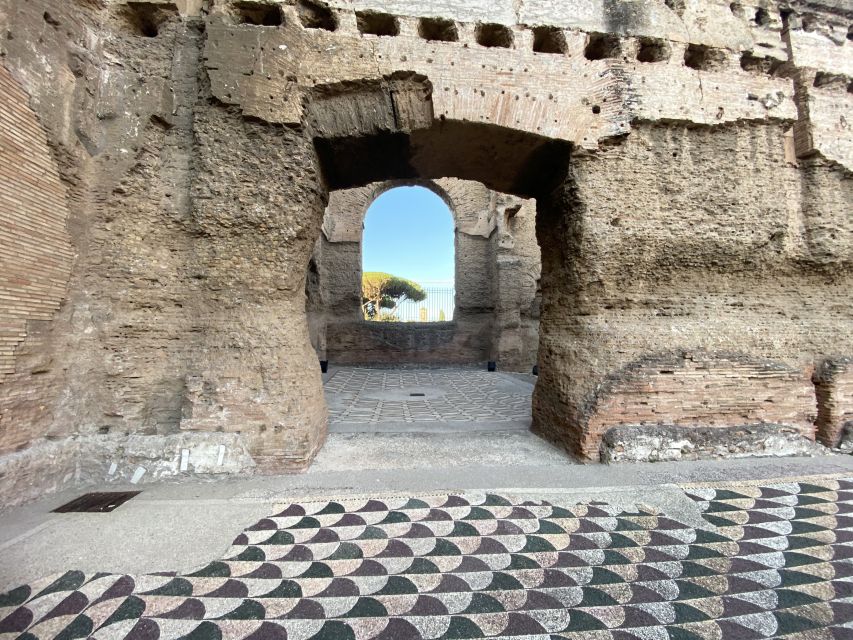
- Mosaic details and engineering are part of the story, including geometric patterns you might otherwise miss.
- “Express” pacing focuses on the essentials of a 3rd-century bath day in about an hour.
- Private vs small-group lets you match the experience to your comfort level and schedule.
Caracalla in One Hour: how “express” actually helps
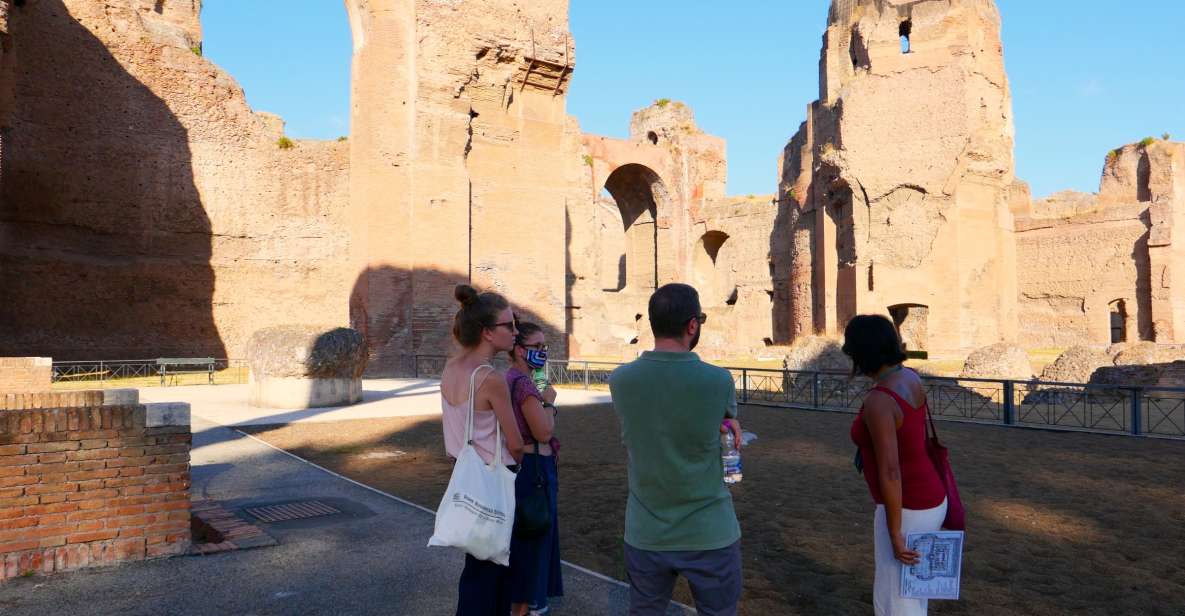
Caracalla is the kind of site that looks huge at first glance. The trick is not letting the scale swallow your time. That’s why I like the 1-hour express format. It’s long enough for a real guided route and short enough that you don’t burn your whole morning (or afternoon) orbiting the ruins without a plan.
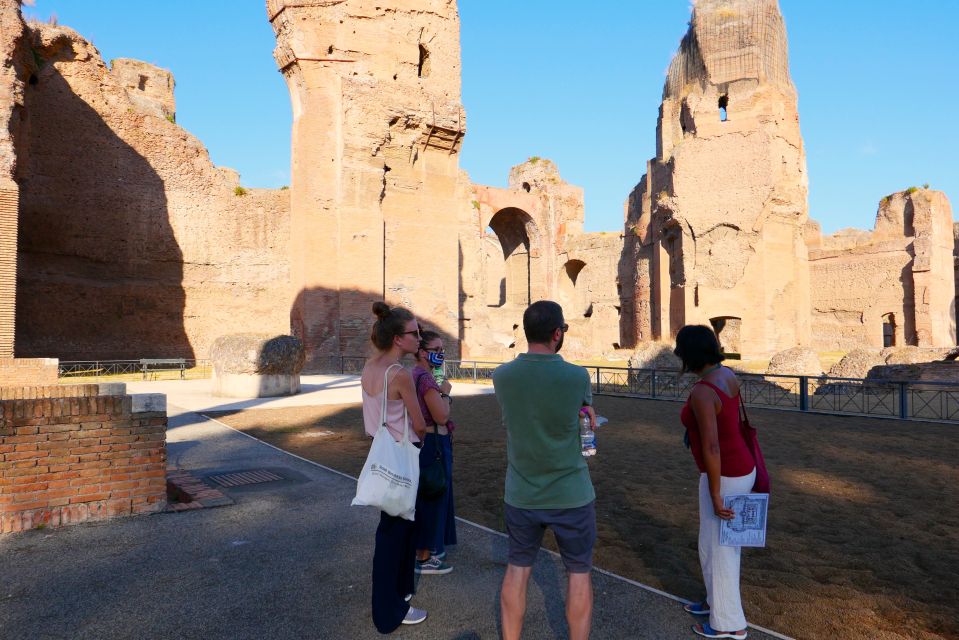
In practice, the guide’s job is to give your eyes a checklist. You’re not just walking “through old walls.” You’re being shown how the complex functioned as an Imperial-era leisure center—what people did, what spaces were for, and how the building kept conditions comfortable. The tour is built around a 3rd-century routine, so the ruins start behaving like a place with rhythm rather than scattered architecture.
At this length, you also get a smart tradeoff: you spend less time wandering and more time learning what matters. And because there are entrance fees included plus skip-the-ticket-line access, you’re less likely to lose your momentum to admin.
You can also read our reviews of more private tours in Rome

Meeting at Circo Massimo: the easiest way to avoid stress
The tour starts at Viale Aventino 3, but the real “don’t-miss” step is the meeting point: the exit of Metro Station Circo Massimo, in front of the FAO building. Look for a yellow label with TOURIKS written on it.
Arrive about 5 minutes early. That buffer is worth it because it’s easy to miss the label in Rome’s station exits if you roll in at the last second.
How this affects your experience: since you’re starting in the Circo Massimo area, the approach may feel like dead time if you’re measuring your day in minutes. The upside is that this is also a convenient transit node, especially if you’re pairing Caracalla with other central sights later.
Inside the Baths: what you’re looking at (and why it’s cool)
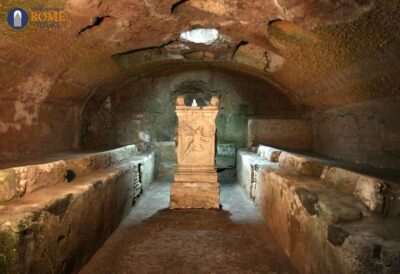
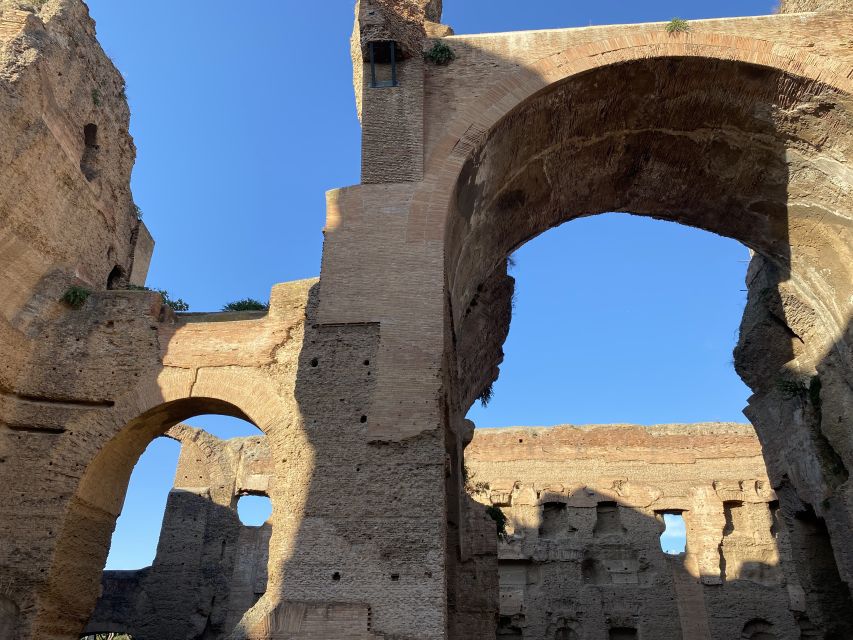
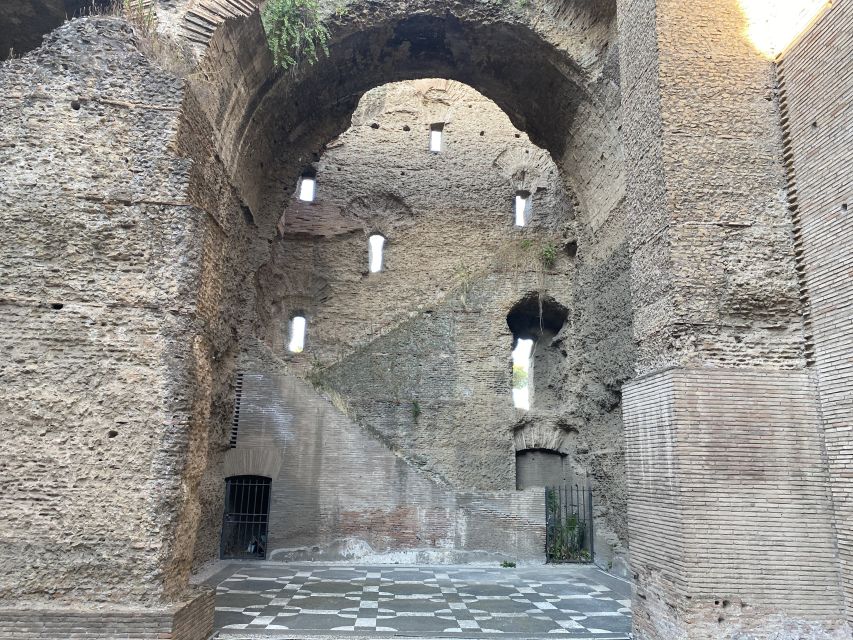
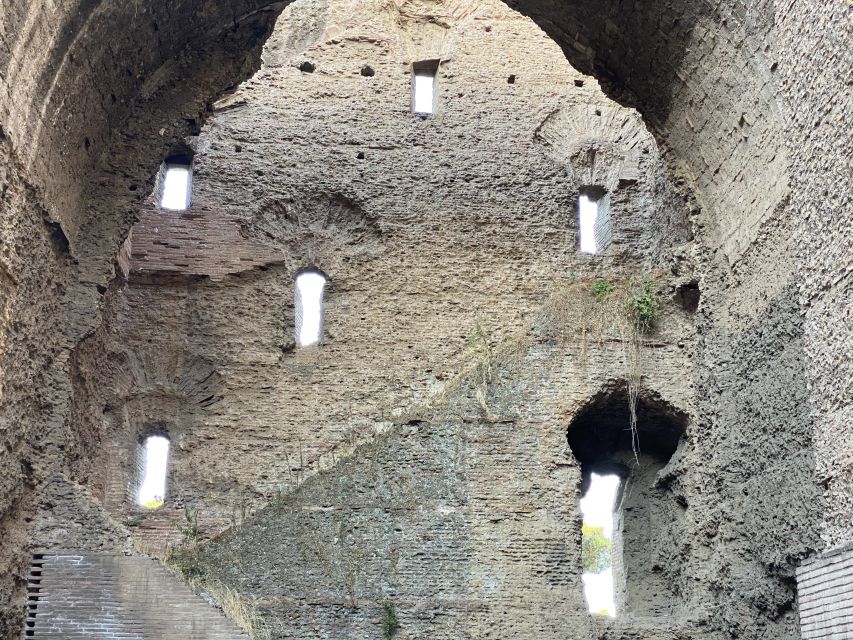
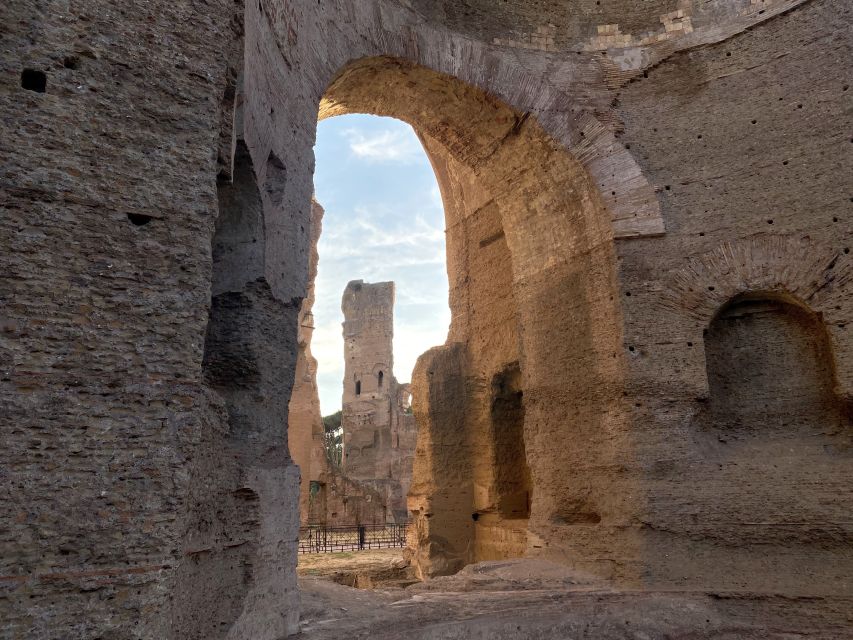
Caracalla is one of Rome’s best-preserved bath complexes, and this tour is tuned to help you read it. The route is built around the monumental rooms of the thermal complex, including the huge walls that make the site feel both orderly and imposing.
You’ll spend your hour moving through the complex with an emphasis on the “how.” That matters because baths aren’t just pretty ruins; they’re systems. The guide walks you through the underfloor heating system—the labor-intensive method used to maintain the desired temperature in different rooms.
This is the kind of detail that changes how you perceive the whole structure. Once you understand the idea of heat being generated and managed underfoot, you stop seeing the floors as flat surfaces and start seeing them as part of a functioning machine.
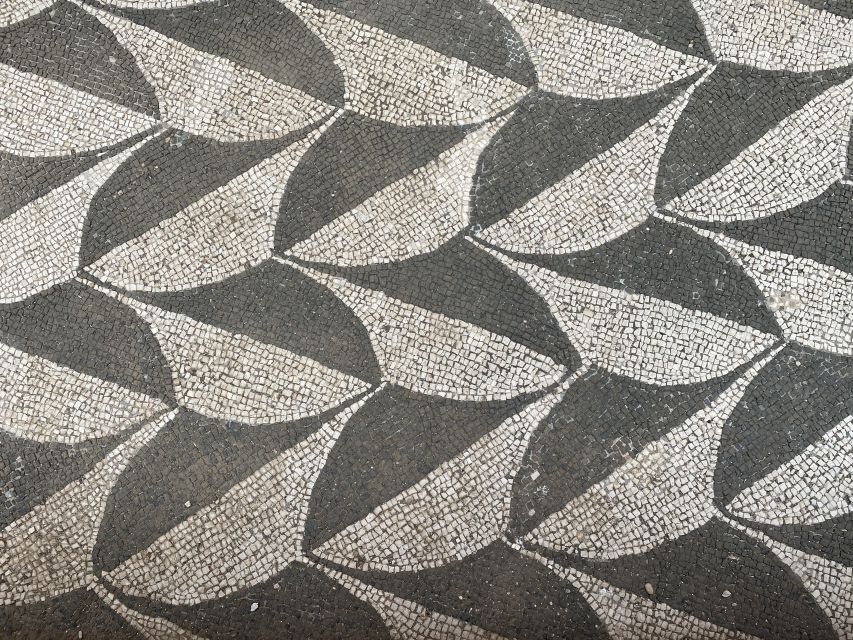
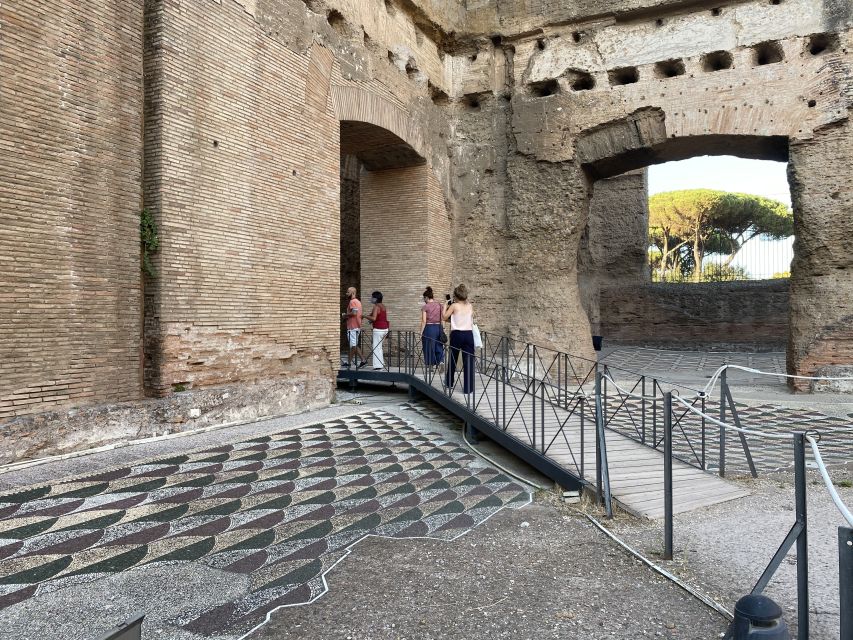
And you’ll also get attention on visual ornament, like the geometric motifs on mosaics. If you’ve visited Roman sites before, you know mosaics can be either a quick glance or a mind-blower. Here, they’re treated as part of the experience, not just background decoration.
The “day at the baths” routine: 3rd-century style, but clearly explained
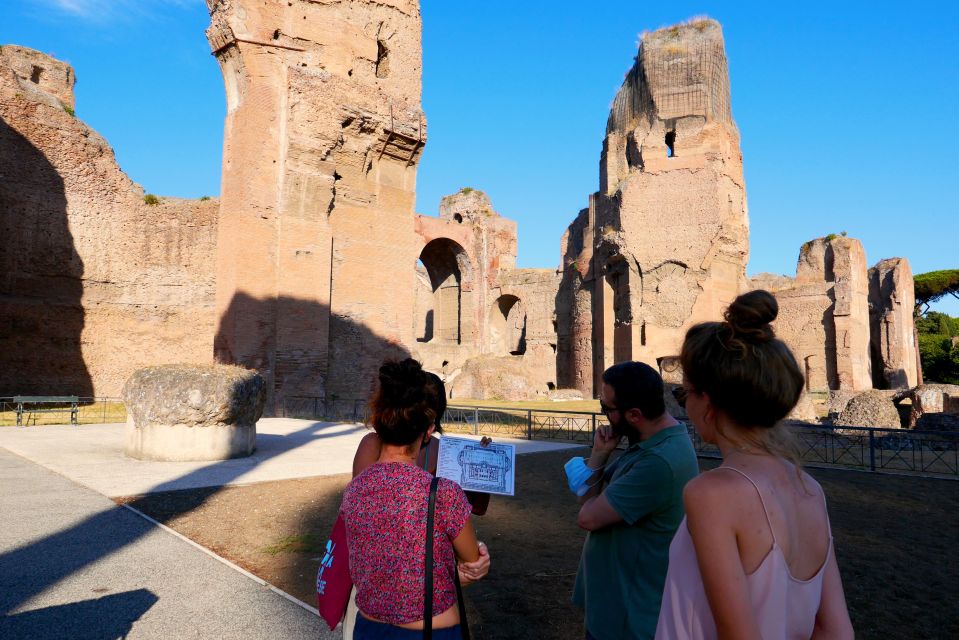
The tour doesn’t try to sound like a dramatic time machine. Instead, it follows the steps of a typical day at the baths in the 3rd century AD. That structure is what makes the hour feel coherent.
Think of it as a guided storyline: you’re shown what’s where, why people used the spaces, and how the bath design supported comfort and leisure. The explanation also covers the bizarre range of services offered in the ancient spa for wellness of the body and mind.
That last part is important. Modern spas often sell a vibe. These baths were integrated into daily life and urban culture—so the guide connects the architecture to the idea of wellness as a public, communal activity.
You’ll also hear the guide frame the engineering as part of the attraction. When someone explains how ancient engineers dealt with temperature and comfort, the place becomes more than ruins. It becomes a working concept.
Headsets, pacing, and group size: what you gain with a max-10 tour
Caracalla is open-air and sprawling. Without help, tours can turn into a game of “Did you hear that?” That’s exactly why I appreciate sterilized headsets. They cut through wind, distance, and the natural noise of people moving around you.
Then there’s the group size. This experience is capped at a maximum of 10 participants, with private or small-group options. In a complex like this, small numbers make the tour less chaotic. Questions feel normal, and the guide can keep an eye on pace.
That pacing flexibility showed up in the kinds of reviews people leave: names like Francesca, Mario, Marco, Chiara, and Sara come up with guests describing them as welcoming, energetic, and fun while staying grounded in the details.
It’s not just personality. It’s also practical: a good guide can speed up when you want momentum, then slow down when you’re staring at mosaics or trying to picture the heating system working.


Value check: does $70 for an hour make sense?
At $70 per person for 1 hour, the price looks straightforward, but it’s the inclusions that tell the real story.
You’re paying for:
- Entrance fees to Caracalla Baths
- Skip the ticket line
- A professional archaeologist guide
- Sterilized headsets
- On-site assistance
If you’ve ever tried to self-guide a bath complex, you know the issue: you can see the walls, but without interpretation you may miss what they were doing. Here, you’re buying understanding. For many people, that’s the difference between “cool ruins” and “I actually get how it worked.”
If your time in Rome is tight, express tours usually make sense because they’re less about covering every corner and more about giving you a high-return route. Caracalla’s main draw is the scale plus the systems. This format is designed to hit both without dragging.
Timing and the approach from Circo Massimo: how to avoid feeling rushed
This is the only part I’d plan around. Starting from Circo Massimo means there’s a little logistics time before you’re fully in the baths complex.
If you’re the kind of person who wants a slow soak in the ruins—stopping for photos, reading details, and taking your time—you might feel the compressed schedule. That’s especially true if the day’s light or foot traffic influences your walking pace.
My practical advice: book a time when you’re not already late for your next stop. And if you’re sensitive to walking time, consider choosing the private option so the guide can match the pacing to your needs more closely.
Best-fit for who this tour is made for
This experience is ideal if you:
- Want a guided, high-return visit in about an hour
- Like Roman engineering and want the underfloor heating system explained
- Appreciate visual details like mosaics with geometric motifs
- Prefer small groups or a private tour rather than a big crowd
- Need headsets to hear well in open ruins
It’s also a great pick if you’ve already seen the big-ticket hits and want something less “on everyone’s list,” but still unmistakably important.
And if you want the most relaxed version of the visit, go with the smallest group option. The max-10 size already helps, but private tends to reduce friction the most.
Accessibility and practical rules: keep it simple
The tour is wheelchair accessible, which is a big plus for anyone navigating Rome’s uneven surfaces. You’ll still be on-site at a ruin complex, so ask yourself honestly what kind of walking distance you’re comfortable with.
The tour also has one clear restriction: no luggage or large bags. Keep your bag small and easy. Bring:
- Passport or ID card
That’s it. No special museum ritual required.
Should you book the Rome: Caracalla Baths Express Small-Group or Private Tour?
Yes—if you want real understanding without burning your day.
Book it if you like the idea of an archaeologist guide explaining how the baths functioned, not just where the ruins are. The combination of included entrance, skip-the-line access, and sterilized headsets makes the hour feel efficient rather than rushed.
Skip or reconsider if your top priority is maximum time inside the baths with minimal approach time. Because you start by Circo Massimo, the transition can matter, especially if you’re traveling at a slower walking pace or you’ve got a packed schedule.
Bottom line: this is a strong “time-smart” Roman stop that turns Caracalla into a guided experience you can actually understand.
FAQ
How long is the Caracalla Baths express tour?
It lasts 1 hour.
Where do I meet my guide?
Meet at the exit of Metro Station Circo Massimo, in front of the FAO building. Look for a yellow label with TOURIKS written on it.
What time should I arrive?
Arrive about 5 minutes before your scheduled start time.
Is the ticket included?
Yes. Entrance fees to the Caracalla Baths are included, and the tour also skips the ticket line.
Will I be able to hear the guide?
Yes. You’ll receive sterilized headsets to hear clearly.
What languages are available for the live guide?
The live guide is offered in German, Italian, English, Portuguese, French, and Spanish.
How big is the group?
The tour has a maximum of 10 participants.
Is there a private option?
Yes, private or small groups are available.
Is it wheelchair accessible?
Yes, the tour is listed as wheelchair accessible.
What should I bring, and what can’t I bring?
Bring a passport or ID card. Luggage or large bags are not allowed.