REVIEW · APPIAN WAY BIKE & E-BIKE TOURS
Rome: Appian Way Golf Cart Tour with Roman Catacombs Entry
Book on GetYourGuide →Operated by Biga Tours · Bookable on GetYourGuide
One road, one cart, and Rome changes mood fast. This tour pairs a smooth electric golf cart drive beyond the city center with a guided walk into the Roman Catacombs, where the cool air and steep steps are real considerations. I love how the route mixes big-name ruins with the feel of the Appian Way’s ancient stones, and I also love that your guide keeps the story moving while you hop between photo stops. The one drawback: the catacombs involve uneven ground and climbing down and up steep stairs, so you’ll want to plan accordingly if you’re mobility-limited.
You start near the Pantheon at Via Monterone, 19, and you’ll likely spend the ride outfitted with earpieces so you can hear the guide even as the cart rolls through Rome’s tight streets. Group size stays small, with up to 14 people split across two carts that travel together like connected train cars. Guides such as Francesco, Amber, Marco, Leo, Gaia, and Andreas pop up in the recent feedback, and the common thread is clear, practical storytelling paired with confident driving.
In This Review
- Key Points You’ll Feel on Day-of
- Electric Golf Cart Start: From Pantheon Area to Real Rome-Outside
- Circus Maximus Viewpoint: Seeing the Giant Without the Fuss
- Baths of Caracalla: Ruins With Mass and Meaning
- Riding the Appian Way Stones: A Route That Feels Like History
- Tomb of Cecilia Metella: A Landmark That Tells You Where You Are
- Roman Catacombs Underground: Cold Air, Narrow Lines, Real Stairs
- Aurelian Walls and Pyramid of Cestius: The City’s Edges Close the Loop
- Who Should Book This Appian Way Golf Cart + Catacombs Tour
- Price, Value, and Why This Works for a Short Rome Stay
- Should You Book It or Skip It?
- FAQ
- How long is the Appian Way golf cart tour with Roman Catacombs entry?
- What catacombs experience is included?
- Is hotel pickup included?
- How many people are on the tour?
- Where is the meeting point?
- What should I know about stairs and weather inside the catacombs?
- Are there age limits, and can I cancel if plans change?
Key Points You’ll Feel on Day-of
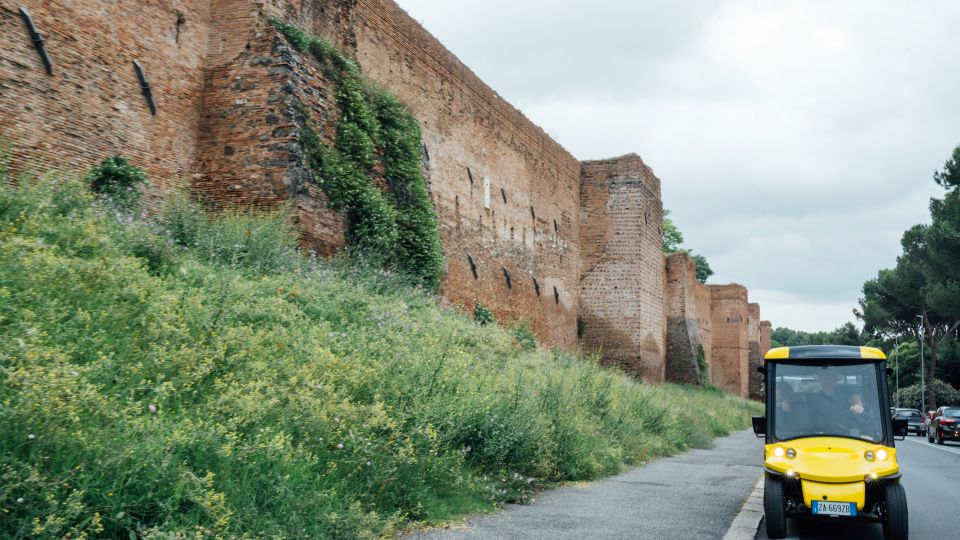
Electric golf carts save your legs while still getting you out to the Appian Way and farther ruins.
Two-cart setup keeps it intimate (max 14 people), with earpieces so everyone hears the same guide.
You get both viewpoints and walking: photo stops at major sites plus a guided underground catacombs walk.
The guide makes the ruins make sense fast using real context you can connect to what you’re seeing.
Catacombs run cool and humid (about 16°C / 61°F) with steep, uneven steps and narrow passages.
Electric Golf Cart Start: From Pantheon Area to Real Rome-Outside
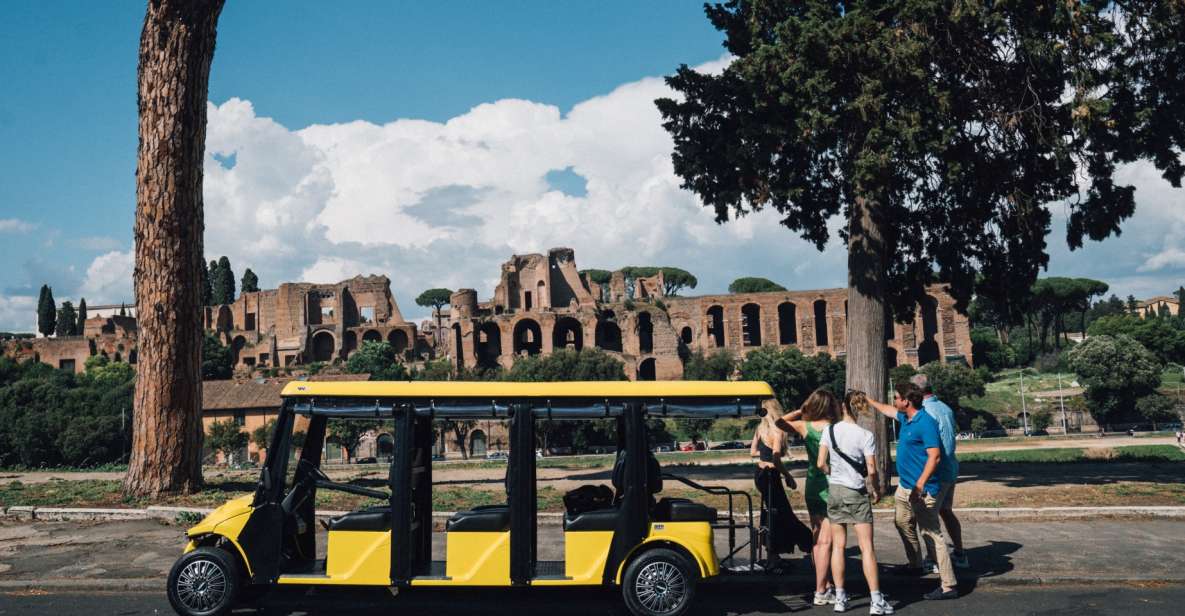
This is the kind of tour that helps you get your bearings without spending half your day trapped in heat, traffic, and stop-and-go walking. You meet at an office on Via Monterone, 19, inside glass doors on a street that forms an L, near Via di Torre Argentina. Once you’re onboard, you’ll drive on an eco-friendly electric golf cart with enough room to stay comfortable.
The cart system matters. There are 7 seats per vehicle, and the tour runs with up to 2 vehicles and 14 participants. That means you don’t feel like you’re inside a rolling bus. The carts travel together, and you listen through earpieces so everyone hears the same guide. In some cases, people who booked together may be separated between the two carts, but you still get the same guided commentary.
One thing I like here is the way the driving fits the experience. Multiple guides were described as safe and fun on the streets, and the general vibe is that the cart is a tool, not a gimmick. You’re not just being transported; you’re being oriented. Drivers like Francesco and Marco, for example, came up repeatedly in feedback for that blend of confidence and humor.
You can also read our reviews of more tours and experiences in Rome.



Circus Maximus Viewpoint: Seeing the Giant Without the Fuss
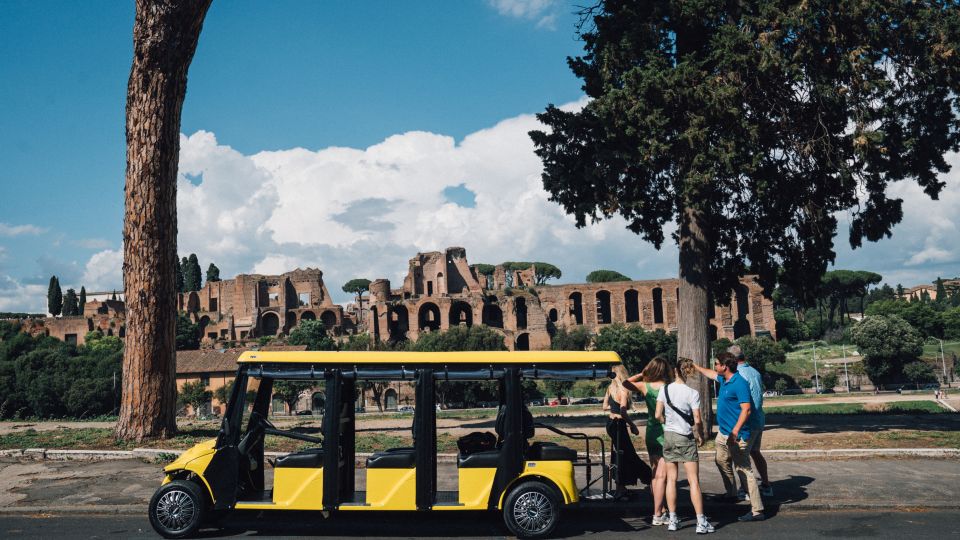
Your first big “wow” stop is a viewpoint of the Circus Maximus. You’re not going into a ticketed monument here; this is more about perspective. From the outside, you can see why this was a massive event space in ancient Rome and how it fits into the city’s overall plan.
The value of a photo stop plus guided explanation is that you don’t just snap a picture. You get a mental map: where the arena was, why it mattered, and how the surrounding area connected to daily Roman life. If you’ve only seen the Colosseum and Forum so far, this viewpoint is useful because it shows a different kind of Roman spectacle: not just gladiators, but crowds, chariots, and public entertainment on a scale that’s hard to imagine from street level.
A minor consideration: since it’s a viewpoint/photo stop, your time there is limited. If you crave long wandering or indoor exhibits, plan to pair this tour with another ticketed attraction later. Think of this stop as the “big picture” moment.
Baths of Caracalla: Ruins With Mass and Meaning
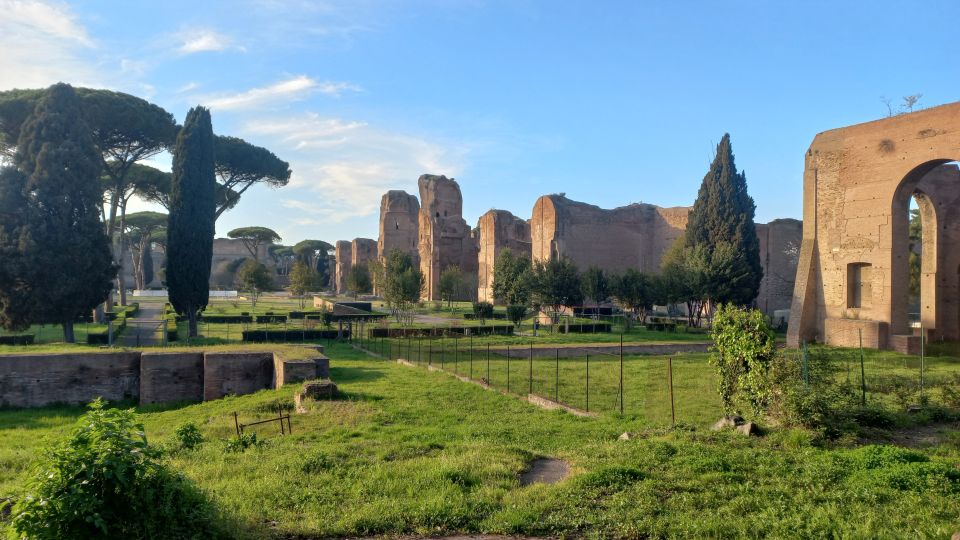
Next up is the Baths of Caracalla, again with a photo stop and guided commentary. Even at a distance, these ruins have weight. They’re built to impress, and what you can see today still gives you that sense of Roman engineering and ambition.
What makes this stop work on a cart tour is the timing. You’re fresh, you’re not overheating, and you’re getting the story right as you look at the remains. The guide can point out what’s left and connect it to how huge bath complexes functioned: social spaces, daily routines, and a status signal wrapped into one.
One drawback to note: because you’re seeing these as ruins from designated viewpoints, you won’t get the same close-up detail you might from a dedicated site visit with longer walking time. Still, the trade is smart. You’re getting context fast while conserving energy for the later walking portion at the catacombs.
Riding the Appian Way Stones: A Route That Feels Like History
When you reach the Appian Way section, you’re getting one of Rome’s best “sensory history” moments. The Appian Way mattered because it was built for movement: officials, soldiers, supplies, and power. On this tour, you’re not just driving past greenery and old walls. You’re hearing why this road became a symbol of Roman reach, and you get stops that help you recognize key pieces of what survived.
Expect scenery that’s calmer than central Rome. The road edges can look delightfully peaceful compared to the traffic you left behind, and that contrast is part of what makes the Appian Way so satisfying on a short itinerary. If you’ve come to Rome craving authenticity but you also know you’ll get tired fast, this is the sweet spot: you’re experiencing the setting without paying in sore calves.
You’ll also hear stories that make the road feel less like a postcard and more like infrastructure. Several guides were singled out in feedback for storytelling and for sharing details that make you see beyond the obvious stones-and-ruins view.
Tomb of Cecilia Metella: A Landmark That Tells You Where You Are

A stop at the Tomb of Cecilia Metella is brief but useful. It’s the kind of landmark that works like a visual marker: you look at it and immediately understand you’re on a major route with serious monuments built alongside it.
From a practical standpoint, this stop helps structure the ride. You’re moving through long stretches of Roman remnants, and a clear landmark breaks up the experience into “chapters.” It also adds variety, since not every stop is a wall foundation or a viewpoint over an arena.
If you’re a detail person, you’ll likely enjoy the guided explanation here because it sets up why tombs like this became part of the road’s identity. If you’re not, don’t worry. Even a quick photo stop lands because the structure is distinct and easy to recognize.




Roman Catacombs Underground: Cold Air, Narrow Lines, Real Stairs
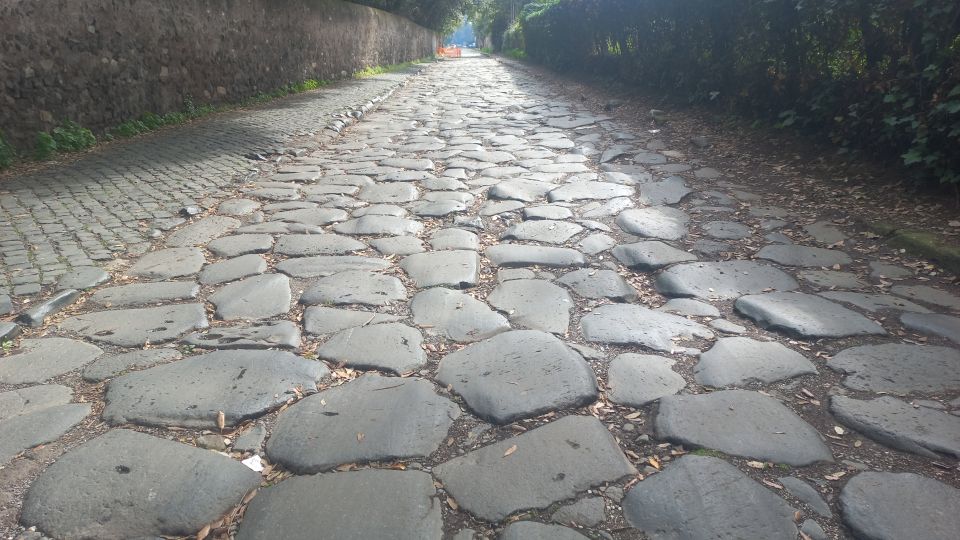
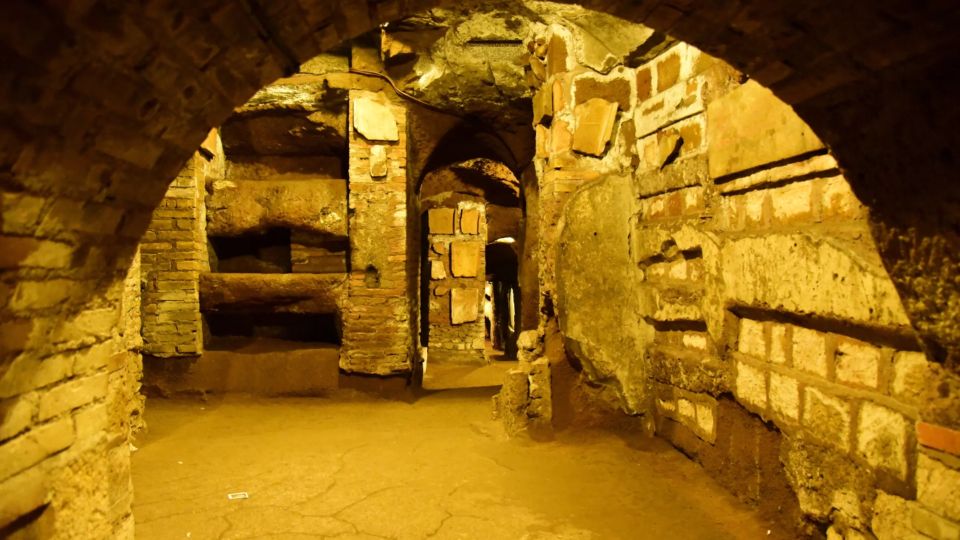
This is the tour’s signature moment for many people, and it comes with very specific physical realities. The tour includes entrance to the Roman Catacombs for a guided walking tour of about 35 minutes underground.
First, the temperature: plan for around 16°C / 61°F with high humidity. A light layer helps, even in summer. Second, the movement: the catacombs require walking on uneven ground and climbing down and up steep stairs. The passageways can be narrow, and some sections are described as single-file lines. If stairs and tight spaces are an issue for you, this is the one part you should evaluate most carefully.
Now, the guide piece: this underground segment is led by an official resident guide for the catacombs site. That’s a big part of why it feels authentic. You’re not hearing a generic script. You’re getting site-specific interpretation from someone tied to the place.
One helpful warning from real feedback: in a few cases, the catacombs guide’s English was reported as hard to follow or delivered quickly/quietly. Your best move is to use your earpieces properly and stand where you can see and hear. If you’re sensitive to unclear audio in tight rooms, bring patience and assume you may catch more through visual cues than through every single word.
Also note this small but meaningful detail: the catacombs site may vary depending on what’s available for scheduling, so you might not enter the exact same complex as the person next to you. The common theme stays the same: carefully managed underground Christian burial spaces with a real sense of fragile preservation.
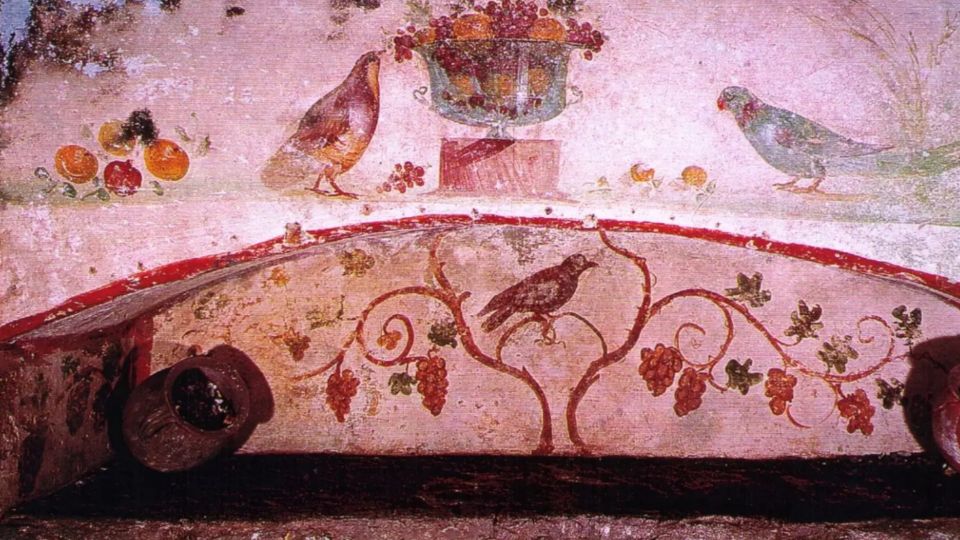
In the catacombs, lighting is designed for visitors, and the whole place can feel professionally presented while still being genuinely old and damp. People describe it as impressive and moving, and it’s the part that turns the day from “sightseeing” into “story you can feel in your body.”
Aurelian Walls and Pyramid of Cestius: The City’s Edges Close the Loop
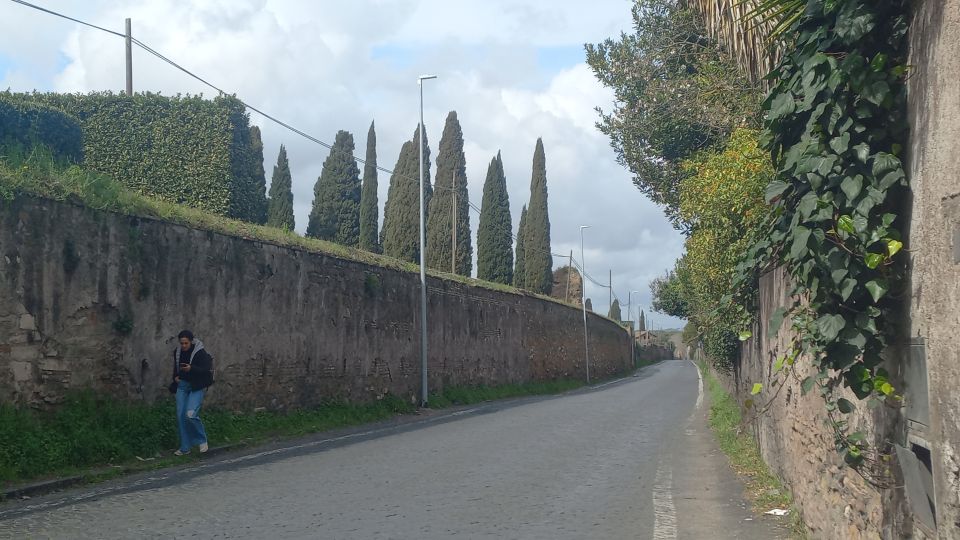
On the way back, you drive along the Aurelian Walls, the ancient Roman fortifications that once protected the city from invaders. This stop gives you a different angle on Rome: not just monuments inside the lines, but defense and boundaries.
Then there’s the Pyramid of Cestius, another distinctive feature that anchors your final stretch of the route. It’s easy to miss if you’re wandering alone, and on this tour it becomes a clean “last stop” payoff—another reminder that Rome kept building landmark-level funerary monuments and monumental scale right next to major routes.
These late stops help you connect the dots. By the time you reach them, you’ve seen the road, the public entertainment site viewpoint, the baths, and the underground world of burial. The fortifications and pyramid help close the loop: Rome isn’t just temples and arenas. It’s also infrastructure, walls, and the way people marked space and memory.
Who Should Book This Appian Way Golf Cart + Catacombs Tour

This tour is a strong fit if you want:
- a short, efficient way to see Rome’s big ancient sites without spending the whole day walking
- a guided catacombs visit that’s reserved and organized
- a calm break from central Rome by heading out to the Appian Way
It’s also a good option if you’re dealing with limited stamina. In feedback, people noted that the cart helped them access the Appian Way without relying on long walks, and that matters in a city where sidewalks and heat can be tough.
But it’s not a perfect fit if:
- you can’t handle steep stairs and uneven ground in the catacombs
- tight, narrow underground spaces are a problem
- you need a lot of time inside major sites (this is a “see and understand” format, not an all-day museum crawl)
Children aged 2 to 12 are welcome, but infants under 2 aren’t accepted due to safety rules. If you’re bringing kids, the cart portion can be a win, but keep the catacombs portion front of mind.
Price, Value, and Why This Works for a Short Rome Stay
There’s no getting around it: Rome tours cost money, and catacomb entries plus guided transportation stack up quickly. What makes this one feel fair is the mix of inclusions for a 2.5-hour format.
You get:
- an electric cart ride that covers ground without wiping you out
- guided interpretation at multiple major stops
- a guided underground catacombs entry (about 35 minutes underground) run by an official site guide
Value here comes from time and organization. If you’re only in Rome a short time, you may not want to spend hours figuring out transit and juggling separate tickets. This tour builds an itinerary that hits several “must-know” ancient elements outside the center, and it gives you enough catacombs time to matter without turning your day into a marathon.
Also, the high satisfaction score in recent feedback (4.9 average from hundreds of reviews) lines up with what the tour is designed to do: efficient routing, good group size, and guides who can keep the day lively.
Should You Book It or Skip It?
Book it if you want Rome with less stress: cart transport, clear stop-by-stop guidance, and a real underground catacombs experience with a dedicated site guide. It’s especially smart for first-timers and for people who want the Appian Way without committing to hours of walking.
Skip it (or consider another option) if the catacombs sound like your least favorite kind of challenge. The steep stairs, uneven ground, and cool humid air are not theoretical. They’re part of the deal.
FAQ
How long is the Appian Way golf cart tour with Roman Catacombs entry?
The tour lasts about 2.5 hours.
What catacombs experience is included?
The tour includes entrance to the Roman Catacombs for a guided walking tour underground of about 35 minutes.
Is hotel pickup included?
No, this tour starts and ends at the meeting office and does not include hotel pick-up.
How many people are on the tour?
There are 7 seats per vehicle, and tours run with up to 2 vehicles and 14 participants. Vehicles travel together, and you’ll use earpieces to hear the same guide.
Where is the meeting point?
You meet inside the office on Via Monterone, 19 (look for the glass doors). It’s on a section of an L-shaped road next to Via di Torre Argentina, near the Pantheon area.
What should I know about stairs and weather inside the catacombs?
The catacombs require walking on uneven ground and climbing down and up steep stairs. Inside is about 16°C / 61°F with high humidity.
Are there age limits, and can I cancel if plans change?
Infants under 2 years old are not accepted, and children from 2 to 12 are welcome. The tour offers free cancellation up to 24 hours in advance for a full refund.