REVIEW · ROME
Dark Heart of Rome: Facts, Legends, and Mystery Tour
Book on GetYourGuide →Operated by City Wonders Ltd. · Bookable on GetYourGuide
Rome at night has a darker beat. This walking tour turns the city’s center into a story-led stroll of legends and real landmarks.
I especially love the focus on places you don’t usually linger at on the big-ticket Rome routes, and I like how the ghostly tales connect to what you can actually see on the street. The main thing to consider: it’s a fast-moving, story-forward walk, so if you want lots of sober, date-by-date history, the tone may feel a bit theatrical.
At $14 for about 1.5 hours, it’s one of the easier “add-on” experiences that still feels different from the usual day sightseeing. You’ll cover a compact stretch in the historic core while the light softens and the crowds thin out, which makes the spooky mood easier to enjoy. If you’re sensitive to gruesome legends, keep your expectations on the lighter side of mystery rather than true crime.
In This Review
- Key takeaways before you go
- Why Rome feels different after dark
- Price and timing: the easy way to add atmosphere
- Where you meet and how the night starts
- Campo de’ Fiori after sunset: executions and legend
- Piazza Farnese: granite basins and a calmer mood
- Via Giulia: Renaissance planning you can actually walk
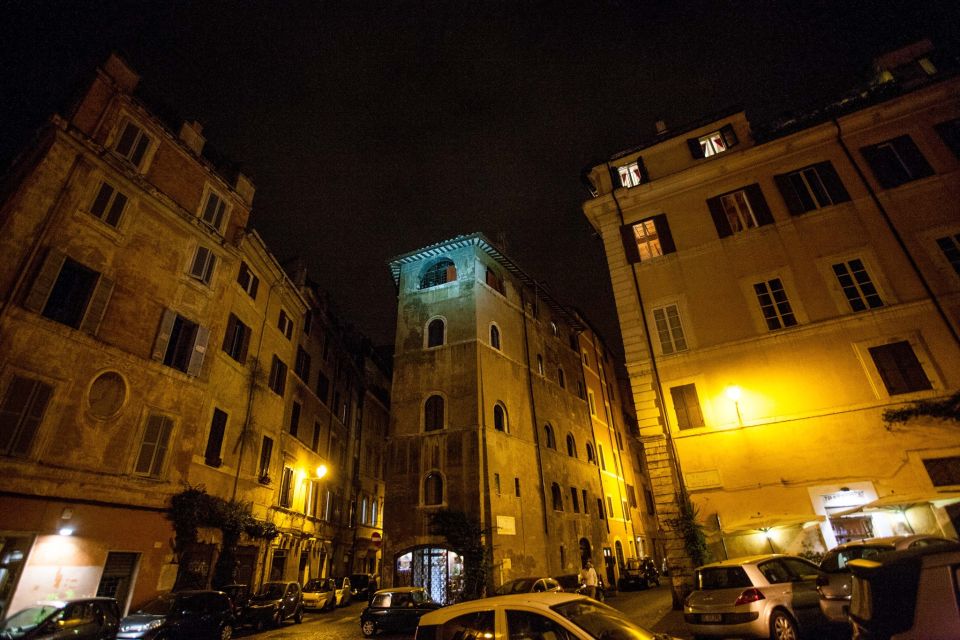
- Via del Governo Vecchio: a photo stop with street texture
- Castel Sant’Angelo: Hadrian’s Mausoleum in night light
- The guides: story craft matters
- Comfort and pacing: what to expect from the walk
- Value check: is $14 really worth it?
- Should you book the Dark Heart of Rome tour?
- FAQ
- How long is the Dark Heart of Rome tour?
- Where does the tour start and where does it end?
- How much does it cost?
- What’s included in the price?
- Is hotel pick-up or drop-off included?
- What language is the guide?
- Is the tour suitable for wheelchair users or people with mobility impairments?
- Are baby strollers allowed?
- What should I wear or bring?
- Can I cancel for a refund?
Key takeaways before you go
- Night-first storytelling: legends are built to match what’s around you after dark.
- Unusual stops: Campo de’ Fiori, Via Giulia, and a Hadrian stop that many standard tours skip.
- Small, efficient route: a 90-minute walk that fits well between bigger attractions.
- Guide-driven energy: named guides like Elizabeta, Elisabetta, Serena, Max, Rob, Pete, and Amanda are repeatedly linked to fun, theatrical delivery.
- Photo moments at key landmarks: Via del Governo Vecchio and Castel Sant’Angelo come with visual payoff.
Why Rome feels different after dark
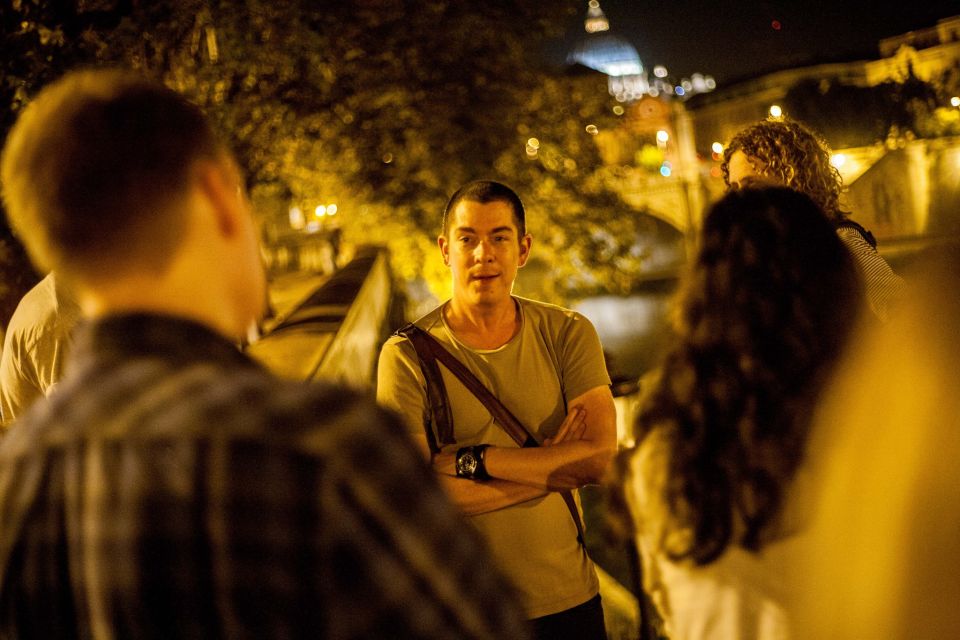
Rome changes its personality when the sun goes down. In daylight, you mainly see stone and scale. At night, you start seeing intent—shadows under arches, dark corners in narrow lanes, and the way streetlights make old buildings look new again.
That’s exactly what this Dark Heart of Rome tour leans into. You’re not just walking from one famous photo spot to the next. You’re moving through the historic center while a guide weaves legends and facts together, including the kind of macabre stories that match the city’s past more than its marketing.
The result is a night tour that feels more like a guided wandering session than a checklist. It’s also a smart way to stretch your Rome time: if you already know you’ll hit the Colosseum and Vatican areas, this gives you another slice of the city’s identity without needing another whole day.
You can also read our reviews of more tours and experiences in Rome.
Price and timing: the easy way to add atmosphere
$14 per person is the big hook here, and for good reason. You get a 1.5-hour night walk that focuses on a compact set of stops, which means you don’t spend most of your time traveling between neighborhoods.
That short duration matters in Rome, where even “close” places can involve lots of walking. Here, you’re guided through a route that stays in the historic core, so you can pair it with dinner plans without feeling like you’ll be trapped on tour for hours.
One small drawback to plan around: this is a walking tour with story pacing, not a sit-down lecture. If you’re the kind of visitor who likes to stop and read every plaque, you may feel rushed at times.
Where you meet and how the night starts
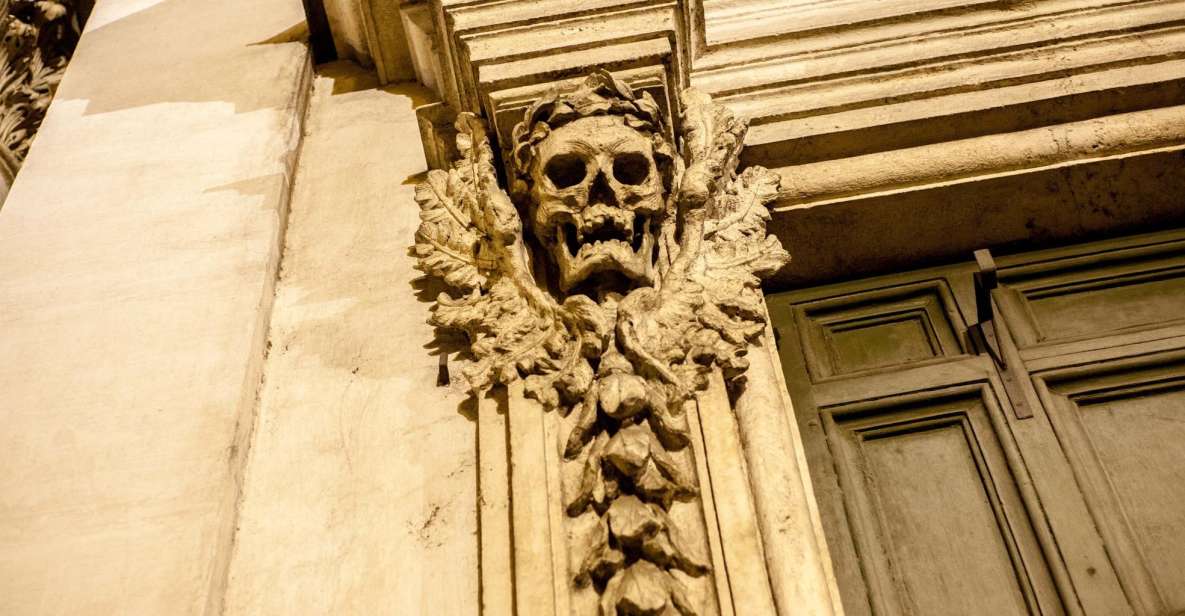
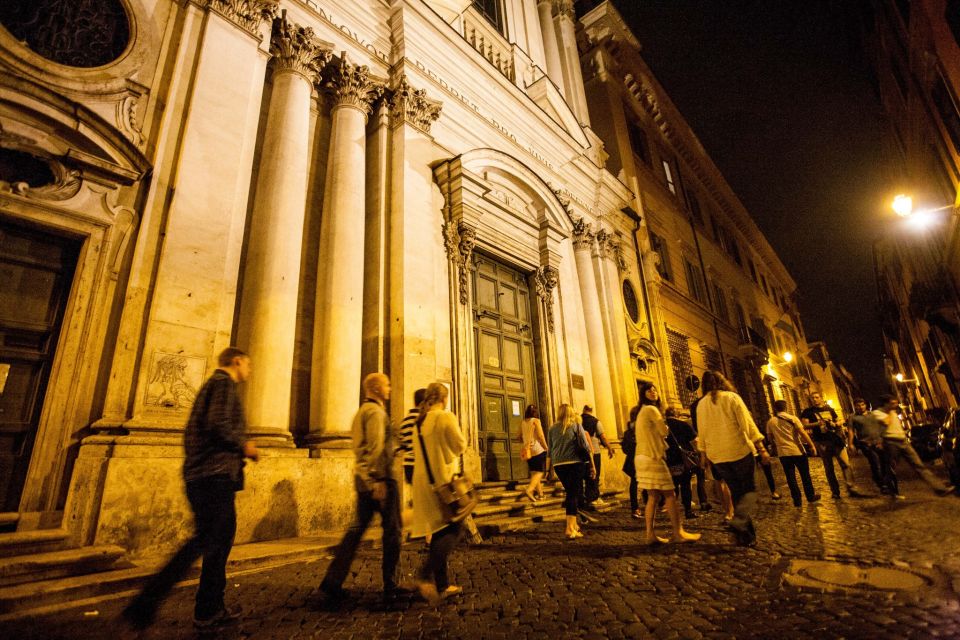
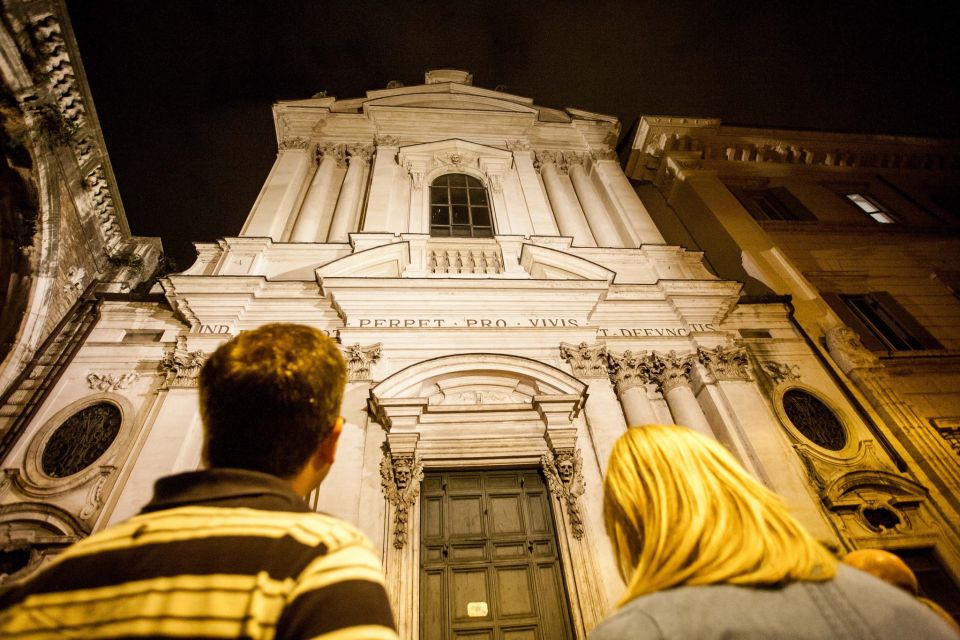
The meeting point is on the steps of San Andrea della Valle Church, on Corso Vittorio Emanuele II. It’s about 150 meters from Largo di Torre Argentina, on the left-hand side if you’re heading toward the Tiber River. Your guide will be wearing blue.
To make this simple on yourself, show up a few minutes early and do a quick orientation scan: identify the church steps and the street direction. Once the group forms, the tour flows into the historic center on foot.
There’s no hotel pick-up or drop-off, so you’ll want to be able to reach the meeting point under your own steam. The upside is you keep your evening flexible—no waiting in a van, no time wasted.
Campo de’ Fiori after sunset: executions and legend
Your route takes you into Campo de’ Fiori, the kind of square that feels like it should only exist in old films. In this part of the city, the stories aren’t abstract. They’re tied to how this place functioned.
Campo de’ Fiori is connected to public executions in Rome’s past, and that historical note gives the rest of the night’s atmosphere extra weight. When your guide layers legend over those details, you start to understand why the square has such a reputation. It isn’t just a “spooky” setting—it’s a real stage where intense events once played out.
What I like about starting here is the contrast. The square looks open and street-level friendly, but at night it can feel exposed—almost like there’s nowhere for the shadows to hide. That’s a great entry point for a tour themed around Rome’s darker side.
Practical tip: bring your best walking shoes. The streets around the square can be uneven, and you’ll want sure footing when you’re listening closely and not watching every step.
Piazza Farnese: granite basins and a calmer mood
From Campo de’ Fiori, the tour moves toward Piazza Farnese, one of those Roman squares that feels both grand and grounded. The centerpiece here is the famous fountain presence—described as granite stone basins—plus the overall feel of the space.
This is where the tour’s tone can shift slightly. After the heavier square atmosphere, Piazza Farnese offers a more composed pause. It still belongs to the same storyline, but your eyes get a breather before the next “wait, what is that?” moment.
Even if you’ve seen Piazza Farnese in daylight, seeing it with evening lighting changes the reading of the scene. Lines sharpen, statues and facades show depth, and the square becomes less like a daytime thoroughfare and more like a stage set.

Via Giulia: Renaissance planning you can actually walk
Next comes Via Giulia, highlighted as one of the first planning projects of Renaissance Rome. That phrasing is important because it reframes what you’re seeing.
You’re not only looking at a street. You’re experiencing a planned urban idea from centuries ago—an intentional layout rather than random sprawl. When you walk it with a guide’s commentary, the street starts to feel like a designed corridor for power, culture, and movement.
This is one of the reasons I like this tour for first-timers who have already “ticked off” the usual ancient sites. You get a chance to understand Rome as a city that kept redesigning itself. It’s not only ruins; it’s planning, architecture, and the way eras laid down their templates.
Also, Via Giulia is a great segment for pacing. It’s long enough for a stroll, calm enough for listening, and visually interesting even when you aren’t fixating on legends.
Via del Governo Vecchio: a photo stop with street texture
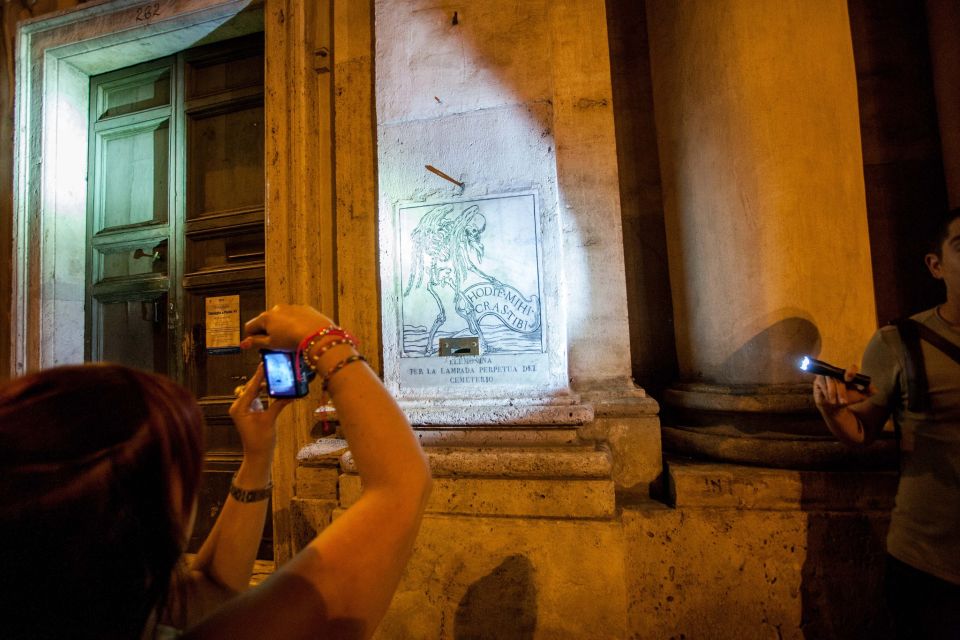
The tour includes Via del Governo Vecchio, and you’ll get a photo stop here. This is the kind of narrow Roman lane that makes you look up without needing to be told to look up.
The value of this segment isn’t just the picture. It’s the texture of the street life—surroundings that help the guide’s stories land. When you’re hearing mysteries, the setting matters. This lane supports that tone.
A helpful mindset: use the photo stop as a chance to do your own mini observation. Look at doors, corners, and the way the street channels light. Even if you’re listening the whole time, a quick self-check helps you remember details later.
Castel Sant’Angelo: Hadrian’s Mausoleum in night light
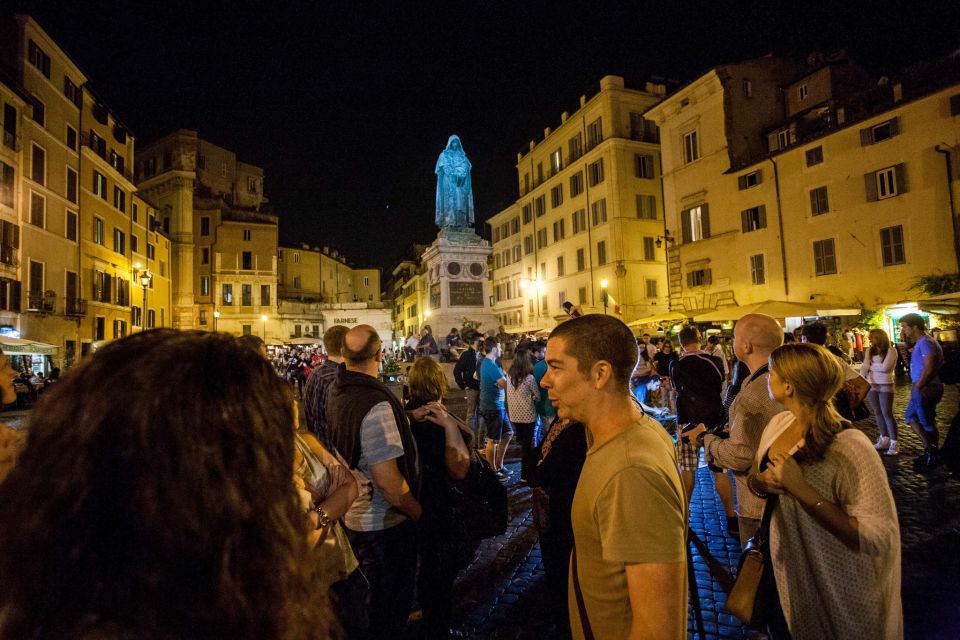
The big finale is Castel Sant’Angelo, including a photo stop and guided tour segment. This site is the Mausoleum of Hadrian, and at night it hits different than the usual daytime postcard route.
In daylight, you often notice the scale and the famous silhouette. At night, you notice mood: the way the structure looks solid and armored, the way the lights pick out edges, and the way the surrounding area feels both public and hidden at once.
Since the tour is themed around mysteries, this is a perfect ending point. A mausoleum already suggests permanence and secrecy. Add the evening lighting and your guide’s storytelling, and the place becomes an anchor for the night’s whole theme.
Even if you’re not a “gothic” person, this stop works because you’re seeing a real, historically loaded structure. You’re not chasing fantasy—you’re standing in front of a landmark that naturally invites questions.
The guides: story craft matters
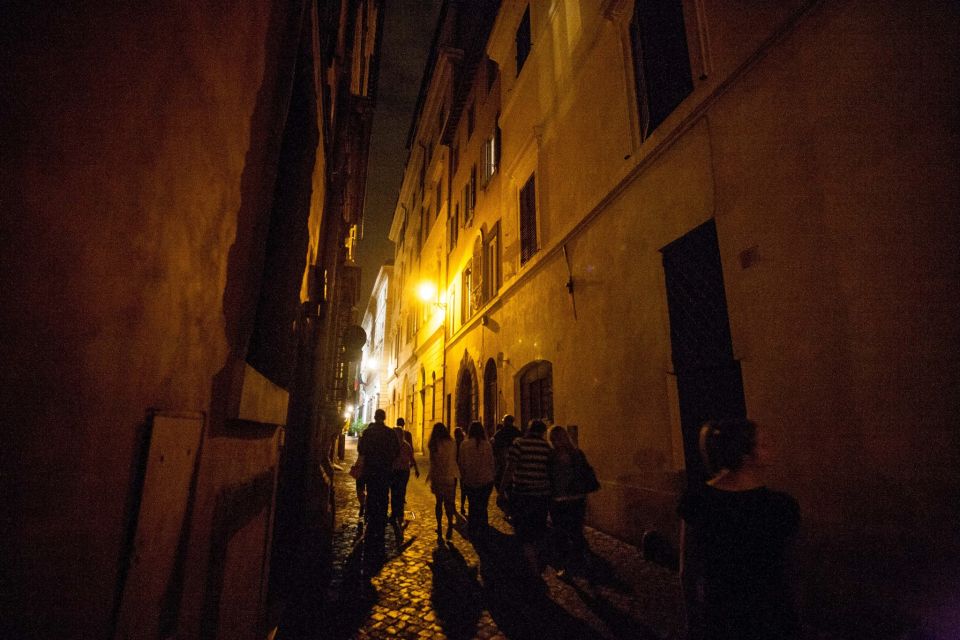
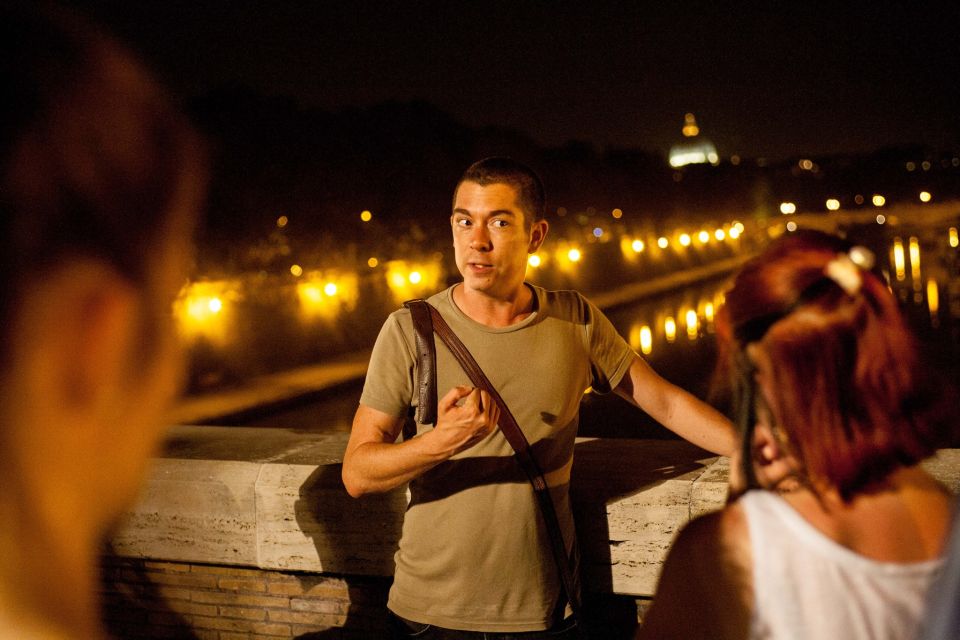
The tour lives or dies by its guide, and the names that come up are a clue to what kind of performance you’re likely to get. People associate this experience with guides such as Elizabeta, Elisabetta, Serena, Alithia, Max, Rob, Pete, and Amanda—often praised for clear English and strong storytelling energy.
Here’s what to look for when you arrive: a guide who can keep the group together while still telling a story smoothly, and who can adapt if someone asks a question mid-walk. The best part of this tour is that the legends aren’t dumped on you like a script. They’re timed to the street scene.
One caution from the broader feedback pattern: a few people note that the pace can feel quick, and some delivery can feel rehearsed. That doesn’t mean it’s bad—it means you should choose this tour for mood and narrative, not for deep document-level history.
Comfort and pacing: what to expect from the walk
This is a walking tour, so your body sets the limits. Wear comfortable shoes. If you’re traveling with kids or teens, many families do fine on this kind of 90-minute night activity, but keep an eye on stamina because the route is continuous.
Also note the practical rules:
- Baby strollers are not allowed
- Wheelchairs and guests with mobility impairments can’t be accommodated
If mobility is a concern, plan on skipping this one and choosing a more accessible Rome experience instead. The nighttime timing doesn’t help if navigating uneven streets is already hard for you.
Finally, bring a realistic expectation of the pace. You’ll be listening while walking, and there will be moments where you’re meant to glance and move, not linger for long.
Value check: is $14 really worth it?
For $14, you’re paying for three things: a guide, night atmosphere, and a curated route that keeps you out of the most predictable lanes.
You’re not getting hotel pickup, which means you’re responsible for getting to the meeting point. But in return, you control your evening. You’re also getting an English-speaking guide included in the price, which is a key value point for visitors who want storytelling without language friction.
Most tours at this price either feel too short or too generic. This one has enough structure to feel coherent: squares, a planned Renaissance street, a photo lane, and finally Castel Sant’Angelo.
The clearest “worth it” sign is your interest in the theme. If you enjoy legends with grounded historical anchors, this tour is a bargain. If you want only strictly verified history, you might feel the story emphasis takes over.
Should you book the Dark Heart of Rome tour?
Book it if you want a night walk with atmosphere, you’re comfortable with the idea of legends stitched to real places, and you like guides who can tell stories in a way that makes streets feel alive. It’s especially good for:
- first-timers who want something different from the day crowds
- visitors who enjoy spooky mood but still want real landmarks
- adults and teens who’ll handle walking for about 90 minutes at night
Skip it if you need wheelchair access, you rely on strollers, or you prefer slow, museum-style history. This is about pacing, mood, and guided narrative—not long stops for reading and research.
FAQ
How long is the Dark Heart of Rome tour?
It lasts about 1.5 hours.
Where does the tour start and where does it end?
It starts at the steps of San Andrea della Valle Church (Corso Vittorio Emanuele II) and finishes at Lungotevere Castello, 50, 00186 Roma RM, Italy.
How much does it cost?
The price is listed as $14 per person.
What’s included in the price?
An English-speaking guided tour is included.
Is hotel pick-up or drop-off included?
No, hotel pick-up or drop-off is not included.
What language is the guide?
The guide provides the tour in English.
Is the tour suitable for wheelchair users or people with mobility impairments?
No. The tour isn’t able to accommodate wheelchair users or guests with mobility impairments.
Are baby strollers allowed?
No, baby strollers are not allowed.
What should I wear or bring?
Wear comfortable shoes.
Can I cancel for a refund?
Free cancellation is available up to 24 hours in advance for a full refund.