REVIEW · DOMUS AUREA TOURS
Rome: Domus Aurea Tour with Virtual Reality Experience
Book on GetYourGuide →Operated by Open Mind Tours · Bookable on GetYourGuide
Nero hid in plain sight. The Domus Aurea tour pairs a guided walk through 30 frescoed halls with a 3D virtual reconstruction, so you can actually picture how Nero’s palace worked in real time. It’s not just about pretty paintings; it’s about power, propaganda, and the way this site still feels alive under Rome’s streets.
I also love the way the story is guided, not guessed. With English narrators such as Linda, Yev, Rosario, and Alexei, you get clear context on Nero’s personality, his tastes, and why the most famous legend about the fire of 64 AD is missing the mark. One possible drawback: the pre-visit introduction and the sound in some interior spaces can be a bit hard to manage if your group is spread out.
In This Review
- Key highlights to look for
- Nero’s World in 3D: What This Tour Is Really Like
- Getting There and Finding the Right Meeting Point
- East Wing First: Frescoes, Vaults, and the Feel of Lost Space
- The Newly Reopened West Wing: When the Palace Feels Bigger
- Busting the Fire of 64 AD: Nero’s Reputation vs. the Evidence
- Where the Tour Peaks: The VR Golden Palace Reconstruction
- Nero’s End, Rome’s Shift, and Why the Domus Vanished
- How This Compares to Other Big Rome Sites
- Timing, Comfort, and Who This Tour Suits Best
- Value: Why This Experience Feels Worth It
- Should You Book This Domus Aurea + VR Tour?
- FAQ
- How long is the Domus Aurea tour with VR?
- Is there a VR component?
- What language is the tour guide?
- Where do I meet the guide?
- Do I need the GetYourGuide voucher as my entry ticket?
- What should I bring?
- What is not allowed during the tour?
- Is this tour suitable for wheelchair users?
- Can I cancel for a refund?
Key highlights to look for
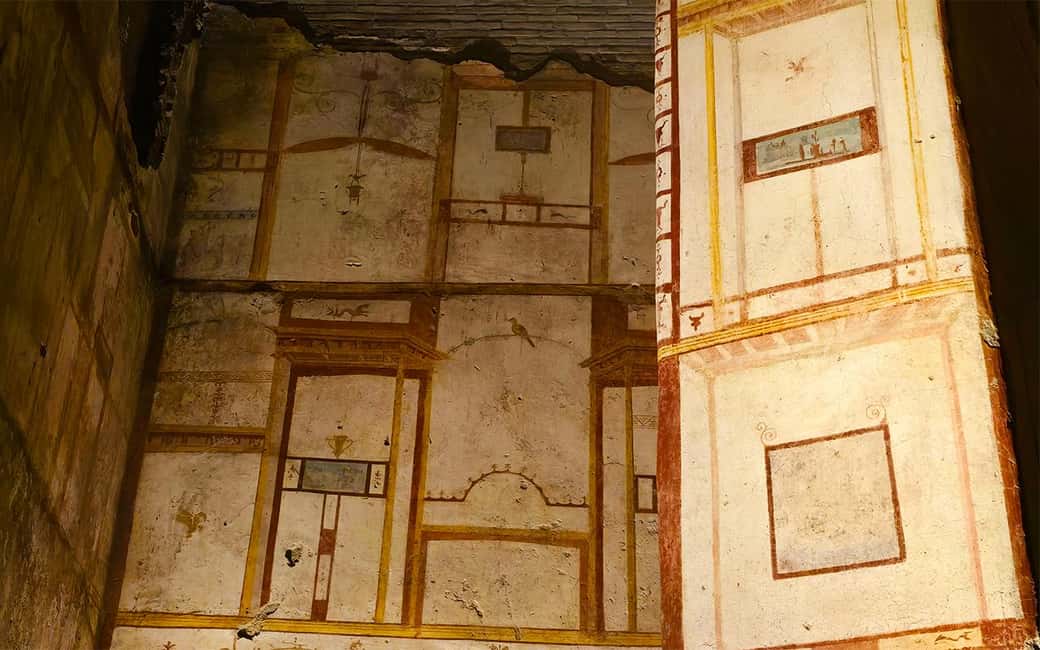
- Reopened west wing: see newly available rooms alongside the east side of the complex
- 30 frescoed spaces: halls and corridors that show how Roman art flowed across walls and ceilings
- Myths corrected about the fire of 64 AD: Nero’s role gets explained with sharp, specific detail
- The VR Golden Palace peak: a seated 3D reconstruction of Nero’s lavish halls and outdoor portico
- One of Rome’s largest active archaeological sites: the scale hits you fast once you’re inside
- Nero’s rise, fall, and afterlife: from suicide to Vespasian’s Colosseum and Trajan’s baths above it
Nero’s World in 3D: What This Tour Is Really Like
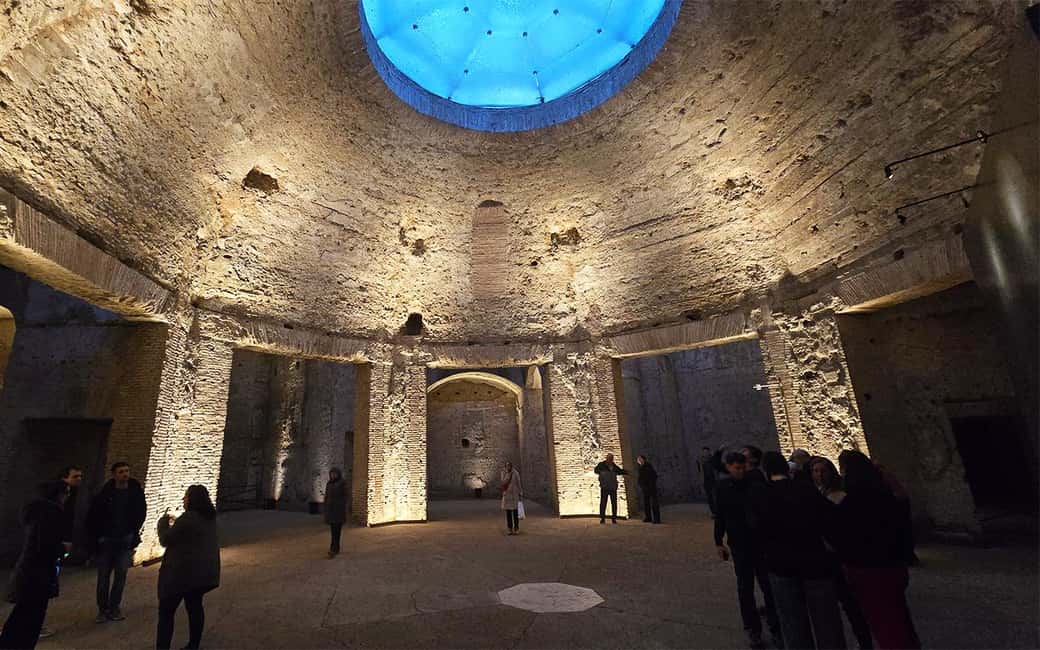
This tour of the Domus Aurea is built around a simple problem: the palace is hard to understand if you only look at ruins. The walls exist, the shapes remain, and the ceiling space is there—but the full experience of walking through Nero’s world is mostly gone.
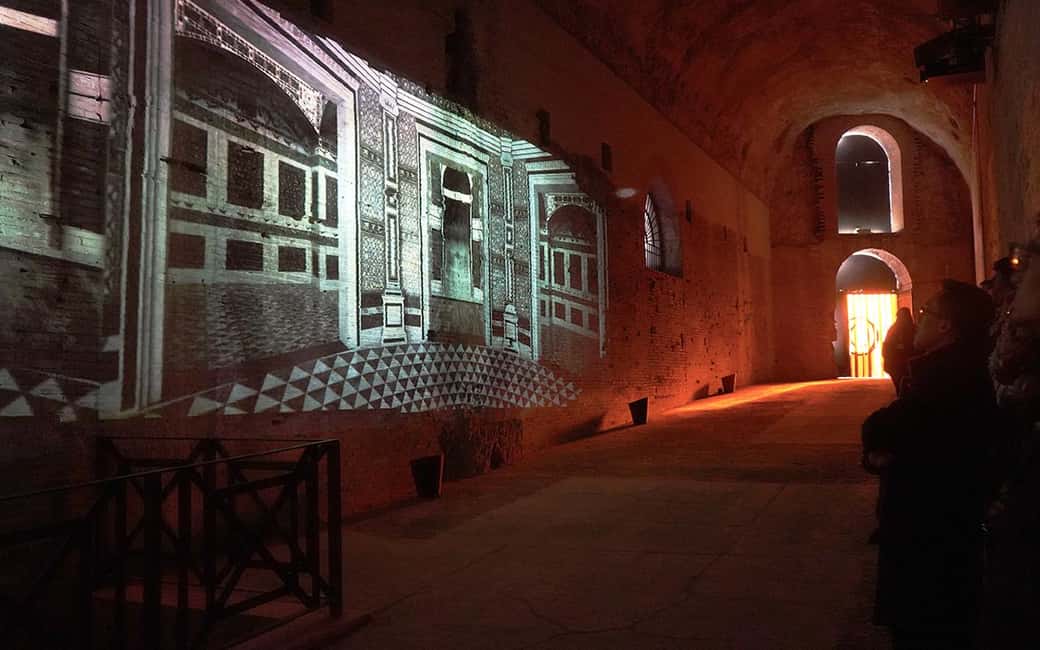
That’s where the 3D VR component earns its place. During the visit, you use a reconstruction to see the halls and an outside lavish portico closer to what they may have looked like at their peak. It’s the difference between seeing fragments and grasping scale. And once you’ve got that mental picture, the frescoed rooms stop feeling random.
Even the guide framing helps. You’re not only walking through rooms; you’re walking through a timeline: Nero’s taste and intellect, Rome’s panic after the fire, the rebuilding politics, and what happened when the Golden House was buried and forgotten. The tour is designed so the artwork and architecture make sense in the story, not just as decoration.
You can also read our reviews of more tours and experiences in Rome.
Getting There and Finding the Right Meeting Point
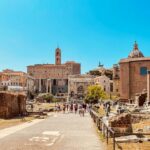
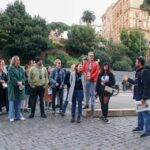
Start at the Domus Aurea itself. Your voucher is not the entry ticket, and that matters because it can affect where you wait. You’re meant to meet the guide outside with an OPEN MIND TOURS sign.
One practical tip: plan extra time for the handoff between the outside introduction and the actual entry. The Domus entrance is scheduled for at least 20 minutes after the guide presentation time. That means you shouldn’t assume you’ll walk in instantly right after the talk ends.
It’s also worth noting the tour has rules designed to protect the fragile environment. No luggage or large bags, no drones, no weapons or sharp objects, and no selfie sticks. Professional cameras, tripods, and selfie sticks are out too. If you’re a photo planner, keep your kit simple—comfortable shoes and a jacket matter more than gear.
East Wing First: Frescoes, Vaults, and the Feel of Lost Space
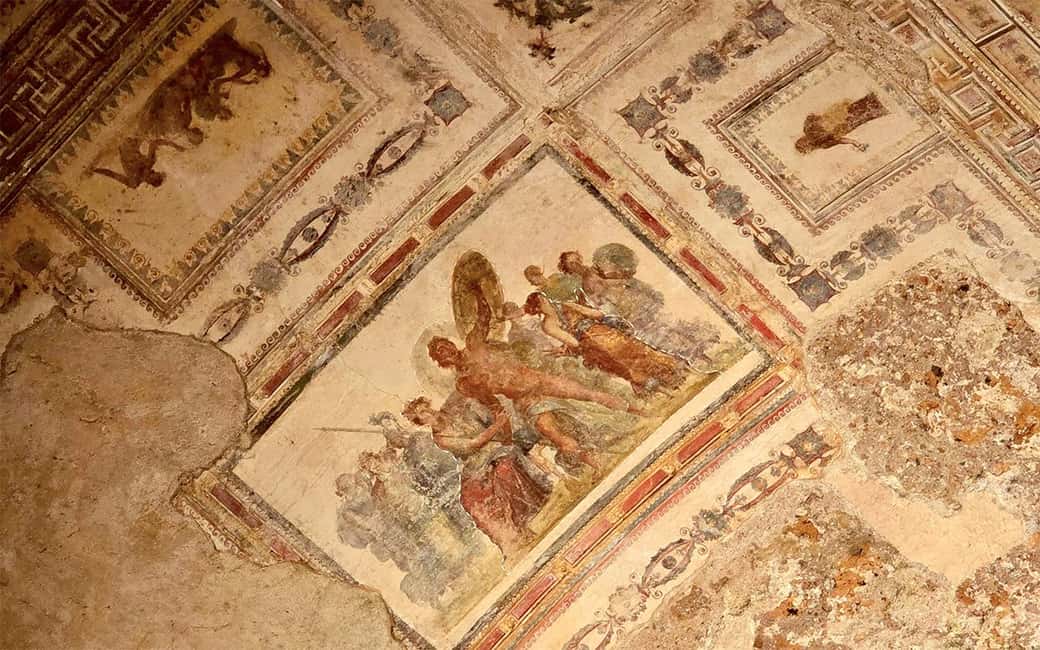
The visit is structured around the east wing and the recently reopened west wing, but the tour starts by orienting you in the east. This is where the guide’s explanations do real work, because the Domus Aurea isn’t laid out like a museum with obvious “look here” signage.
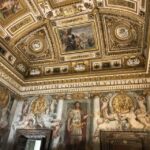
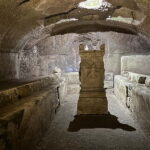
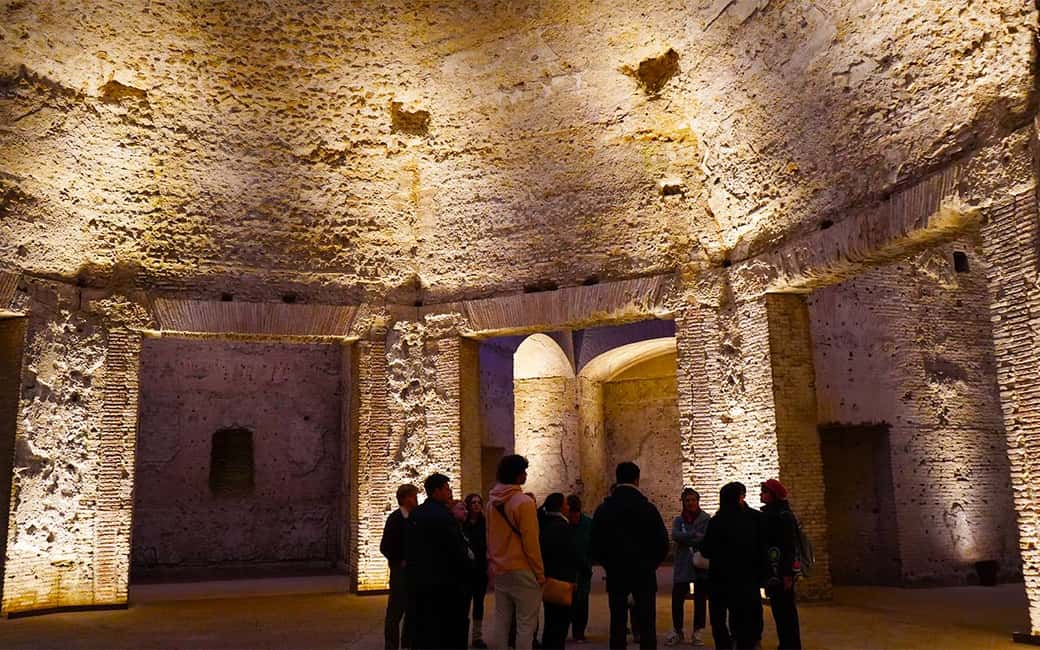
Expect to move through vaulted halls and hallways where you can see why the Domus still stuns people who know Roman architecture. The ceilings and wall surfaces are preserved well enough to show the techniques, even if the full palace isn’t intact.
A key theme you’ll hear is how the frescoes and decorative elements relate to light. The description focuses on the way porticoes, fountains, and gardens helped create a kind of atmospheric illumination. In other words, you’re not just looking at painted scenes—you’re seeing how Nero’s architects tried to shape the whole experience.
One room-related detail to watch for: you’ll reach up to the Octagonal Room during the tour. It’s described as a standout moment and there’s even a possibility of a rotating ceiling in the reconstruction story. Even if you only catch the gist, that kind of feature helps you understand Nero’s obsession with spectacle.
The Newly Reopened West Wing: When the Palace Feels Bigger
The west wing is a major selling point for repeat visitors and first-timers alike. If you’re visiting Rome and you’ve already done other ruins, you might assume the Domus Aurea is small. It isn’t. The complex is enormous, and the reopened areas help you feel the scale of the Golden House.
As you move through these spaces, focus on the transitions: alleys, corridors, and connected rooms rather than isolated “must-see” panels. The guide’s job is to connect the design to meaning—Nero’s taste, the political climate, and why the palace had to feel different from normal imperial architecture.
This part is especially good if you like details. There’s a strong emphasis on restoration and on seeing frescoes that are properly conserved rather than guessed at through imagination. You’ll also get a sense of how the palace “breathes” across rooms, with that sense of flowing movement that makes you want to keep walking to see what’s next.
Busting the Fire of 64 AD: Nero’s Reputation vs. the Evidence
One of the most interesting parts of the tour is how it handles Nero’s reputation. The story includes a direct correction of one famous claim: Nero is presented as not the mastermind behind the fire of July 64 AD. Your guide ties this to where Nero actually was—at a seaside villa outside Rome—so the myth loses its power.
This part matters because the Domus Aurea itself sits inside the politics of aftermath. After the fire destroyed a huge portion of the city and caused thousands of deaths, Nero’s actions are framed in a way that complicates the usual villain-only story.
Instead of only hearing blame, you’ll hear about Nero’s immediate response:
- opening his gardens to shelter people made homeless
- distributing essential goods
- lowering the price of grain
- introducing urban planning ideas meant to reduce similar disasters
At the same time, the narrative doesn’t pretend history is simple. Nero is also criticized for delays in rescue efforts and for insufficient funding for reconstruction. That balance is what keeps the tour from turning into propaganda-by-way-of-ruins.
If you like stories where architecture and politics connect, this segment is one of the most rewarding.

Where the Tour Peaks: The VR Golden Palace Reconstruction
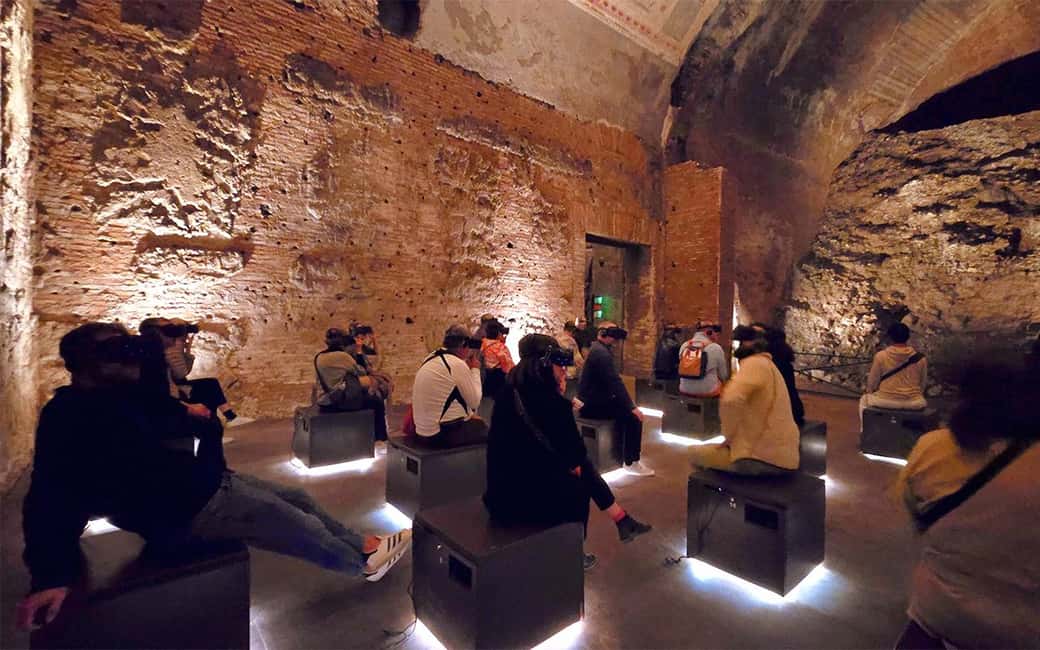
The peak moment is the 3D virtual reality reconstruction. It happens during a seated part of the tour, which is helpful for comfort on a hot day and for clarity as you watch the rebuilt spaces.
Here’s your practical “do this to get more out of it” tip: during the VR sequence, look around. The tour guidance explicitly suggests moving your head and taking in the directions, not just staring forward. That’s how you’ll absorb the proportions of corridors and halls.
The reconstruction focuses on the palace at its peak—especially the halls and the outside lavish portico, which is described as not yet completed when Nero took his own life. That unfinished detail is a smart narrative move: it tells you the palace wasn’t static; it was in progress, shaped by Nero’s decisions up to the end.
When the VR ends, you’ll likely feel a different kind of appreciation inside the physical rooms. The faded or fragmented spaces start to snap into a coherent plan. That’s the point of the VR: it doesn’t replace the ruins. It teaches you how to read them.
Nero’s End, Rome’s Shift, and Why the Domus Vanished
Once you understand the palace, the tour naturally moves into the consequences of Nero’s reign. The story reaches his dramatic end in June 68 AD, when popularity collapses and he is driven to suicide.
Then comes the political replacement of the Golden House:
- Vespasian is described as deciding to build the Colosseum where Nero’s lake once was
- Trajan later buries the Nero-era palace with an immense bath complex built above it
- the Domus Aurea then falls into oblivion for nearly 1,500 years, before Renaissance artists rediscover it in the 1500s
For me, the most useful part of this section is the lesson about how rulers manage public memory. Rome didn’t just bury Nero’s palace; it repurposed the space into public works that made political sense for the next era. The result is that you’re not only touring a site—you’re touring a decision-making record.
And once you hear how Renaissance rediscovery sparked the European cultural re-reading of Ancient Rome, the frescoed halls feel more than ancient art. They feel like proof that Rome keeps rewriting itself.
How This Compares to Other Big Rome Sites
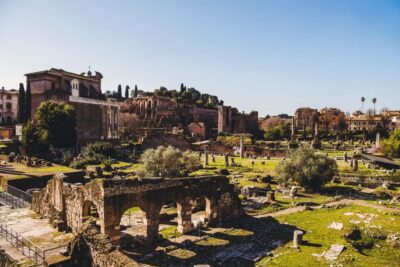
If you’re visiting Rome with a “ruins checklist,” the Domus Aurea tour is different from most of the classics. The Colosseum is all energy and crowds. The Forum is all visible history layers. The Domus Aurea is about hidden scale and damaged beauty.
This makes it a smart pairing with your other stops. For example, if you’re in Rome after seeing Pompeii, this experience can sharpen your Roman art and archaeology sense fast—because the Domus is about interior decoration, architectural design, and elite lifestyle, not just streets and buildings.
It’s also a relief if you want something less crowded than some of the headline sites. The guide approach and the way the VR pauses the experience can feel calmer than long outdoor walks, especially in summer.
Timing, Comfort, and Who This Tour Suits Best
Duration is listed as 2 hours total, with the guided portion lasting 105 minutes. That’s a good length for balancing “I want real history” with “I don’t want to be in line all day.”
Wear comfortable shoes. The site rules also suggest you bring a jacket, which makes sense because interior archaeological spaces can feel cooler than Rome’s street heat. If it’s summer, that jacket becomes a small comfort upgrade.
This is also not the best choice if you need accessibility support. It’s noted as not suitable for people with mobility impairments or wheelchair users. If that’s you, it’s worth looking at other Rome tours that can accommodate your needs better.
This tour is ideal if you:
- care about Roman art and architecture, not only battles and emperors
- want the Nero story with a more evidence-based framing
- like a guide-led experience where the ruins get explained, not just displayed
- enjoy VR when it’s used as a learning tool, not a gimmick
Value: Why This Experience Feels Worth It
Even without discussing a specific price, the value is pretty clear from how the tour is built.
You get:
- a skip-the-line approach using a separate entrance
- guided context that turns the rooms into a readable story
- access to both east wing and reopened west wing
- a VR reconstruction that makes architectural scale understandable
If you only walked through the Domus on your own, you’d likely understand the importance. But you might miss the connections between Nero’s personal tastes, the art choices, and the political reactions to the fire and rebuilding.
Guides mentioned as strong examples include Linda, Yev, Rosario, Alexei, and Laura. The consistent theme is that good explanations make a complex space feel manageable. When the guide can keep the pace and language clear, the whole experience clicks.
Should You Book This Domus Aurea + VR Tour?
Yes, if you want a guided, story-driven visit to one of Rome’s most confusing-but-fascinating sites—and you like the idea of using VR to understand what you’re actually seeing.
I would skip it (or at least think twice) if:
- you need wheelchair or mobility-friendly access
- you hate any seated technology moment and prefer pure walking-only tours
- you get frustrated by meeting points that require a quick, sign-based handoff
If you’re somewhere in the middle, book it with your eyes open: this is history plus interpretation, and the VR segment is the “make it all click” moment. For most people, that tradeoff is exactly right.
FAQ
How long is the Domus Aurea tour with VR?
The total experience is listed at 2 hours, with the guided tour portion taking 105 minutes.
Is there a VR component?
Yes. There is a 3D virtual reality reconstruction of the Domus Aurea halls, including an outside lavish portico, and it occurs during a seated part of the tour.
What language is the tour guide?
The live tour guide is offered in English.
Where do I meet the guide?
You should wait outside the Domus Aurea for the guide with an OPEN MIND TOURS sign. Entrance into the Domus is at least 20 minutes after the scheduled guide presentation.
Do I need the GetYourGuide voucher as my entry ticket?
No. Your voucher is not the entry ticket. The guide has the tickets.
What should I bring?
Bring comfortable shoes and a jacket.
What is not allowed during the tour?
Not allowed items include weapons or sharp objects, luggage or large bags, drones, pets (assistance dogs allowed), selfie sticks, professional cameras, tripods, sprays or aerosols.
Is this tour suitable for wheelchair users?
No. It is listed as not suitable for people with mobility impairments and wheelchair users.
Can I cancel for a refund?
Free cancellation is offered up to 3 days in advance for a full refund.