REVIEW · CATACOMBS & CRYPTS TOURS
Rome: Crypts, Catacombs and Skeletons Underground Tour
Book on GetYourGuide →Operated by TICKETSTATION SRL · Bookable on GetYourGuide
Rome has bones and water underground. This 3-hour tour hits three underground stops that make Roman life feel real, starting with the Capuchin Friars crypt of roughly 4,000 skeletons and continuing with the Acqua Vergine aqueduct system tied to the Trevi Fountain. I also like that you do not just look down at artifacts; you get a local guide to explain what you are seeing as you move through the layers of time. One thing to consider: this is an underground experience and it is not suitable if you get claustrophobic.
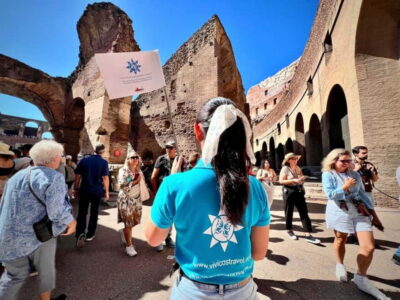
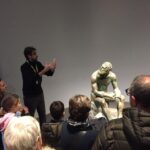
You meet at the Fontana del Tritone, where the staff wears a red and white hat, then the tour keeps you moving between sites and underground passages. I like that the guide is English, and you also receive an English audio guide, so you can follow even when the spaces get a little chaotic.
In This Review
- Key Highlights You’ll Notice Right Away
- How This 3-Hour Underground Route Really Flows
- Capuchin Friars Crypt: Skeleton Math and the Reality of 4,000 Bodies
- The Acqua Vergine Aqueduct Under a Commercial Area
- A 10th-Century Church Over 1st-Century B.C. Temple Remains
- The Exorcism Crypt: 12th-Century Rituals and Bone Fragments
- Ancient Prisons and the Saint Nicola Legend
- Price and What You’re Really Getting for $147.27
- What to Bring, Wear, and Expect About Photos
- Who Should Book This Underground Rome Tour
- Should You Book This Underground Rome Tour?
- FAQ
- How long is the Rome Crypts, Catacombs and Skeletons Underground Tour?
- Where is the meeting point?
- Is there a live guide and what language is it in?
- Is an audio guide included?
- Are admission fees included?
- Where does the tour end?
- Is photography allowed?
- Can I cancel and get a refund?
Key Highlights You’ll Notice Right Away
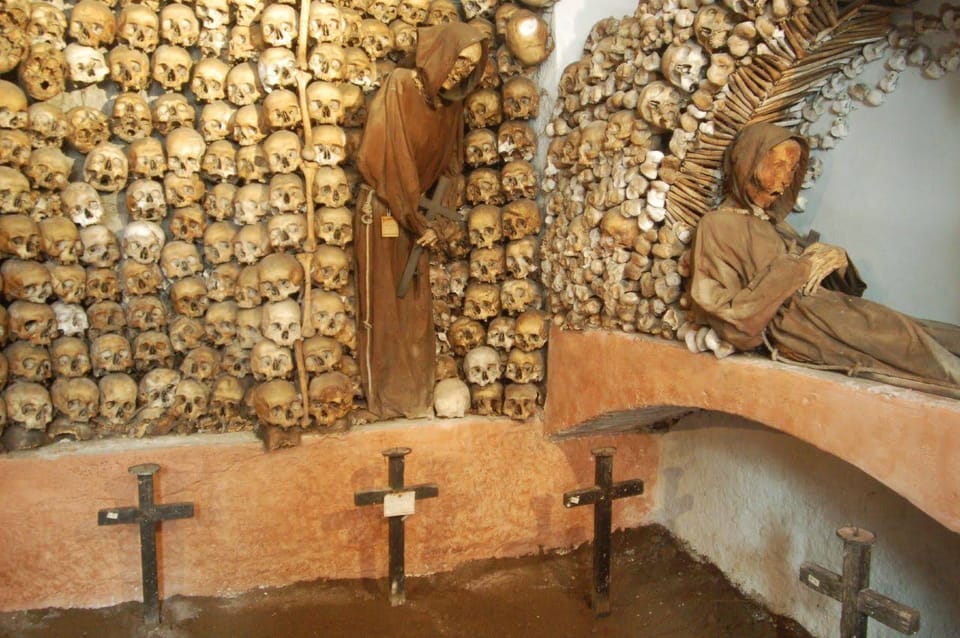
- 4,000 Capuchin friars arranged in a crypt you will remember longer than you expect
- Acqua Vergine aqueduct views tied directly to the water system that feeds Trevi Fountain today
- Underground access under modern Rome, including a section of aqueducts located beneath a commercial area
- A 10th-century church built over older temple remains from the 1st century B.C.
- A crypt used for exorcisms in the 12th century, with ancient bone fragments scattered below
- Ancient prison spaces connected to the legend of Saint Nicola
How This 3-Hour Underground Route Really Flows
This tour is built around three underground stops, with short travel time between them, so you are not stuck waiting around. You spend about three hours moving from cemetery to water system to church crypts and prisons, all while a local guide points out what matters and why it matters.
The big value here is that you get admissions included and you are not doing this piecemeal. One ticket, one guided sequence, and you leave with a clear sense of how Romans used the earth itself—first for burial, later for infrastructure, and then for rooms with strong religious and even legendary associations.
It’s also a good length if you want something deeper than a typical sight-and-photo loop. Three hours can feel quick in daylight Rome; underground, it feels like you are walking through different chapters of the city.
You can also read our reviews of more tours and experiences in Rome.
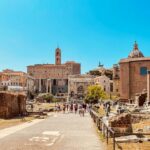
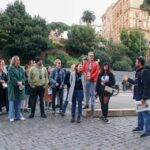

Capuchin Friars Crypt: Skeleton Math and the Reality of 4,000 Bodies
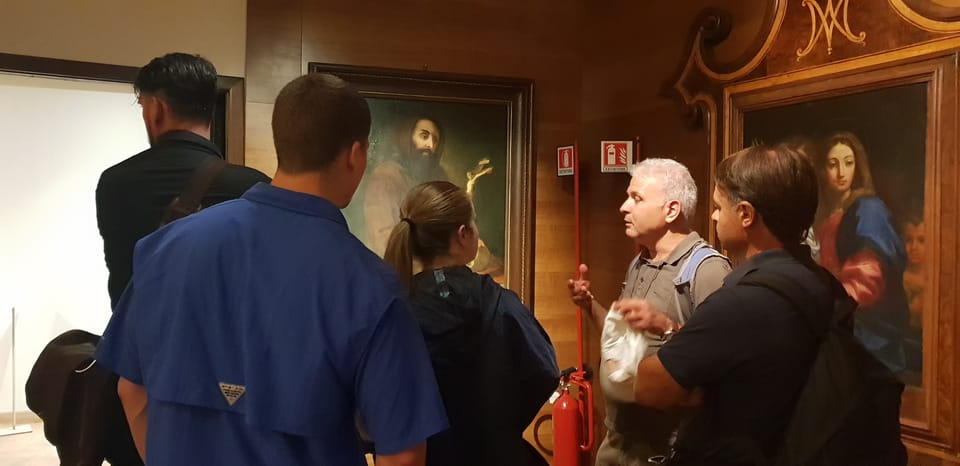
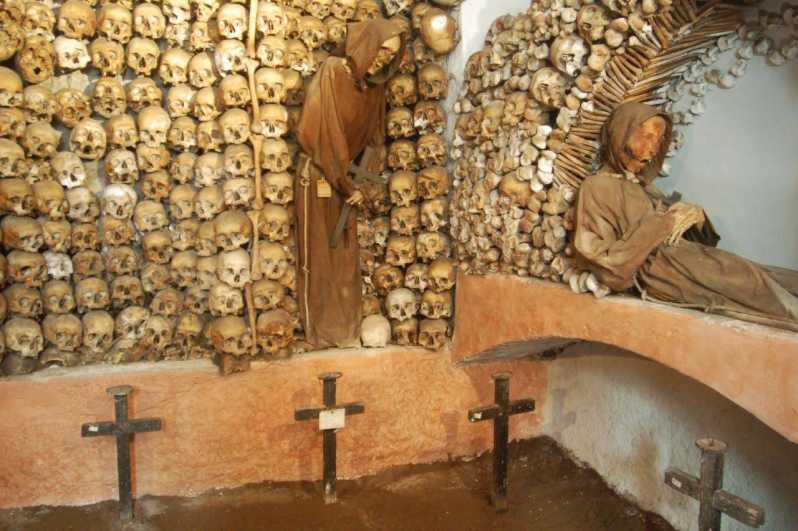
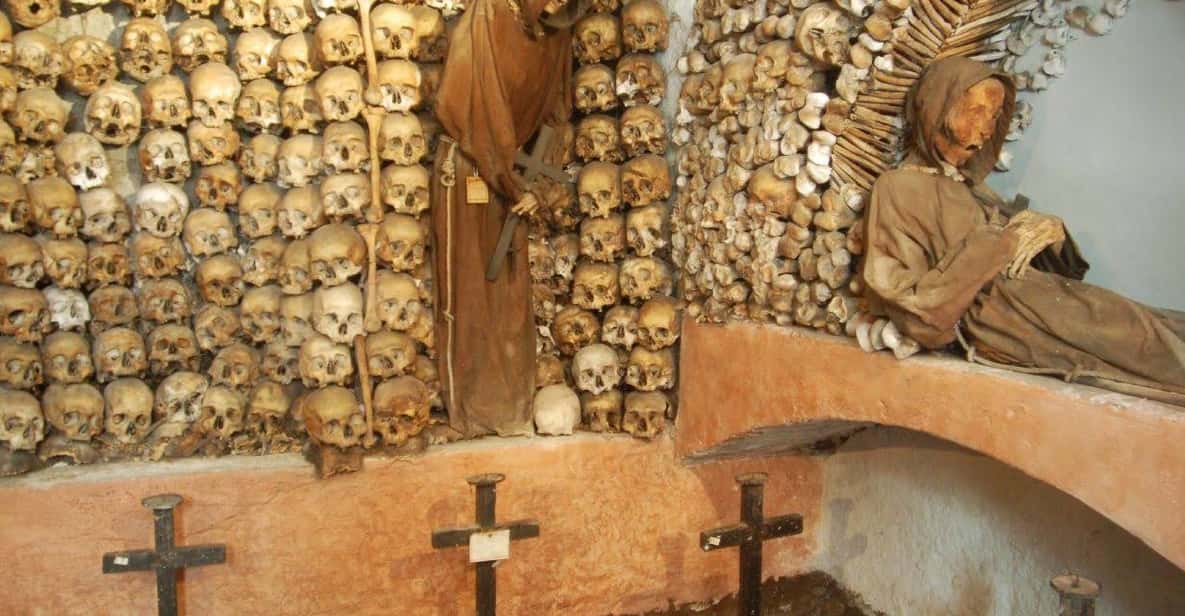
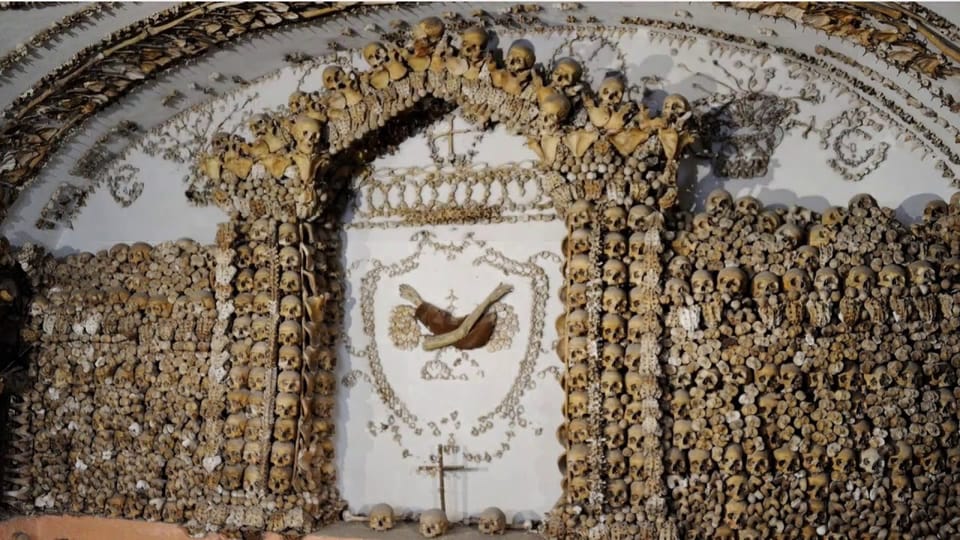
The tour starts with the Crypt of the Capuchin Friars. This is not a museum-style display where bones are treated like background objects. You are looking at a historical cemetery made from bones, and the guide frames it as a “why” story, not just a “what” story.
You will learn about the remains of about 4,000 friars who occupy the crypt. That number matters because it changes how you read the space. Instead of thinking of it as a spooky curiosity, you start thinking about it as a whole system—how a community used an underground setting for death, remembrance, and structure.
Practical note: the crypt can be intense if you expect things to feel light or casual. Wear comfortable clothes and be ready for the mood to shift quickly. This is the sort of site where listening to the guide helps more than staring.
The Acqua Vergine Aqueduct Under a Commercial Area
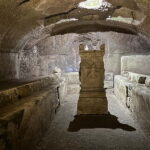
Next, you move from bones to water—an excellent change of pace. The tour takes you to the aqueducts that fueled ancient Rome, explaining how water and daily life were tied together long before Trevi Fountain became the postcard star.
You get to see the Acqua Vergine aqueduct, the source that still feeds Trevi Fountain today. That connection is the key. It is easy to admire Roman engineering from above—columns, arches, walls. Here, you get the logic of the system: water traveled through channels that supported the city’s growth.
One detail that makes this stop feel extra real is the setting. You visit the aqueduct beneath a commercial center. It’s a strange, slightly surreal feeling: modern shops and streets overhead, then ancient stone channels below. The guide helps you connect the dots between ancient infrastructure and the way the modern city uses the same kinds of water routes.
Expect a different atmosphere here than at the crypt. It is less about shock, more about understanding how Romans made the city function—and why that mattered.
A 10th-Century Church Over 1st-Century B.C. Temple Remains
After the aqueduct, you head to a church that dates to the 10th century. The fascinating part is what sits underneath it. The church stands above the remains of three temples from the 1st century B.C.
Those temple remains are located in an area that served as the center of a Roman fruit and vegetable market as far back as the 4th century B.C. So even before you reach the crypts, you’re already getting a layered timeline: market space, then temple space, then a later church built above it.
This stop works well if you like when history has consequences. You can trace how a neighborhood changed uses over time rather than treating ancient Rome as one sealed-off moment.
And because the tour is guided, you’re not just looking at old stone and guessing. The guide points out how the church’s placement and the older ruins below fit together.
The Exorcism Crypt: 12th-Century Rituals and Bone Fragments
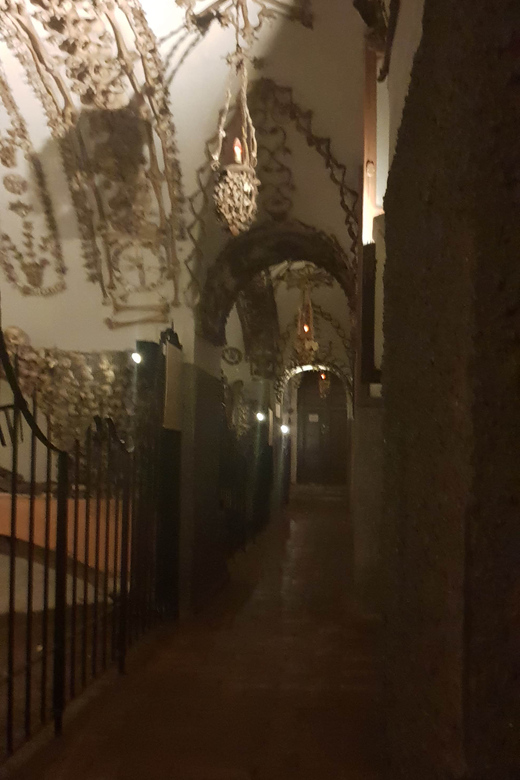
Then comes the most unusual under-church experience of the route: a crypt that was used for exorcisms in the 12th century. The tour includes a descent below ground, where you can see fragments of human bone scattered there.
This is the part where the tone shifts again. The aqueduct teaches you engineering and city-building. The exorcism crypt ties you to religious practice and fear—how people explained illness, danger, and unseen forces in the Middle Ages.
What I like about this section is that it avoids turning the bones into a cheap scare tactic. The guide’s explanations help you see this as part of a historical belief system and a building’s evolving use over centuries.
If you have any discomfort with closed spaces, this is exactly where you should think twice. The tour is underground throughout, and this stop is one of the tighter, moodier parts.

Ancient Prisons and the Saint Nicola Legend
The tour finishes by exploring ancient prisons. According to legend, Saint Nicola was imprisoned there.
This ending feels like a deliberate choice. You start with the physical remains of death, move through the practical remains of Roman water systems, and then land on spaces tied to punishment and story. It makes the underground feel like more than a set of attractions—it becomes a network of places where power, belief, and daily life left marks.
Legends can be tricky in history, but even without treating the story as literal, the prison visit helps you understand why people later connected Saint Nicola to specific sites. You are walking through spaces that left an imprint on how the city told its own stories.
Price and What You’re Really Getting for $147.27
At $147.27 per person, this is not a budget “quick tour.” But the price makes sense if you want more than one site. You are paying for three underground experiences plus admissions, with guided access to the aqueducts, crypts, and catacomb-like areas.
Here’s how to think about value: if you tried to plan this yourself, you would likely face two problems. First, tickets and entry can be scattered across different operators and times. Second, you would still need a guide to explain what you are seeing, especially in places where the context is not obvious.
You also get both a live English guide and an English audio guide. That combination is helpful underground, where sound can carry oddly and the group may move at different speeds.
If you already know you hate dark, enclosed spaces, or you strongly prefer daylight monuments, then the price won’t feel worth it. But if you want Roman depth and you enjoy learning on the move, it’s a solid use of your time.
What to Bring, Wear, and Expect About Photos
Bring comfortable shoes. Underground stone and uneven surfaces can happen at multiple stops, so you want footwear that feels stable.
Wear comfortable clothes you can move in. Underground tours often mean slower, stop-and-start walking, plus waiting in small areas while you listen.
About photography: photography is not allowed inside. Also, photos are not allowed at every site. You will be notified when pictures are or aren’t permitted, so pay attention to what the guide says before you start taking out your camera.
Who Should Book This Underground Rome Tour
This is a good fit if you:
- Like Roman sites that feel different from the big outdoor monuments
- Want a guided explanation of what bones, aqueducts, and underground religious spaces meant
- Enjoy practical “how things worked” history, not just names and dates
It is not a good fit if you:
- Have claustrophobia
- Need wheelchair access
- Have mobility impairments that make underground steps and uneven areas difficult
- Are pregnant
If you are traveling with kids, the crypt section is often fascinating to younger visitors as well, but you still need to judge whether the tone fits your group.
Should You Book This Underground Rome Tour?
If you want Roman history that you can feel—bones, water channels, and underground religious spaces—this tour is worth serious consideration. The big win is the structure: three linked underground stops with admissions included and an English guide who keeps the story clear.
Book it if underground sites sound like your thing and you can handle dim, enclosed spaces. Skip it if you are sensitive to darkness, tight areas, or you strongly want photo freedom inside.
If you’re aiming to use your time well in Rome, this is one of the more distinctive ways to spend an afternoon or morning indoors, while still seeing real connections to places above ground—like Trevi Fountain’s water source.
FAQ
How long is the Rome Crypts, Catacombs and Skeletons Underground Tour?
It lasts 3 hours.
Where is the meeting point?
You meet in front of the Fontana del Tritone. The staff has a red and white hat.
Is there a live guide and what language is it in?
Yes. There is a live tour guide in English.
Is an audio guide included?
Yes. An English audio guide is included.
Are admission fees included?
Yes. Admission fees are included.
Where does the tour end?
The tour ends back at the meeting point.
Is photography allowed?
Photography is not allowed inside. Also, photos are not allowed at every site, and you will be told when.
Can I cancel and get a refund?
Yes. Free cancellation is available up to 24 hours in advance for a full refund.