REVIEW · CITY MUSEUMS & MONUMENTS TICKETS
Rome: Capitoline Museums Private Guided Tour
Book on GetYourGuide →Operated by Tour in the City - Travel Agency Rome - · Bookable on GetYourGuide
Rome’s oldest museum can feel brand new. This private Capitoline Museums tour pairs skip-the-line access with a private guide who helps you spot what matters, from famous statues to the smaller details you’d normally miss. With guide Martin leading the way, the conversation stays lively and focused, not lecture-y.
I especially like how the route jumps between the museum’s different “moods” (ancient Rome first, paintings next, then that Rome-Forum panorama). One catch: it’s a guided route with set stops, so if you want to wander freely at your own pace, you’ll feel guided rather than in full control.
In This Review
- Key things to know before you go
- Why this tour works so well for first-time Rome museum visitors
- Getting in fast: skip-the-line plus a real art historian guide
- Palace of the Conservatives courtyard: the Rome “starter pack” starts immediately
- Pinacoteca Capitolina paintings: why the route includes this room
- Marcus Aurelius and the temple ruins: the view quality improves as you go
- New Palace galleries: inscriptions, mosaics, Marforio, and the Dying Gaul
- Timing and pacing: 2.5 hours that still feel like time well spent
- Price and value: what $201.65 per person gets you
- Who should book this Capitoline Museums private guided tour
- Quick take: should you book it?
- FAQ
- Where do we meet for the Capitoline Museums tour?
- How long is the tour?
- Does the tour include museum tickets?
- Is this a private tour?
- What languages are offered for the guide?
- What should I wear or bring?
- Is hotel pickup included?
- Are there restrictions on luggage?
- Can I cancel for a refund?
Key things to know before you go
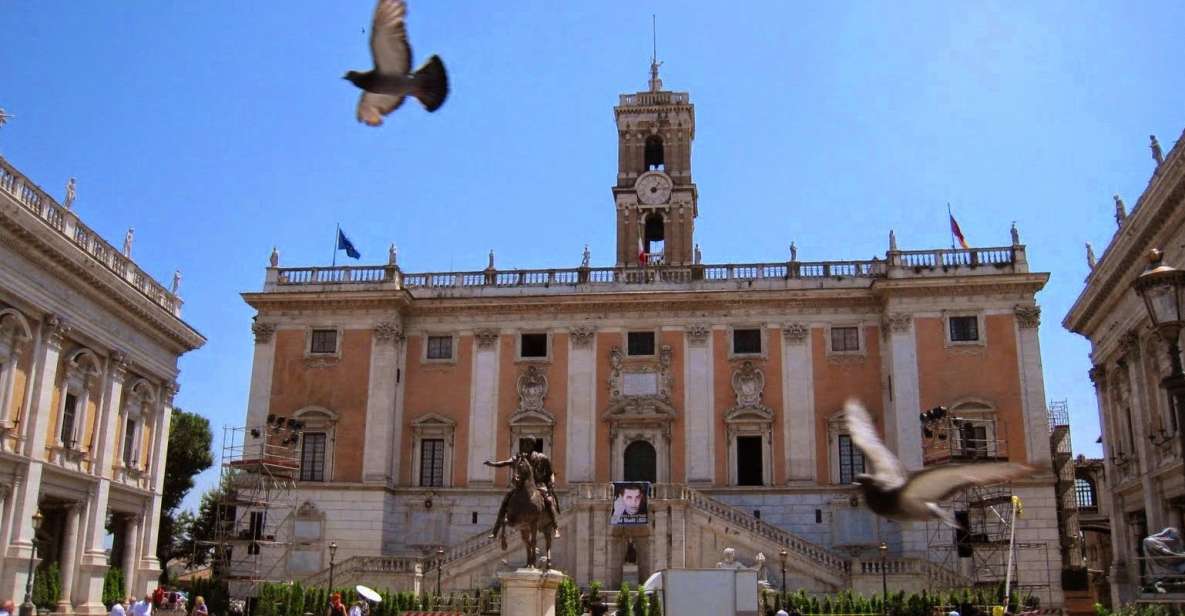
- Private, small-group feel with a maximum of 20 people, plus a professional art historian guide.
- Fast entry thanks to skip-the-line access, so you spend time inside, not queued outside.
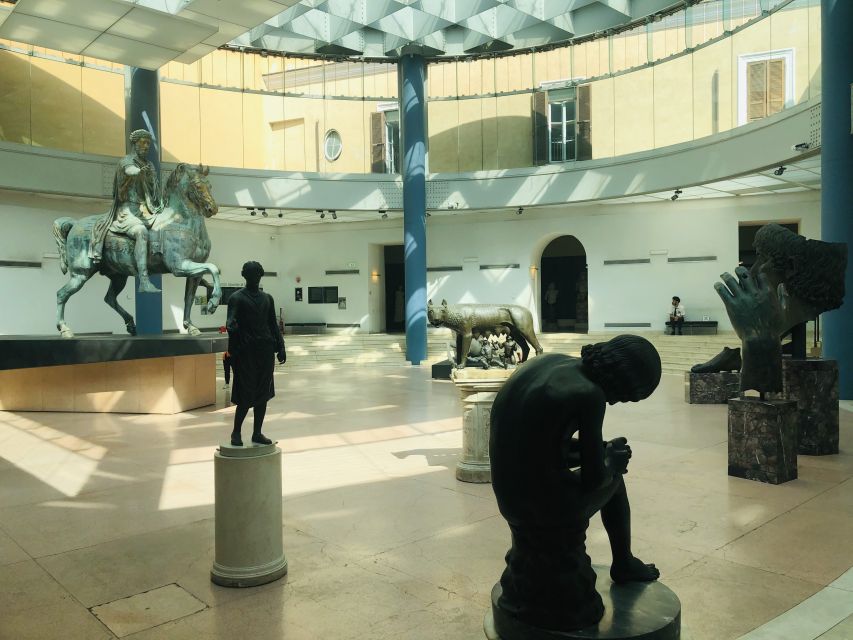
- Palace of the Conservatives highlights, including the Capitoline Wolf, Spinario, Capitoline Brutus, and the Castellani vase collection.
- Pinacoteca Capitolina paintings, including works by Caravaggio, Guido Reni, Titian, Tintoretto, Rubens, and others.
- Marcus Aurelius on display with the surrounding structure that still shows ancient temple ruins.
- Forum views via the Tabularium, reached through an underground tunnel for a very “Rome in layers” moment.
Why this tour works so well for first-time Rome museum visitors
The Capitoline Museums can intimidate you in the best way. It’s a serious museum, and it covers a lot of time. What helps here is that you’re not left to guess what’s important. You get a path through two historic museum seats, and you’re shown how the pieces connect.
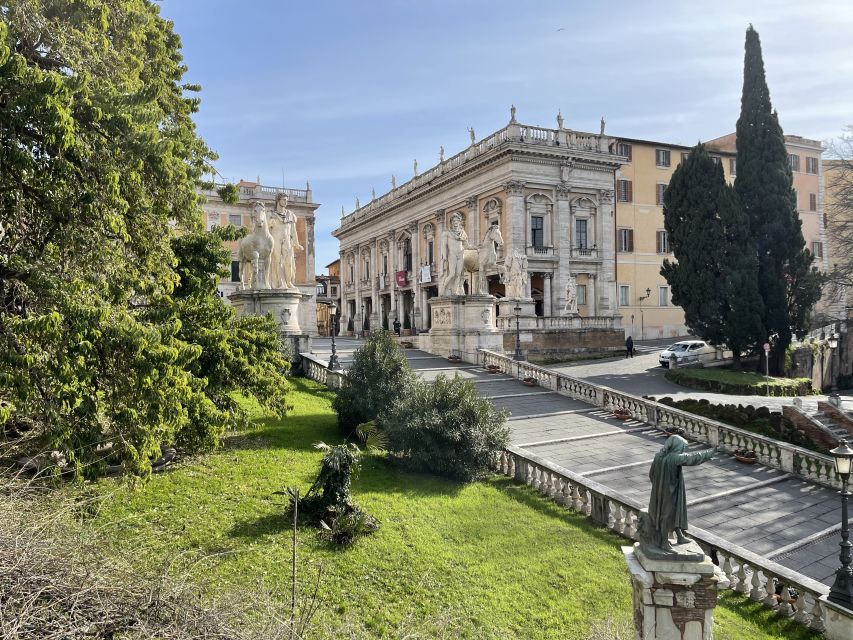
I like that the tour starts outdoors, right at the equestrian statue of Marcus Aurelius, before you go fully indoors. It gives you a quick anchor: okay, this is Rome’s power and memory in stone. Then you move through sculpture, then paintings, then back out toward the Roman Forum. It’s museum-hopping with purpose.
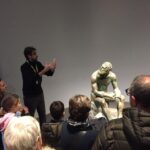
And the guide matters. Martin’s style, based on what you’ll hear from the experience details, is more than naming objects. He draws links between events, societies, and what you’re seeing in the galleries. That makes the museum feel like a story instead of a checklist.
You can also read our reviews of more guided tours in Rome

Getting in fast: skip-the-line plus a real art historian guide
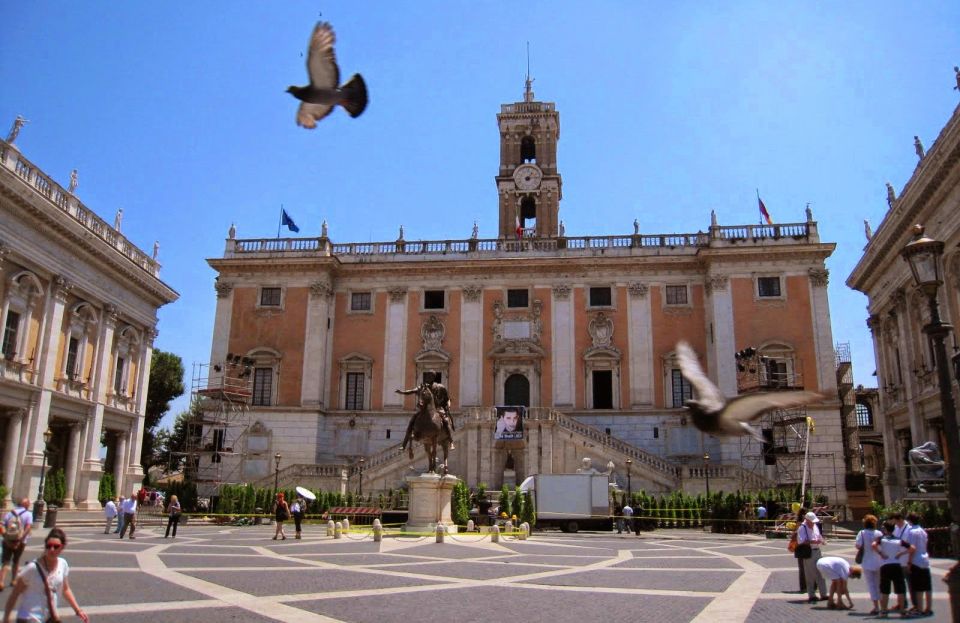
The tour includes the museum entry ticket and skip-the-line access, which is a big deal at the Capitoline Museums. Even in good weather, lines can eat your time. With this setup, you spend your limited museum hours actually looking.
You also get a professional art historian guide, and that shows in the pacing. A guide who knows the collection can help you read what you’re seeing: why a bronze matters, what a particular painting room represents, and what to notice when the museum shifts from ancient Rome into medieval and Renaissance work.
This is a private group experience, with English or Italian. If you’re comfortable asking questions, you’ll likely get more out of the paintings section and the interpretation of the sculptures. If you’re more quiet, that’s fine too. The route is still structured so you don’t wander.
One practical note: there’s no hotel pickup. You’ll meet at the Capitoline Museums’ entrance (the guide waits with a sign with your name). That keeps the tour simple, but it also means you’ll want to arrive a few minutes early so you don’t start stressed.
Palace of the Conservatives courtyard: the Rome “starter pack” starts immediately
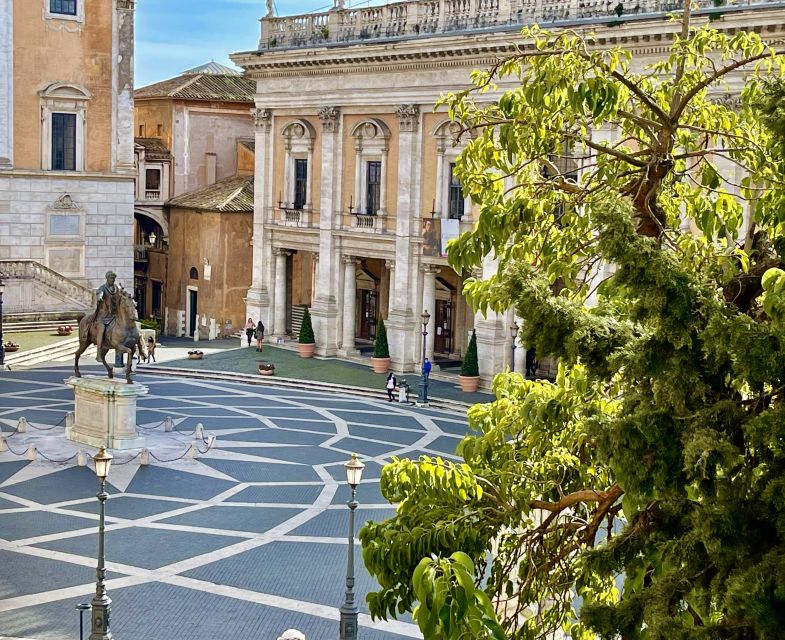
The tour begins at the Capitoline Museums area and starts in the courtyard of the Palace of the Conservatives, one of the museum’s historic seats. This is where the collection begins to feel like Rome itself: layers, power, and propaganda-like imagery.
You’ll see the remains of a colossal acrolith representing Constantine. That’s not just a statue moment. It’s a window into how Roman images were made to communicate authority. Then the tour moves upstairs to key sculpture and emblem pieces.
Expect major names here:
- Capitoline Brutus, a bust that helps you understand Roman ideas of civic character.
- Spinario, a Greco-Roman Hellenistic bronze of a boy withdrawing a thorn from his foot. It’s small compared to the grand imperial works, but the realism is the point.
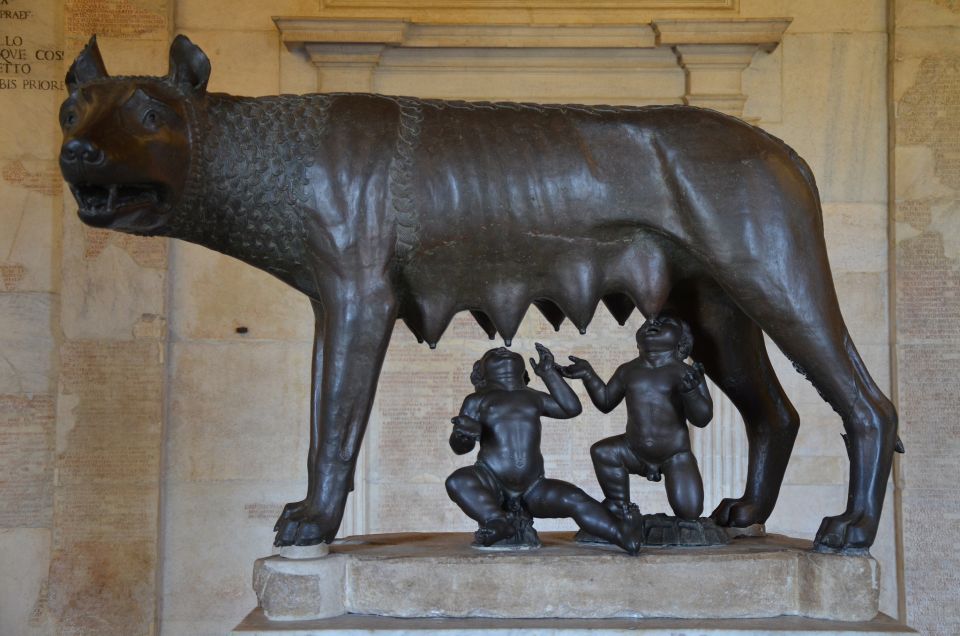
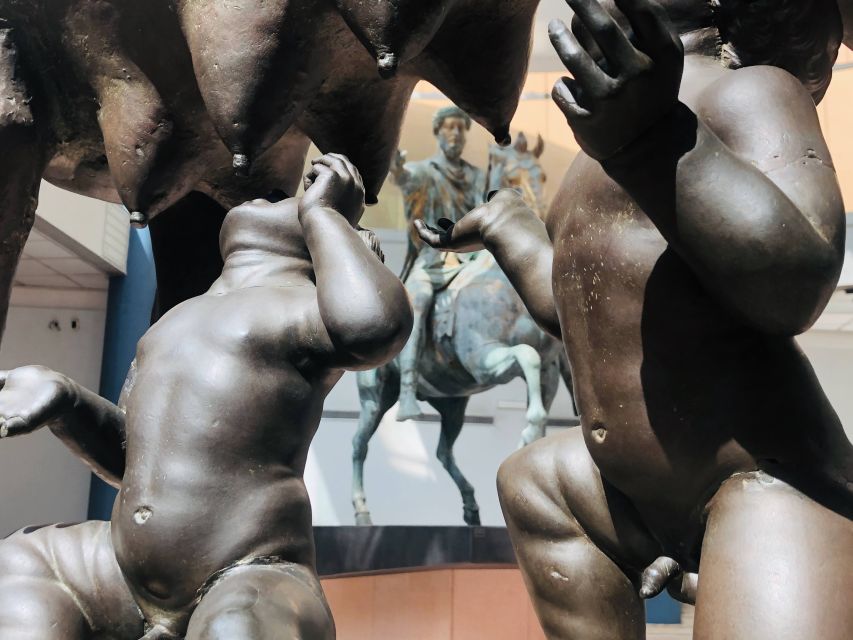
- Capitoline Wolf, the bronze she-wolf nursing Romulus and Remus. It’s basically the museum’s emotional core for many visitors because it connects myth to the objects Rome chose to keep.
- The Castellani collection, with around 700 Greek and Etruscan vases. That’s the kind of number that sounds abstract until you’re standing there and realizing how wide-ranging the ancient Mediterranean was.
This part is valuable because it sets up your later “upgrade” as you move into paintings and later into Roman Forum viewpoints. If you understand the sculpture language first, the rest of the museum reads more clearly.
Pinacoteca Capitolina paintings: why the route includes this room
Most museum tours that focus only on ancient Rome miss a huge chunk of meaning. Here, you do go to the Pinacoteca Capitolina, the oldest public collection of paintings in this setting, and it’s placed right after the sculpture floors for a reason.
On this level, you’ll see works by major artists including Caravaggio, Guido Reni, Titian, Tintoretto, Rubens, and Pietro da Cortona, plus others listed in the tour details. That mix matters because it shows how Rome didn’t stop at antiquity. City culture kept rewriting itself on top of ancient foundations.
A helpful way to think about this section: paintings here aren’t just pretty. They show how later artists used Rome’s past—sometimes as inspiration, sometimes as status, sometimes as a way to make new stories feel old and important.
You’ll also encounter frescoes and statues from Renaissance and Baroque Rome. So even if your favorite part of the museum is ancient bronze, you still get context for how later generations curated Rome’s image.
If you’re the type who usually rushes paintings, this is still worth slowing down for, because the guide can point out what to look for in composition and style rather than just giving dates.
Marcus Aurelius and the temple ruins: the view quality improves as you go
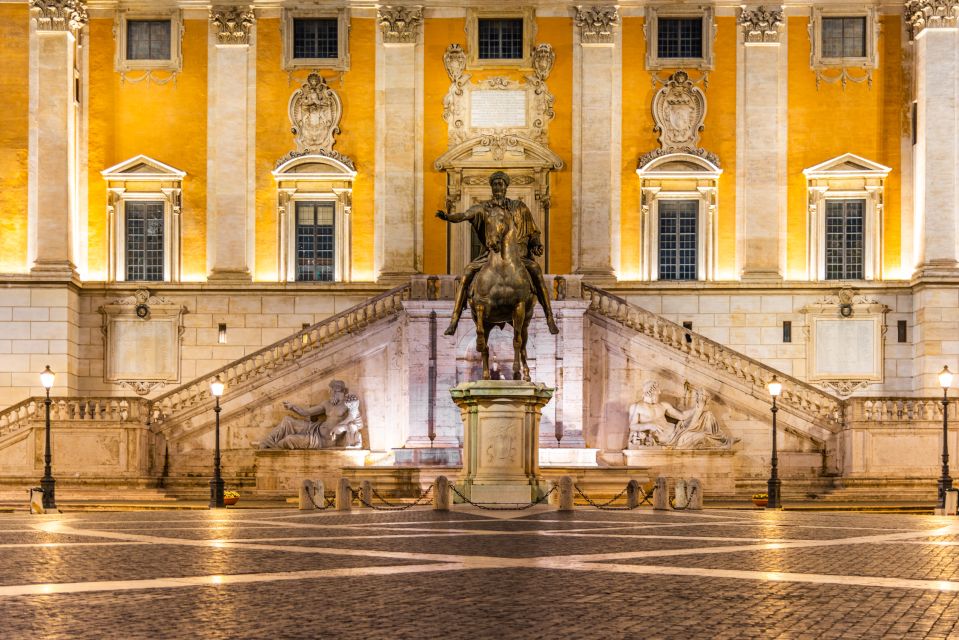
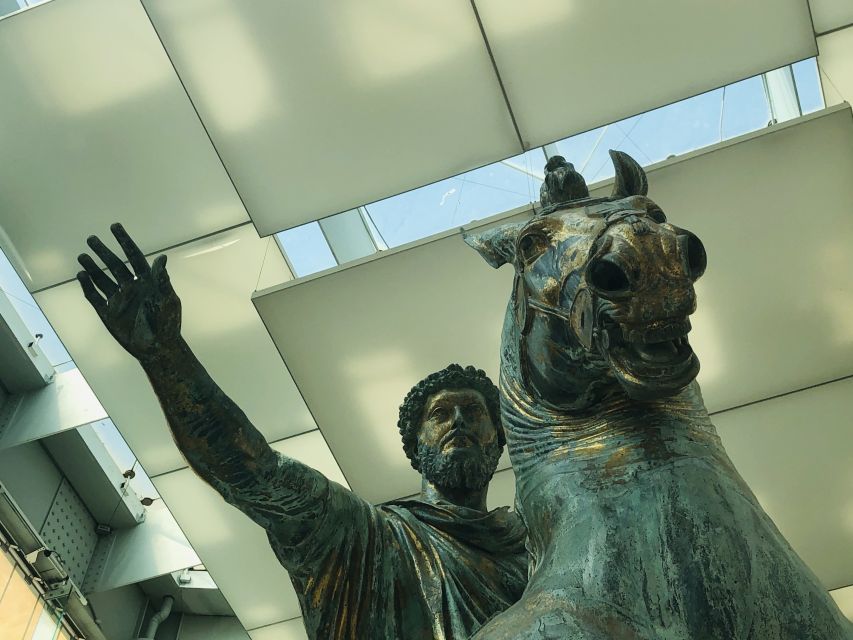
Going down to the ground floor, you reach a dramatic centerpiece: the equestrian statue of Marcus Aurelius. Seeing it after the earlier sculpture rooms makes a difference. The courtyard pieces were about myth, civic ideals, and emblem symbols. Marcus Aurelius is about how Rome displayed leadership and continuity.
What adds texture here is that you’ll appreciate ruins of ancient temples still visible in the structure of the building. So the statue doesn’t feel like a standalone artifact. It feels like a surviving fragment of a bigger setting.
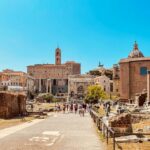
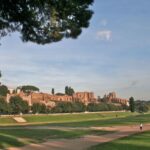
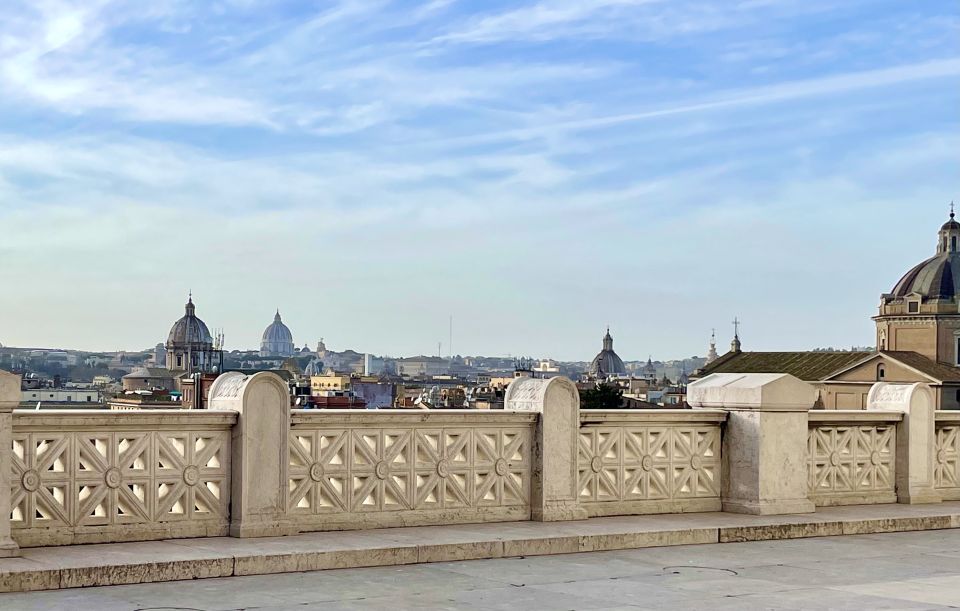
Then comes one of the most practical, satisfying parts of the tour: the route toward the Forum viewpoints. You’ll walk through an underground tunnel that crosses the Tabularium, and along the way your guide gives you the chance to enjoy the views of the Roman Forum.
This is where the museum tour earns its “Rome in layers” reputation. You’re not just learning about space; you’re looking at it. The underground passage also keeps the experience moving, which matters because Rome can be hot, busy, or both.
You can also read our reviews of more private tours in Rome



New Palace galleries: inscriptions, mosaics, Marforio, and the Dying Gaul
After the Forum viewpoint moment, the tour leads you to the museum’s second historic seat, the New Palace. This shift is smart because it changes what you’re looking at.
In the New Palace, you’ll find a lot of the “Roman paperwork” vibe: statues, inscriptions, sarcophagi, busts, mosaics, and other ancient Roman artifacts. In plain terms, this is the section that helps you feel how Romans lived, remembered, and recorded themselves.
Some of the named highlights you should look out for:
- Marforio (the famous statue associated with the fountain area in Rome)
- The Dying Gaul
- Cupid and Psyche
These works land differently than the wolf or the thorn-pulling boy. They’re emotionally heavier, more dramatic in pose and expression. And again, the guide’s job is to help you read those gestures, not just admire them from a distance.
A small caution: mosaic and inscription-heavy rooms can be easy to skim if you’re tired. If that happens to you, bring your attention back with one simple habit: pick one inscription or one detail and ask the guide what it reveals. That one focus point often makes the whole room feel less overwhelming.
Timing and pacing: 2.5 hours that still feel like time well spent
The tour is listed as 2.5 hours, with about 2 hours inside the museum and roughly 20 minutes of scenic views on the way to and from the Forum perspective.
That pacing works well for people who want a meaningful museum experience without turning the day into a full museum marathon. You’ll get main highlights—major sculptures, the Pinacoteca painting room, and the Forum viewpoint—without feeling like you’re stuck for hours in a single building.
It also fits real-life Rome travel. You’re only a few blocks away from other sights, and this tour gives you context so later stops make more sense.
One practical detail from the overall experience: Martin has been sensitive to guest needs during the tour, including taking a break for water when someone felt light-headed and then continuing with extra time. That’s the kind of calm, human problem-solving that makes a private guide feel worth it.
Price and value: what $201.65 per person gets you
At $201.65 per person, this isn’t a bargain-basement museum ticket. You’re paying for three things: a private guide experience, skip-the-line entry, and the content depth that comes with a trained art historian.
So the question isn’t just cost—it’s “How much do you want the museum to interpret you?” If you’re the kind of visitor who likes to read little placards and still feel lost, this tour is often a win. It turns hours of looking into something more like an organized conversation.
It can also be good value if:
- You’re visiting with a small group who wants a shared plan.
- You care about specific highlights (Marcus Aurelius, Spinario, the Pinacoteca’s big-name painters).
- You want a route that covers both ancient and later art without missing the best transitions.
If you’re the type who loves drifting and you already know what you want to see, you might not need a guide. But if you want the museum to “click” fast, the price starts to feel less like a splurge and more like buying time and clarity.
Who should book this Capitoline Museums private guided tour
This tour is especially suited to you if:
- You want a structured museum experience with a clear route through both historic museum seats.
- You care about both ancient sculpture and the Pinacoteca painting room.
- You’d like Roman Forum context without trying to piece it together on your own.
It’s also a solid fit if you value a guide who can connect objects to broader ideas. The named guide Martin is described as passionate and able to make connections between historical events and societies, which is exactly what turns a “see this statue” trip into a “understand this Rome” trip.
If you don’t enjoy standing still in galleries for longer stretches, keep that in mind. This is a guided walk with museum stops, so wear comfortable shoes and plan for some time on your feet.
Quick take: should you book it?
I think you should book this tour if you want to get real value from your limited time in Rome. The combination of skip-the-line entry, a trained art historian guide, and a route that moves from sculpture to paintings to Forum viewpoints is a smart way to experience the Capitoline Museums without feeling overwhelmed.
If your travel style is pure wandering and you already have a strict checklist of what you want, you may find the structure a bit limiting. But for most visitors who want the museum to make sense quickly, this private guided setup is a very practical choice.
FAQ
Where do we meet for the Capitoline Museums tour?
You meet at the Capitoline Museums. Your guide will wait for you with a sign with your name. The tour also ends back at the same meeting point.
How long is the tour?
The tour duration is listed as 2.5 hours. The exact starting times depend on availability.
Does the tour include museum tickets?
Yes. The price includes Capitoline Museums entry ticket, along with skip-the-line access.
Is this a private tour?
Yes. It’s a private group tour, with a maximum of 20 persons per booking.
What languages are offered for the guide?
The live guide is available in English and Italian.
What should I wear or bring?
Bring a passport or ID card and wear comfortable shoes. The dress code is smart casual.
Is hotel pickup included?
No. Hotel pickup and drop-off are not included.
Are there restrictions on luggage?
Yes. Oversize luggage is not allowed.
Can I cancel for a refund?
The tour offers free cancellation up to 24 hours in advance for a full refund.