REVIEW · ROME
Rome: Angels, Demons, & Dark Legacy of True Crimes Tour
Book on GetYourGuide →Operated by REAL BARCELONA TOURS, S.L · Bookable on GetYourGuide
Rome at night turns sharp. This 2-hour true-crime style walk threads Castel Sant’Angelo to Campo de’Fiori with eerie, real-world stories and creepy legends.
I especially like how the tour leans into storytelling instead of just pointing at monuments. You’re nudged through places connected to violence, fear, and famous cases, all while you’re moving through Rome’s dark-sky backstreets.
One drawback to plan for: it’s a nighttime walking tour, so comfortable shoes matter, and it’s not a fit for wheelchair users or people with certain medical limits.
In This Review
- Key things to know before you go
- Meeting Castel Sant’Angelo at Night (and staying found)
- Ponte Sant’Angelo: River crossing, poisoners, and a grim prison for women
- Giulia Street and the Brotherhood of Mercy church: where public executions shaped the vibe
- Campo de’Fiori: the market square you won’t see the same way
- A chapel of human bones and a bridge legend about a disguised female Pope
- The tour style: why guides like Fabiana and Furio can make or break it
- Price and value: is $36 worth a 2-hour dark Rome walk?
- Comfort, timing, and who should skip this one
- Should you book the Angels, Demons, and Dark Legacy tour?
- FAQ
- FAQ
- How long is the Rome Angels, Demons, and Dark Legacy of True Crimes Tour?
- What’s the meeting point?
- Is food included?
- Are entrance tickets included for attractions?
- What languages is the guide available in?
- Do I need to bring anything specific?
- Who is this tour not recommended for?
- Is the tour wheelchair accessible?
- Are alcohol or drugs allowed?
- What if I arrive late?
Key things to know before you go
- Castel Sant’Angelo first, Ponte Sant’Angelo next: you start with a fortress vibe and cross into grim legends fast
- Giulia Street and the Brotherhood of Mercy: execution lore is part of the route, not just a name-drop
- John Paul Getty III kidnapping reference: the tour ties a shocking modern case into the darker corners of Rome
- Campo de’Fiori + dowsing rods: you get a hands-on spooky moment for the curious
- A chapel with human bones and a disguised female Pope legend: Rome goes gothic in a hurry
- Guide energy matters: named guides like Fabiana and Furio are singled out for keeping attention on track
Meeting Castel Sant’Angelo at Night (and staying found)
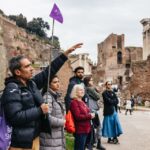
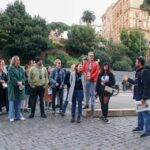
The tour’s meeting point is practical and easy to locate: at the end of the bridge in front of Castel Sant’Angelo, where your guide holds a company flag. That’s good, because at night in Rome you don’t want to play hide-and-seek with crowds and streetlights.
Plan for a short walk before you’re fully in the story flow. This isn’t a sit-down experience. You’re on your feet for about 2 hours, and the route is built around moving from one dark spot to the next while the guide connects locations with tales of executions, crimes, and rumors that stuck around.
It’s also worth knowing what’s not included. Entrance tickets to sights aren’t part of the package, so you’ll see many stops from the outside. That can be a plus if you hate ticket lines, but it also means don’t expect every stop to turn into a full interior visit.
You can also read our reviews of more tours and experiences in Rome.
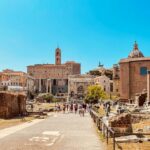
Ponte Sant’Angelo: River crossing, poisoners, and a grim prison for women
After starting near Castel Sant’Angelo, you’ll cross Ponte Sant’Angelo—one of those Rome bridges where the setting feels instantly dramatic. The guide uses that crossing time to set tone and context, so the walk doesn’t feel like a random string of landmarks.
The route explanation includes several darker anchors tied to the bridge area. You’ll hear about a poisoner’s home nearby, plus the story of a prison for women. These are the kinds of details that don’t fit on a postcard, but they click once you’re standing there and the guide frames why the legends formed in the first place.
This is also where the tour style shows its advantage. Rome has plenty of daytime walking tours that skim the surface. Here, you’re encouraged to look at the city through a “why this place mattered” lens—especially how fear and punishment shaped street memory.
If you’re sensitive to heavy topics, give yourself permission to pace out mentally. The tone can be intense, even though the duration is short.
Giulia Street and the Brotherhood of Mercy church: where public executions shaped the vibe
From the bridge area, you’ll head into the older streets near Giulia Street. This is the part that tends to feel the most atmospheric, because narrow lanes plus night lighting makes everything sharper. The guide turns that into a storytelling advantage.
One of the key stops on this stretch is the Brotherhood of Mercy church, tied to public executions. That detail matters: the tour isn’t just repeating spooky folklore. It frames how executions were once public events, meaning the surrounding streets weren’t only “background”—they were part of the spectacle.
You’ll also hear a shocking reference to the John Paul Getty III kidnapping. The tour connects that story to a specific spot along the route, which gives the night walk a modern-leaning jolt. It’s a reminder that Rome’s dark legacy isn’t only medieval—crime and fear can be more recent than you expect.
Practical tip: bring clothes that let you move comfortably. Night tours can feel warmer than expected at first, then colder once you’re in a shaded pocket of alleys.
Campo de’Fiori: the market square you won’t see the same way
Campo de’Fiori is the kind of place that usually gets described in daytime terms: lively, historic, central. On this tour, the feeling changes fast. The guide brings forward its bloody associations, which shifts your mental picture the moment you arrive.
This stop is where the tour really leans into “dark legacy” mode. You’ll hear about countless souls meeting horrific ends, and the guide uses the square’s geometry and foot traffic to explain how such stories could stay lodged in a neighborhood’s identity.
Then comes a more unusual moment: you’ll use dowsing rods as part of the experience, aimed at sensing lingering spirits in haunted hotspots. Is it scientific? No—this is a spooky tradition used for atmosphere and participation. But it’s exactly the kind of activity that turns a history talk into something you can actually do with your hands.
If you’re not into theatrics, treat it like a guided audience moment—fun, slightly goofy, and quick. If you are into it, it’s one of the few chances on the tour where your senses and curiosity take the lead.
A chapel of human bones and a bridge legend about a disguised female Pope
The final stretch leans hard into gothic weirdness—in a good way. You’ll visit a chapel adorned with human bones, which immediately gives you that unmistakable “Rome takes death seriously” feeling.
The guide also includes a legend about a bridge tied to a disguised female Pope. Legends like this survive because people want a shortcut to mystery, and Rome’s layered past makes it easy for stories to mutate over time. What makes the tour interesting is that it doesn’t treat the legend like a random rumor. It places it in the cultural space where myth and memory feed each other.
Because this is an outside-view style route at many points, you’ll get the vibe without needing to wait for interior viewing time. That’s helpful if your evening is tight or you don’t want to fight ticket lines.
Also, keep in mind that night + bone-themed stops can be intense for some people. You can always step back, take a breather, and rejoin when you feel ready.

The tour style: why guides like Fabiana and Furio can make or break it
This tour’s rating is strong (about 4.2/5 from 11 ratings), and the common thread is guide performance. One named guide, Fabiana, is praised as a strong storyteller that pulls you into the stories. Another, Furio, is described as funny and professional—plus someone who keeps the group’s attention up.
That matters more than you might think. A dark-history walking tour has two jobs: move you through the city and keep the narrative gripping so you don’t just feel like you’re walking from stop to stop. When the guide has timing, you get a story arc. When the guide doesn’t, it can turn into a list of grim facts.
This tour also runs in multiple languages—Italian, Spanish, English, and French—so you’re more likely to get the same energy even if you’re traveling with friends who don’t share your language.
One more thing: because the route includes sensational elements (executions, poison, kidnappings), the guide’s tone is crucial. The best version of this tour feels more like a city mystery game than a gore show.
Price and value: is $36 worth a 2-hour dark Rome walk?
At $36 per person for a 2-hour night tour, the pricing feels positioned for value—especially if you like walking tours that replace museum time with storytelling.
Here’s what you’re paying for, based on what’s included:
- A professional guide
- Access to the main route that features major landmarks as part of the experience
And here’s what you’re not paying for:
- Entrance fees (many sights are viewed from outside)
- Food and drinks
The highlight also mentions a restaurant stop at a place that’s been serving meals for over 150 years. Since meals aren’t listed as included, think of it as a chance to get a local, classic setting without committing to a full dinner plan through the tour. You can grab something before or after depending on your appetite and budget.
So is it good value? If you want a quick, atmospheric night story about Rome’s darker side, yes. If you’re hoping for lots of paid interior access and structured museum time, you might feel like the ticket doesn’t buy enough “inside” experiences. But if you’re the type who learns faster through narrative and place, the price makes sense.
Comfort, timing, and who should skip this one
This is a walking tour, at night. Bring comfortable shoes and comfortable clothes, and dress for cool air and cobblestones. Rome’s streets can turn your “2 hours” into a real workout if you show up in thin-soled shoes.
It’s also not recommended for:
- Travelers with back problems
- Pregnant travelers
- Travelers with heart problems or other serious medical conditions
And it’s not suitable for wheelchair users. So this isn’t the time to test out mobility aids or “I’ll just take it slow.” If any of those categories apply, choose a daytime option with fewer uneven walking demands.
A practical note that can affect your evening: meeting time may shift, and you should have a working phone number with the correct country code in case the provider reaches out. Late arrivals aren’t refunded, so aim to be early enough that you’re not sprinting in the dark.
Finally, alcohol and drugs aren’t allowed. It’s a sensible rule for any night walk, especially one that deals with heavy themes.
Should you book the Angels, Demons, and Dark Legacy tour?
Book it if you want:
- A 2-hour night walk built around true-crime style storytelling
- A route that pairs Rome landmarks with stories you won’t usually get on standard daytime tours
- Something interactive-ish, like the dowsing rods moment
- A guide-driven experience, where strong storytellers like Fabiana and Furio can turn the evening into a real memory
Skip it if you:
- Need wheelchair access or have mobility limits that make uneven cobblestones hard
- Have medical concerns that make nighttime walking risky
- Prefer light and breezy sightseeing. This one goes darker, with executions and gruesome legends part of the package
If you’re on the fence, here’s the simple test: if you’d rather walk the streets learning how fear and crime shaped Rome than sit in a museum, you’ll likely enjoy this.
FAQ
FAQ
How long is the Rome Angels, Demons, and Dark Legacy of True Crimes Tour?
The tour lasts about 2 hours.
What’s the meeting point?
Meet at the end of the bridge in front of Castel Sant’Angelo. The guide will be holding a company branded flag.
Is food included?
Food and drinks are not listed as included. There is also mention of a restaurant stop, but meals aren’t guaranteed as part of your purchase.
Are entrance tickets included for attractions?
No. Attractions that need entrance tickets are visited from outside, and entrance fees are not included.
What languages is the guide available in?
The live tour guide runs in Italian, Spanish, English, and French.
Do I need to bring anything specific?
Wear comfortable shoes and comfortable clothes for walking on uneven streets.
Who is this tour not recommended for?
It’s not recommended for travelers with back problems, pregnant travelers, or people with heart problems or other serious medical conditions.
Is the tour wheelchair accessible?
No, it’s not suitable for wheelchair users.
Are alcohol or drugs allowed?
No. Alcohol and drugs are not allowed.
What if I arrive late?
Late arrivals won’t be refunded, so plan to arrive a bit early to find your guide.