REVIEW · COLOSSEUM, FORUM & PALATINE TOURS
Palatine & Roman Forum guided Tour
Book on GetYourGuide →Operated by My city Tours · Bookable on GetYourGuide
Roman ruins move fast, and this route is built for speed. You get Palatine Hill and Roman Forum admission with a live English guide, plus exterior stops for the Colosseum and Trajan’s area without getting stuck in ticket lines. I especially like the focus on big story beats, from Rome’s origin myths to how the forum shaped power, and the practical use of headsets/radios so you can actually hear the talk in a crowded site. The one drawback to think about is that the tour time is short, so if you want a slow, wander-at-your-own-pace visit, you’ll feel the clock.
This is a walking tour in Lazio that’s designed to take the confusion out of your first look at the forum. You’ll also stand in spots that give you panoramic views you’d miss if you just chase the loudest monument. On paper it’s 1.5 hours, rain or shine, which means the group will keep moving even when the sky does not cooperate.
My advice: treat this as a guided overview of where Rome began, not as a full, deep archaeological experience of every nook and cranny. If the guide doesn’t show or the meeting point is unclear, you could lose your window—so I’ll share a couple of simple ways to protect your day.
In This Review
- Key things to know before you go
- Via Baccina 59C meetup and how to start on the right foot
- Palatine Hill + Roman Forum tickets: what 1.5 hours really means
- The Colosseum exterior: learning the amphitheater story from outside
- Via dei Fori Imperiali and Trajan’s Column: the “power road” effect
- What stands out most: the guide, the headsets, and the origin story
- Price value: is $49 for this Rome walk a smart deal?
- Who this tour suits best (and who might want a different one)
- How to protect your day when the plan is tight
- Should you book this Palatine & Roman Forum guided tour?
- FAQ
- How long is the Palatine & Roman Forum guided tour?
- Is admission to the Roman Forum and Palatine Hill included?
- Does the tour enter the Colosseum or Trajan’s Market?
- Where do I meet the guide?
- What languages are available?
- Will I need to wait in ticket lines?
- Is there free cancellation?
Key things to know before you go
- Fast-track entry: skip the long ticket lines and focus on the ruins
- Admission included for Palatine Hill and Roman Forum
- Exterior-only approach: you won’t go inside the Colosseum or Trajan’s Market
- Headsets and radios: easier listening even in heavy crowds
- Colosseum + Trajan’s area views: more variety than a pure forum-only tour
Via Baccina 59C meetup and how to start on the right foot
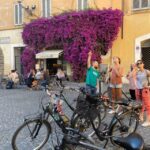
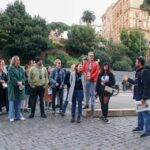
The tour meets at the operator’s office in via baccina 59c, in front of the market. That sounds simple, but Rome has a habit of making simple things tricky: office entrances are easy to miss, and crowds can move like a slow wave. I’d show up early, not because you should wait, but because you want a clean start when the tour begins.
Also, the entire plan is built around timing. You’re paying for the ability to bypass the ticket-line hassle and get straight into the Palatine Hill and Roman Forum area. If you arrive late, you can end up joining after the best context has already been given.
You’ll have an English-speaking live guide, and the tour provides headsets/radios. That matters more than most people think. The Roman Forum can feel like a maze of stone fragments and distances. When you can hear the guide clearly, you learn to connect what you see to what you’re being told. You spend your energy on the story, not on guessing what that wall or arch used to be.
One more practical note: this tour is rain or shine. So bring something that lets you keep moving without turning the day into a slip-and-slide. Even a light rain can make Roman stone surfaces slick.
You can also read our reviews of more guided tours in Rome

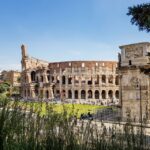
Palatine Hill + Roman Forum tickets: what 1.5 hours really means
You’re getting admission and entry tickets to both the Roman Forum and Palatine Hill, and the guide leads you through the main ideas behind the place. In 1.5 hours, the goal isn’t to hit every single ruin. It’s to help you understand the structure of the city’s early power center—why these stones mattered, and how people used them.
Here’s what you should expect conceptually. The forum is where public life happened: politics, announcements, ceremonies, and daily power displays. The Palatine Hill sits above it and connects strongly with Rome’s origins. Your guide’s job is to translate that into a route you can follow with your eyes, even if you only know a few names from school.
This tour is especially good if you want the “how Rome became Rome” sequence. You’ll hear about the founding myth—how Rome’s beginnings get tied to Romulus and Remus—and how that story fed the city’s identity long before everyone agreed on the details. That myth isn’t just folklore. It’s also branding. In an ancient city that constantly celebrated its legitimacy, stories were political tools.
The most valuable part of this kind of guided forum walk is not memorizing dates. It’s learning what to look for:
- Which ruins signal civic space versus private power
- How lines of movement connect hills, forums, and major monuments
- Why certain views are positioned where they are, not by accident but by design
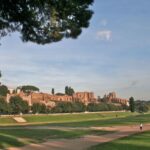
You’ll also get panoramic views to remember. In this area, the viewpoints often act like a cheat code. They help you see relationships: hill above forum, forum above the bigger processional routes, and the long shadows of later imperial construction.
The Colosseum exterior: learning the amphitheater story from outside
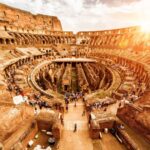
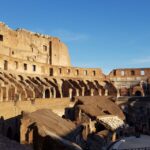
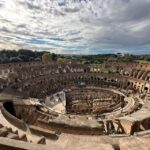
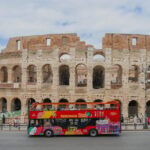
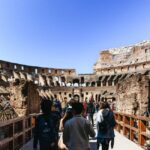
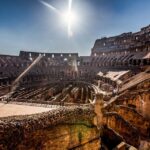
You won’t enter the Colosseum on this tour. Instead, you’ll get exterior viewing and a guide-led explanation of what made it special. That’s a real choice, and it can be a good one if your goal is context and orientation.
From the outside, you can still grasp the scale. You can understand the amphitheater as a machine for spectacle—built to seat crowds, frame events, and project imperial authority. Your guide’s talk focuses on what happened inside the walls, and the big draw here is how the story connects to Roman engineering.
Romans didn’t just build for looks. They used technological advancements that allowed for mass seating, movement, and crowd control. Even if you never see the interior stages, you can learn to spot what the structure was designed to do.
One smart benefit of doing the Colosseum exterior as part of a broader day: it prevents the classic mistake of treating the Colosseum as an isolated photo stop. When you see it after the forum and Palatine context, the Colosseum feels less like a standalone monument and more like the endgame of Rome’s public-life culture—where politics, identity, and entertainment all mix.
Via dei Fori Imperiali and Trajan’s Column: the “power road” effect
After Palatine and the forum, the tour points you toward one of the most important visual ideas in central Rome: Via dei Fori Imperiali. This is the kind of route where the city’s planning becomes obvious. You’re not just moving between sites. You’re traveling along a statement about authority.
Your guide will bring in Trajan’s Column and Markets as part of the story. Even without entering, this portion helps you understand how emperors used architecture to communicate. Trajan’s Column, in particular, is tied to imperial messaging. It’s a monument that turns triumph into something you can read, not just admire.
For many people, Trajan’s area becomes real when you connect three dots:
- The forum was the old public stage
- The imperial projects reorganized what power looked like
- The column and surrounding structures made those messages unforgettable
The tour includes a guided exterior look at Trajan’s Market, and you’ll learn what makes it more than just a “fancy old building.” The important part is the logic behind the complex: Roman engineering and administration working together.
If you love photos, this is also where you’ll likely appreciate the route most. You’re aligned with long sightlines and monumental backdrops, not stuck at a single angle.
What stands out most: the guide, the headsets, and the origin story
When this tour works at its best, it’s because of how fast it gets you oriented. The guide doesn’t just point at rocks. They connect Rome’s founding myth to the way people viewed the city’s legitimacy. They give you a mental map for why the Palatine and forum are tied together.
One guide name that shows up in the available information is Tania. In the record, her explanations and anecdotes are singled out as a reason the experience felt special. That makes sense: the forum rewards narrative. A good guide uses quick stories and clear explanations so you don’t drown in architectural fragments.
The headsets and radios are another standout. In a crowded place, the biggest problem is often sound, not sight. When you can hear the guide consistently, you follow the logic of the route. It also helps you avoid the feeling of constantly needing to reposition just to catch the next sentence.
Finally, panoramic views aren’t a small add-on here. They help you understand scale and layout. Rome’s ruins can feel random until you get one good angle that forces the pieces to click.

Price value: is $49 for this Rome walk a smart deal?
At $49 per person for 1.5 hours, the value depends on what you would otherwise spend time doing. If you’re planning to show up and figure out ticket logistics yourself, the “skip the ticket line” aspect has real monetary value. Time is money in Rome, especially at the busiest hours.
You also get admission/entry tickets for the Roman Forum and Palatine Hill and a guided tour. That’s key. You’re not paying just for walking. You’re paying for guided context plus paid access to the core ruins for the length of the tour.
At the same time, understand the boundary: the tour does not include entry into the Colosseum or Trajan’s Market. It focuses on exteriors. If your dream day is standing inside specific spaces with long museum-style explanations, this may feel like a preview rather than the whole meal.
Still, for first-time visitors, a guided overview can be the best use of limited time. You’re learning the “why” behind the “what.” And when you later return for a second visit, you’ll actually know what to look for without needing a guide to translate every stone.
Who this tour suits best (and who might want a different one)
This is a strong fit if:
- You’re a first-timer trying to make sense of Rome’s earliest political and cultural center
- You want a guided overview with tickets included
- You like hearing the origin story and seeing how monuments connect
- You prefer a “route + explanation” format over wandering alone
It may be less ideal if:
- You want a slow, in-depth, stop-everywhere exploration
- You expect interior visits to the Colosseum or Trajan’s Market
- You don’t like group timing, even when the guide is excellent
Also, keep language needs in mind. The tour is listed as English. If you need a different language, you should plan carefully before relying on translation that isn’t explicitly part of what’s promised.
How to protect your day when the plan is tight
This kind of guided Roman itinerary lives or dies on execution. Since this tour is tightly scheduled and starts at a specific office address, your best protection is simple: arrive early and double-check you know exactly where you’re going.
Here are a few practical moves:
- Take a screenshot or offline map of via baccina 59c before you leave your hotel
- Build a small buffer into your schedule so you are not forced to make last-minute replacements if something changes
- Wear shoes that handle uneven stone and keep an eye on weather since the tour runs rain or shine
If you’re the type who gets stressed by tight timing, consider what your backup plan would be. Would you rather pivot to a different guided option, or switch to self-guided wandering with your own priorities? Having that decision made ahead of time can save you a lot of frustration later.
Should you book this Palatine & Roman Forum guided tour?
Book it if you want a smart, efficient way to get your bearings and you value skipping the ticket lines while still getting a guide to explain what you’re seeing. The combination of Palatine + Roman Forum admission, headset listening, and added exterior context for the Colosseum and Trajan’s area is a solid value for many first-time visitors.
Hold off or choose another format if your top priority is interior access to the Colosseum or extended time wandering with zero pressure. This tour is built for momentum and big-picture understanding, not slow archaeology sightseeing.
If you do book, go in with the right mindset: you’re here to learn the story arc—Rome’s beginnings on the hill, power in the forum, and imperial messaging in the monumental stretches that follow. That’s where the tour earns its keep.
FAQ
How long is the Palatine & Roman Forum guided tour?
The tour duration is 1.5 hours.
Is admission to the Roman Forum and Palatine Hill included?
Yes. The tour includes admission/entry tickets to the Roman Forum and Palatine Hill.
Does the tour enter the Colosseum or Trajan’s Market?
No. The tour only explores the exterior of the mentioned sites and does not enter them. You also do not get entry tickets for the Colosseum or Trajan’s Market.
Where do I meet the guide?
Meet at the provider’s office in via baccina 59c, in front of the market.
What languages are available?
The live tour guide is English.
Will I need to wait in ticket lines?
The tour includes fast track entrance and is meant to help you avoid long ticket lines.
Is there free cancellation?
Yes. You can cancel up to 24 hours in advance for a full refund.
If you want, tell me your travel month and whether you prefer early-morning or mid-day tours, and I’ll suggest a practical strategy for best light and fewer crowd headaches around the Forum area.