REVIEW · ROME
The Marvels of Rome: A Journey through Time and Landmarks
Book on GetYourGuide →Operated by Rome - Tour · Bookable on GetYourGuide
Rome is best when you walk.
This tight, 2-hour route strings together Rome’s most famous squares, letting you see the big monuments and understand why they matter, from Piazza del Popolo to Piazza Navona.
I love how the tour uses a licensed English-speaking guide to turn stone-and-statues sightseeing into clear stories you can remember. And I like that you get multiple stops on foot, so you’re not burning half your day figuring out transit and “where to go next.”
One consideration: the pace is steady and it’s not set up for people with limited mobility. Also, you’ll want to travel light since no luggage or large bags are allowed.
In This Review
- Key things to know before you go
- Why this 2-hour Rome squares walk works
- Starting in Piazza del Popolo: the meeting point that keeps you calm
- Piazza del Popolo: the first square that sets your Rome “map”
- Piazza di Spagna and the Spanish Steps: more than just photos
- Trevi Fountain: the coin ritual and the Baroque “how”
- The Pantheon: ancient engineering you can actually feel
- Piazza Navona: fountains, people energy, and a great finish
- Price and value: is $35 fair in real Rome time?
- What to bring, wear, and avoid
- Guide quality: names like Celia, Estefani, and Sarah
- Who this tour suits best
- Should you book this Rome landmarks tour?
- FAQ
- How long is the tour?
- Where do I meet the guide?
- Do you include hotel pickup and drop-off?
- What languages are offered?
- What should I bring, and what isn’t allowed?
- Is this tour suitable for limited mobility?
Key things to know before you go
- A 2-hour, start-to-finish square-hopping route that hits major Rome icons without long waits.
- Guides with strong presentation skills, and you may get aids like before-and-after visuals.
- Coin-toss moment at Trevi Fountain done the traditional way.
- Short guided stops, so you can still explore on your own after.
- Comfort rules matter: good walking shoes and water, plus no sleeveless shirts.
- Not for limited mobility, since it’s a walking tour.
Why this 2-hour Rome squares walk works
Rome can be overwhelming fast. This tour gives you a focused route that helps you get oriented in the city center without turning it into a marathon.
The value here is concentration. For around $35, you’re buying the time saved by having a guide point out what matters and keep the flow between stops. And because the walk is scheduled in short chunks, you’re not stuck waiting around for the group to catch up.
I also appreciate that it’s not just “look and move on.” The itinerary is designed around squares first, then major monuments, so you see how Roman power and faith shaped everyday public space.
You can also read our reviews of more tours and experiences in Rome.
Starting in Piazza del Popolo: the meeting point that keeps you calm
You meet at Basilica Parrocchiale Santa Maria del Popolo, in Piazza del Popolo. Your guide stands in front of the church, holding a sign with the company name.
That detail matters more than you’d think. Rome has plenty of confusing church entrances and side streets, and starting in the right spot means you avoid that awkward 15-minute scramble with a group that’s already moving.
If you’re taking transit or walking over from your hotel, I’d aim to arrive a few minutes early. This tour starts right on time, and the whole point is a smooth, time-efficient loop through the center.
Piazza del Popolo: the first square that sets your Rome “map”
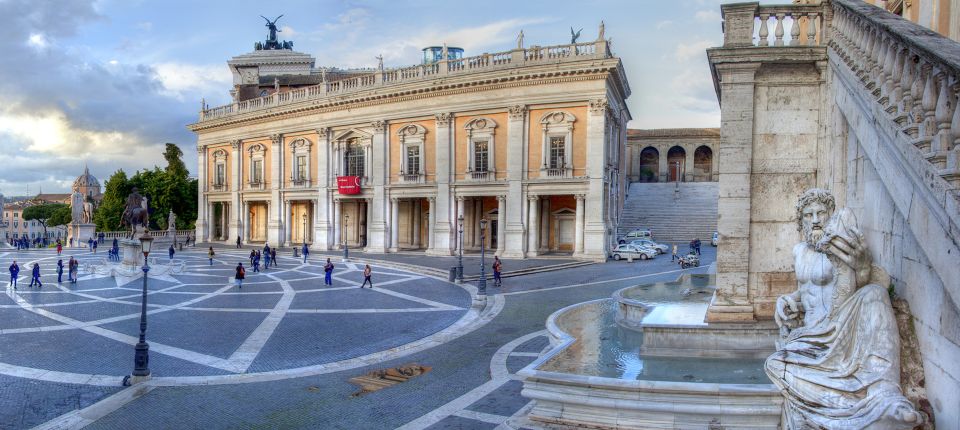
Piazza del Popolo is a great opening stop because it helps you understand Rome’s layout at street level. Your guide starts there and points out the square’s key features so you can see how it connects to the surrounding streets and viewpoints.
Expect a guided introduction plus a short walk—about 20 minutes here. This isn’t meant to be a full deep study of every building, but it is enough time to learn what you’re looking at before you move on.
One practical perk: you’ll likely pick up the “vocabulary” for the day early (how squares function, how monuments relate to movement and crowds). That makes the later stops easier to follow.
Piazza di Spagna and the Spanish Steps: more than just photos
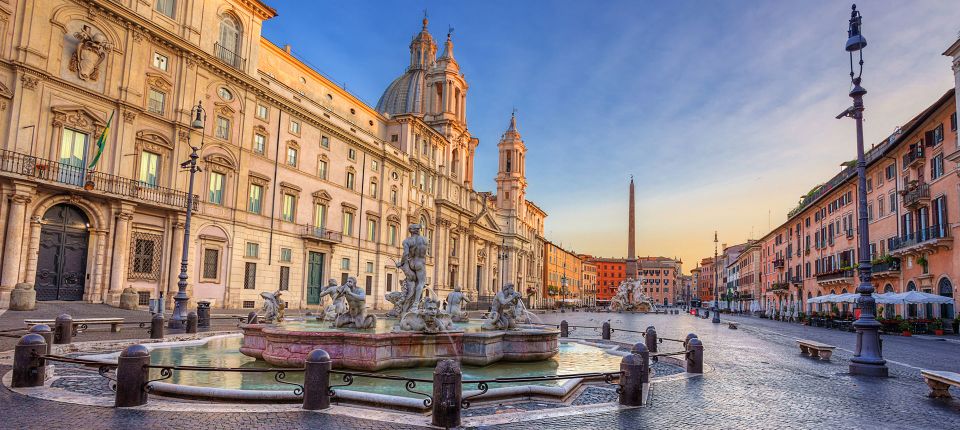
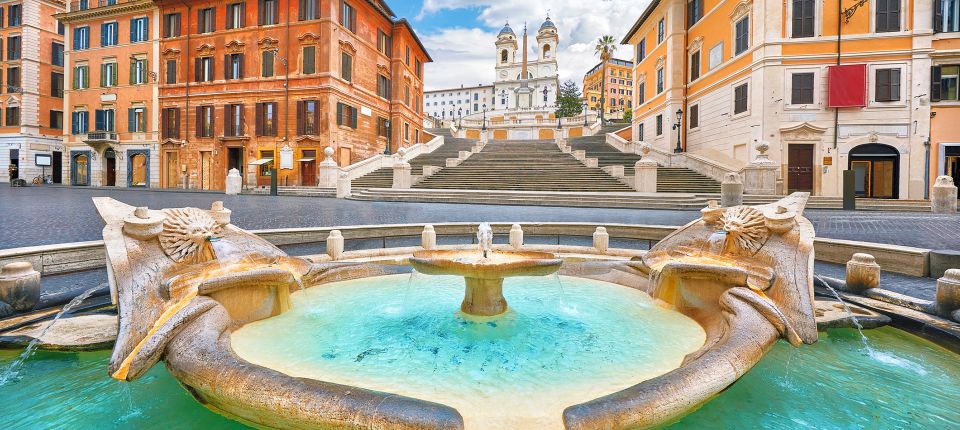
Then you head toward Piazza di Spagna, home of the Spanish Steps. This stop is another guided walk—again around 20 minutes—and it’s designed to help you understand the square in context, not just from the bottom of the stairs.
Here’s a tip that helps you enjoy this part more: pay attention to the angles. Even if your camera skills are average, this area rewards you if you look for sight lines—how the steps frame movement and how the square’s edges shape what you see next.
The Spanish Steps area is famous, so it can feel busy. Your best strategy is to let your guide show you what to focus on first, then use that knowledge to find calmer moments to pause and watch the flow.
Trevi Fountain: the coin ritual and the Baroque “how”

Trevi Fountain is the star stop. Your guide brings you through the Trevi district and you’ll spend about 30 minutes here, with time to see the fountain properly and learn what you’re looking at.
The big tradition you’ll do is the coin-toss—Rome’s ritual at Fontana di Trevi. Your guide will explain the custom, which helps you avoid that common tourist problem: tossing first, listening never, and then asking later what you just did.
What I like about Trevi in a guided format is that it’s easy to get stuck only on the spectacle. With a guide, you’ll also notice how the fountain’s design works as a performance in stone—how it pulls your attention and how Baroque style turns water, light, and figures into drama.
If you want a “better photo,” don’t just stand where everyone stands. The fountain reads differently as you shift a few steps, so use the time to reposition slowly rather than rushing.

The Pantheon: ancient engineering you can actually feel
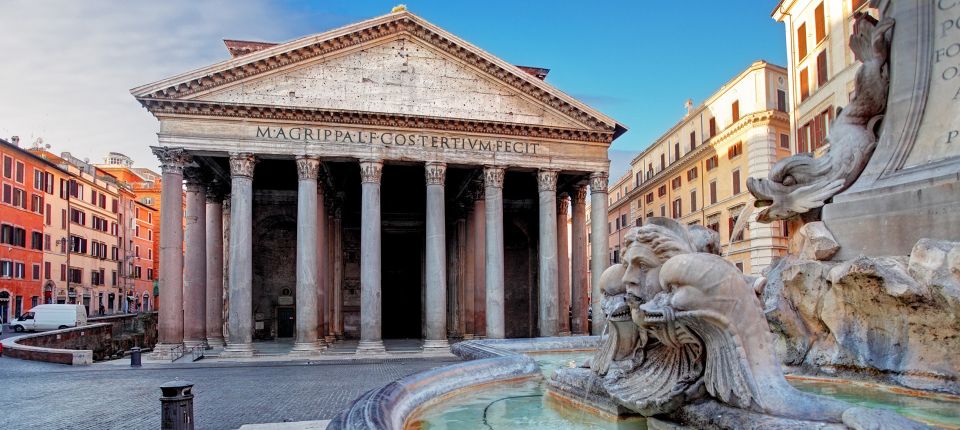
After Trevi, you move to the Pantheon, with about 20 minutes for the guided segment and sightseeing.
This is the stop where the tour earns its keep. The Pantheon isn’t just another landmark; it’s the kind of building where you understand why Romans were obsessed with scale and structure. Even with limited time, your guide can point out the big visual logic so it clicks rather than staying vague.
Expect a focused walk-through: the guide helps you connect what you see to how it was built and why it mattered. One review highlighted how some guides use tools—like a book showing before and now—to make changes easier to grasp. That kind of visual aid is especially helpful here.
Important realism: 20 minutes is enough to get oriented, but it won’t turn you into a建筑/architecture expert. If the Pantheon is the main reason you’re in Rome, you’ll probably want independent time afterward too.
Piazza Navona: fountains, people energy, and a great finish
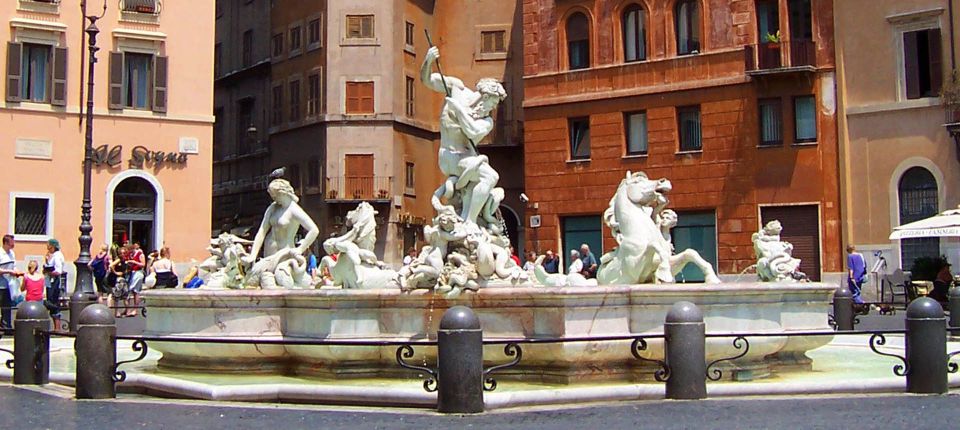
The final stop is Piazza Navona, with guided sightseeing and walking time around 20 minutes. This is where Bernini’s fountains take center stage and the square becomes a natural “you’re done, now enjoy” moment.
You’ll end surrounded by lively cafes and street performers. It’s a satisfying finish because it feels like Rome at normal life volume, not just an arrival sequence of monuments.
This is also a smart place to decompress. By now you’ve covered the major highlights, so you can linger, grab a drink, or simply watch the way the square’s layout guides movement around the fountains.
Price and value: is $35 fair in real Rome time?
At $35 per person for a 2-hour tour, you’re paying for three things: a licensed guide, guided pacing between major stops, and the interpretation that turns photos into understanding.
If you tried to do this route yourself, you’d still be able to hit the same places. But you’d lose the time-saving benefits: not knowing where to look, missing key background, and spending extra moments figuring out the best flow through the center.
It’s also worth noting the mix of what you get. In two hours you cover five major stops (Piazza del Popolo, Piazza di Spagna, Trevi Fountain, the Pantheon, Piazza Navona). That’s hard to replicate without backtracking when you’re on foot and juggling crowds.
The only value question is depth. One participant felt the historical detail didn’t go far enough for someone hunting for specifics. If you’re a serious history fan, you might want to plan a separate, longer history-focused visit later. For most first-time or time-crunched visitors, the balance here is a good match.
What to bring, wear, and avoid
This tour is set up for walking, so come prepared.
Bring:
- Comfortable shoes
- Water
Don’t bring or wear:
- No luggage or large bags
- No sleeveless shirts
Also, skip this if you have mobility limitations. The tour isn’t recommended for limited mobility and isn’t suitable for people with mobility impairments.
My simple packing advice: keep it to a small daypack you can manage easily through crowds and short transitions. If you’re used to big travel bags, Rome will ask you to scale down for days like this.
Guide quality: names like Celia, Estefani, and Sarah
Guide quality is a big deal on a route like this, because the difference shows up in the details you remember later.
Some guides have stood out for being patient and considerate. For example, Celia received praise for being kind, careful, and accommodating, including for someone dealing with a disability.
Estefani was also highlighted as excellent, with strong command of historical detail and the use of a book that shows differences between what you see now and what existed earlier. Sarah earned a perfect score for delivering a smooth, well-supported experience in French.
There was also one note that a guide didn’t provide enough historical depth. That doesn’t mean the tour is weak—just that your preference matters. If you want a tight narrative with interpretive detail, you’ll likely enjoy it. If you want heavy academic depth, you may want to complement with another guided option afterward.
Who this tour suits best
This works best for you if you:
- Want an efficient Rome introduction centered on major squares
- Like guided storytelling more than solo wandering with guesswork
- Have limited time and still want the Pantheon and Trevi Fountain in one plan
It may not suit you if:
- You need step-free or low-walking accommodations
- You’re traveling with large luggage
- You prefer long-form museum-style history sessions over short, high-impact stops
If you’re traveling with family, keep in mind the tour is about walking segments and close-to-central sights. Good shoes and a cooperative attitude go a long way.
Should you book this Rome landmarks tour?
If you’re visiting Rome for the first time or you’re short on hours, I’d say yes—this is a strong way to learn the city’s logic quickly. The route hits the places that most visitors want, and the guide layer helps you understand more than you’d get from wandering alone.
Before you book, be honest about your pace needs. This is not a slow sit-everywhere tour. It’s designed to move through the center with short guided stops and then let you continue at your own rhythm afterward.
And if you’re the type who wants deep historical minutiae, plan a second, longer history-focused experience on a different day. Consider this tour your orientation plus highlight reel.
FAQ
How long is the tour?
The duration is 2 hours.
Where do I meet the guide?
Meet in Piazza del Popolo, in front of the church Santa Maria del Popolo, where the guide holds a sign with the company name.
Do you include hotel pickup and drop-off?
No. Hotel pickup and drop-off are not included.
What languages are offered?
The live guide is available in Spanish, French, and English.
What should I bring, and what isn’t allowed?
Bring comfortable shoes and water. Luggage or large bags aren’t allowed, and sleeveless shirts aren’t allowed.
Is this tour suitable for limited mobility?
This tour is not recommended for people with limited mobility and is not suitable for people with mobility impairments.