REVIEW · COLOSSEUM, FORUM & PALATINE TOURS
Rome: Colosseum Guided Tour
Book on GetYourGuide →Operated by Discover Rome Tours · Bookable on GetYourGuide
The Colosseum feels louder in person, and this guided tour gives you skip-the-line entry with a small-group format so you can actually hear the story. In just 75 minutes, you’ll get inside the amphitheater and learn how Romans staged spectacle, from gladiators to animal hunts.
I love the first-level access focus, including walking through the arena area and hearing about trapdoors and how the show worked. I also like the hands-on architectural details, especially when guides explain construction materials like travertine limestone and tuff and the role of Roman arches.
One possible drawback: after the tour, your Roman Forum and Palatine Hill time is self-guided, so you’ll want to plan around closing hours and the usual crowd energy.
In This Review
- Key highlights to look for
- Meeting outside the Colosseum: where your tour actually starts
- Tickets and the skip-the-line advantage (and what you still control)
- Inside the Colosseum: arena views, trapdoors, and gladiator stories
- Roman engineering 101: travertine, tuff, and the logic of arches
- The pace in a real crowd: what 75 minutes feels like
- Roman Forum and Palatine Hill: self-guided, but plan your timing
- Who this tour fits best (and who might want a different plan)
- Price and value: $56.11 for 75 minutes plus two major sites
- What to bring (and what the Colosseum security may reject)
- Should you book this Colosseum tour?
- FAQ
- How long is the Colosseum guided tour?
- What’s included in the ticket package for after the guided part?
- Where do I meet the guide?
- Do I need ID to enter the Colosseum?
- Is this tour wheelchair accessible?
- What should I wear or bring for the tour?
Key highlights to look for
- Skip-the-ticket-line entry so you lose less time standing in line
- Small-group size (max 24) for a more personal experience and easier listening
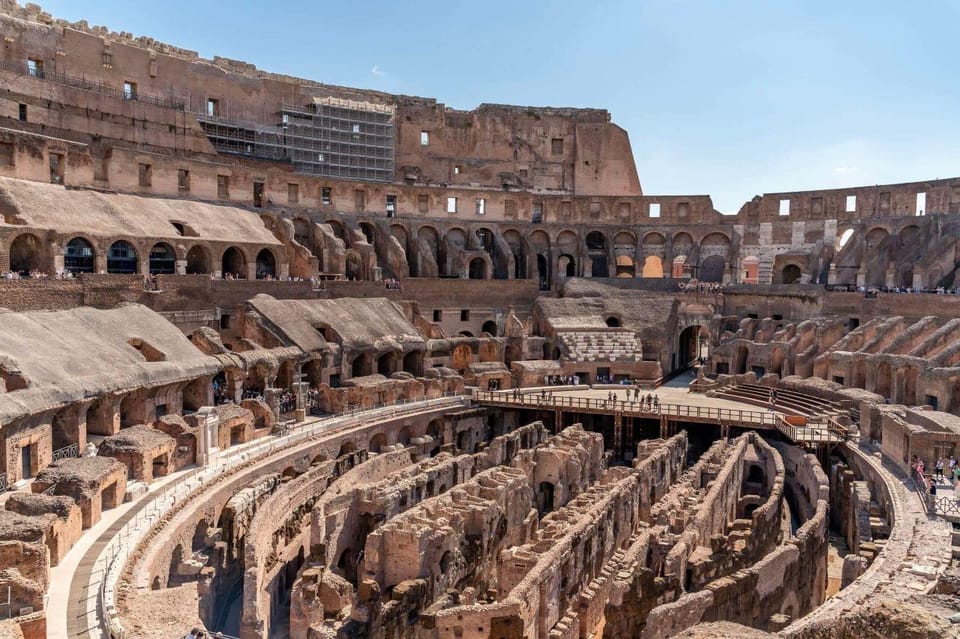
- Arena-level walk-through with practical context for what you’re seeing
- Gladiator types and show mechanics (including trapdoors) explained in plain language
- Construction techniques you can picture using real Roman materials and arch logic
- Guided Colosseum now, self-guided Forum/Palatine after with provided entry tickets
Meeting outside the Colosseum: where your tour actually starts
Your day begins at the Colosseum Metro Station (Upper level). Look for the Discover Rome Tours sign outside, near Caffe Roma Bar, close to the red M and SOS signs. It’s a very specific meet point on purpose: when you’re dealing with one of the world’s busiest monuments, being off by even a few blocks can eat your time.
Plan to arrive a bit early. Guides can only wait for so long before they have to keep the group moving. Also, the area is crowded, so take a quick second to find the right sign and staff before you try to wrangle your phone, tickets, and ID at the same time.
You can also read our reviews of more guided tours in Rome

Tickets and the skip-the-line advantage (and what you still control)
This tour includes skip the ticket line entry, which is a big deal at the Colosseum. The attraction can feel like an obstacle course, especially during peak hours. Skipping the worst of the queue means you get more time inside and less time watching other people’s vacation photos while you wait.
You also get access to the Colosseum, Roman Forum, and Palatine Hill. The guided part is the Colosseum, while the Forum and Palatine are yours afterward. That split is practical: the Colosseum is the place where expert context matters most. The Forum and Palatine are easier to wander solo once you understand the big-picture story.
One important requirement: it is mandatory to have a picture ID (or a copy on your phone) to enter the Colosseum. Bring the ID that matches the booking details. If you show up without it, you’ll be stuck at the gate.
Inside the Colosseum: arena views, trapdoors, and gladiator stories
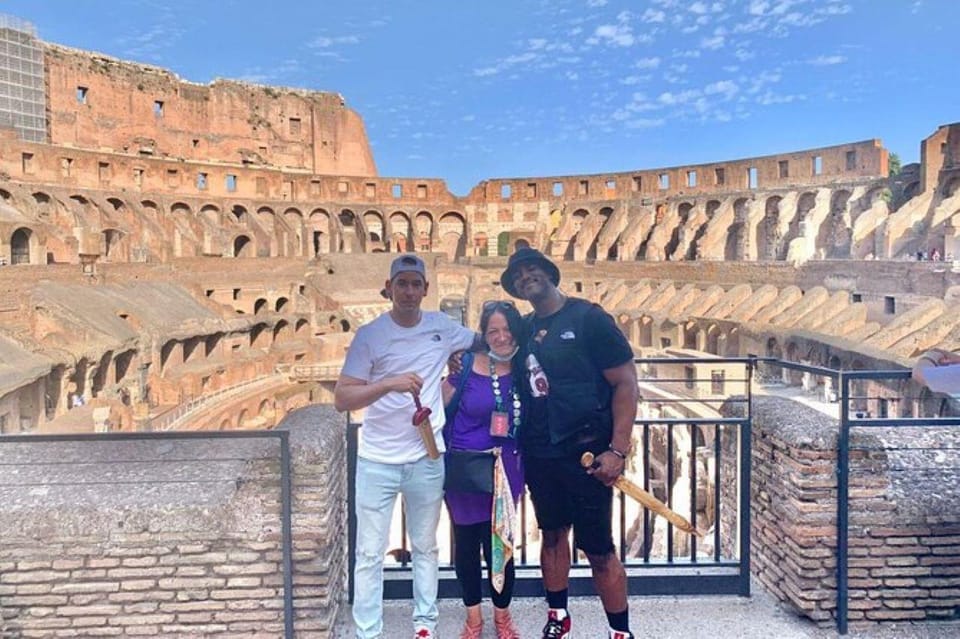
Once you’re in, the experience is built around one core idea: you’re not just looking at ruins. You’re learning the stagecraft behind the ruins.
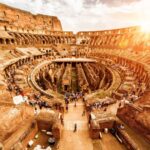
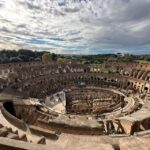
The tour takes you into the Colosseum and focuses on the first level, with time to see the arena floor and the kind of details people miss when they wander alone. Expect to hear about trapdoors and how fighters and animals were introduced. That matters because the Colosseum isn’t only about fighting. It was about timing, entrances, and engineering surprises for a massive crowd.
Gladiator talk is a highlight too, and it’s more useful than just naming famous fighters. You’ll learn about different gladiator styles—like the heavily armored murmillo and the swift retiarius—and what those designs meant for how the fights played out. The best guides connect costume and armor choices to what you see on the floor plan.
You’ll also hear about animal hunts, including the idea that exotic beasts were brought from distant lands. Standing near the arena while a guide paints that picture helps you understand the Colosseum as a full entertainment system, not a single event.
And yes, you might get extra help visualizing what you’re looking at. In the group, guides like Scott have used pictures from a book to help you picture what the arena would have looked like in action. It’s one of those small touches that makes the stonework feel less abstract.
Roman engineering 101: travertine, tuff, and the logic of arches
A good Colosseum tour answers two questions: what are you seeing, and how did they build it without modern tools?
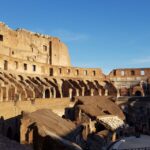
This experience leans into that. You’ll hear about Roman construction materials such as travertine limestone and tuff, plus the engineering innovations that helped the structure endure. When your guide explains the Roman arch, it turns the Colosseum from a cool silhouette into a set of repeatable building ideas.
Why this matters: once you understand the logic behind arches and stone choices, the damage and missing sections don’t feel random. You start noticing what survives, what failed, and where the stress would have gone. It’s the difference between sightseeing and real comprehension.
The pace in a real crowd: what 75 minutes feels like
The Colosseum inside can be packed, and you should expect crowd density. Even when you’ve got a guided route, you’ll be shoulder-to-shoulder in the most popular spots. That’s why the small-group limit (up to 24 people) matters. Smaller groups can keep moving and regroup more easily, which also helps you stay with the guide when you’re at key viewing points.
The tour is 75 minutes, so it won’t feel like a long lecture. The aim is to get you the big story, the meaningful visuals, and enough context so your later self-guided time feels smarter.
If you’re sensitive to noise or you hate missing words, use your advantage: stay a little closer to the guide during explanations. There’s at least one common annoyance reported with tours when the guide drifts farther away, and it’s easiest to avoid just by positioning yourself well.
Also note: guides have handled tough weather. One experience mentioned a storm, and the guide still kept the group organized and moving. Still, bring a light rain layer or umbrella if you’re traveling in unpredictable seasons.

Roman Forum and Palatine Hill: self-guided, but plan your timing
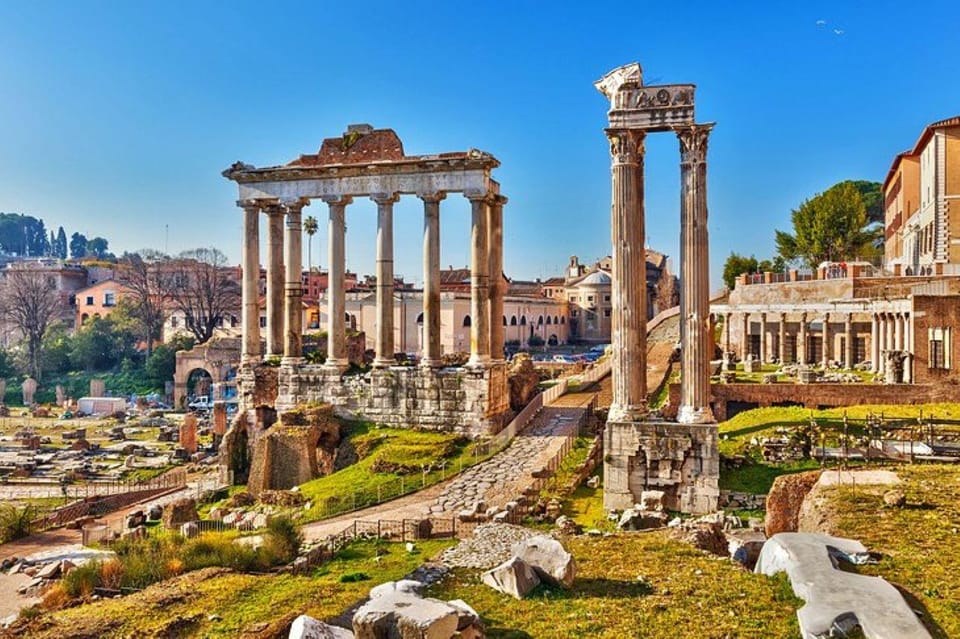
After the guided Colosseum portion, you’ll receive entry tickets for the Roman Forum and Palatine Hill for self-guided exploration. This is a great add-on because you can take your time walking through the spaces where Romans did business and politics.
Here’s what works well about the Forum section: it’s easier to wander slowly once you understand the Colosseum as an entertainment and power machine. Suddenly, the Forum feels less like random ruins and more like the daily engine of Roman life.
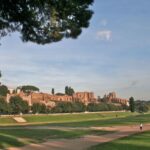
Then Palatine Hill is a strong payoff because you can head uphill for views and perspective. Even if you don’t know every emperor, the hill helps you get the geography of the city in your bones.
Your main caution is timing. One issue that came up is that tickets are time-restricted by attraction hours. If your Colosseum slot runs later in the day, you might not want to assume you’ll have unlimited hours for the Forum and Palatine afterward. Build in a buffer.
Who this tour fits best (and who might want a different plan)
This experience is a strong fit if:
- You want a guide’s storyline rather than reading everything off a sign
- You care about how the Colosseum worked (arena flow, entrances, trapdoors)
- You like small groups and hate getting swallowed by massive tour herds
- You want the Colosseum done with context, then the Forum and Palatine done at your own pace
It may not be ideal if:
- You’re wheelchair users (this activity is listed as not suitable)
- You want a fully self-guided experience with zero structure
If you’re traveling with kids or older relatives, the structure can help, since several groups noted that guides kept the material accessible and included everyone.
Price and value: $56.11 for 75 minutes plus two major sites
At $56.11 per person for a 75-minute guided Colosseum visit, the price can look “reasonable” or “steep,” depending on what you’d do otherwise. Here’s the value logic:
- You’re paying for expert live guidance inside the most overwhelming part of the complex.
- You get skip-the-line entry for the Colosseum, which can save significant time on-site.
- You also receive tickets for the Roman Forum and Palatine Hill, which are major attractions on their own.
You’re not paying only for walking around. You’re paying to make the Colosseum legible—why the materials matter, how the arches hold, and what the show mechanics were. That kind of context is hard to replicate at your own pace unless you already know what to look for.
Also, this tour doesn’t include food or hotel pickup, so factor that into your day. Bring water and plan a meal stop before or after so you don’t end up eating on the move.
What to bring (and what the Colosseum security may reject)
For a smooth entry day, stick to the rules:
- Bring passport or ID card (a copy is accepted)
- Wear comfortable shoes (moderate walking, and the ground is not always forgiving)
- Bring a water bottle
- In hot weather, consider hat and sunscreen
- Expect security checks at the entrance
Not allowed items include:
- Weapons or sharp objects
- Luggage or large bags
- Pets (assistance dogs allowed)
- Glass objects
If you’re traveling with lots of shopping bags or bulky backpacks, plan for it. The easier your load, the less friction you’ll face at security.
Should you book this Colosseum tour?
I’d book this tour if you want the Colosseum experience to feel guided, not random. The combination of first-level arena access, skip-the-line entry, and the guide-led breakdown of gladiators and Roman engineering gives you the fastest path to understanding what you’re looking at. Then the Forum and Palatine Hill tickets let you keep exploring without rushing the guide to cover everything.
I’d hesitate only if your schedule is tight later in the day and you think you might not have enough time for the Forum and Palatine afterward. In that case, pick a start time that leaves breathing room for the self-guided portion.
If you want a solid, efficient way to connect the Colosseum to the rest of ancient Rome, this is the kind of tour that helps you see more and feel less lost.
FAQ
How long is the Colosseum guided tour?
The tour lasts 75 minutes.
What’s included in the ticket package for after the guided part?
You receive tickets for the Roman Forum and Palatine Hill for a self-guided visit after the Colosseum tour.
Where do I meet the guide?
Meet outside the Colosseum Metro Station (Upper level), near Caffe Roma BAR, close to the red M and SOS signs. Look for staff with the Discover Rome Tours sign.
Do I need ID to enter the Colosseum?
Yes. It’s mandatory to have a picture ID (or a copy on your phone) to enter the Colosseum.
Is this tour wheelchair accessible?
No. It is not suitable for wheelchair users.
What should I wear or bring for the tour?
Wear comfortable shoes and bring a water bottle. In hot weather, consider a hat and sunscreen. You’ll also go through security checks at the entrance.