REVIEW · APPIAN WAY BIKE & E-BIKE TOURS
Rome: Appian Way & Catacombs Golf Cart Shared Tour
Book on GetYourGuide →Operated by EcoBike Roma - Parco Appia Antica · Bookable on GetYourGuide
The Appian Way is Rome’s timeline in stone. This golf cart shared tour takes you off the usual grid and into a quieter pocket of the Parco Archeologico dell’Appia Antica, with stops that range from an early Christian story to underground burials. I especially like the mix of outdoorsy walking time with real interpretive stops, not just photo stops.
Two things I’d pick first: the Domine Quo Vadis church stop (it’s tied to the Christ-and-Peter encounter) and the guided Catacombs of Rome visit. One thing to consider is that the catacombs are very stair-focused—there’s no lift, and you need a steady ability to go down and climb back up.
In This Review
- Key Points You’ll Care About
- Why This Appian Way Golf Cart Tour Beats the Usual Rome Plan
- Meeting at Via Appia Antica 60: The Setup That Keeps It Smooth
- Domine Quo Vadis: The Christ-and-Peter Encounter in a Real Setting
- Catacombs of Rome: Law, Faith, and Stairs You Need to Respect
- Quick reality check on catacombs expectations
- Circus of Maxentius and Capo di Bove: Politics in Brick and Stone
- Tomb of Cecilia Metella and Villa dei Quintili: Elite Life and Imperial Trouble
- Tomb of Cecilia Metella
- Villa dei Quintili
- Price and Value: What You’re Really Buying for $95
- A quick guide-style tip
- Who This Tour Fits Best (and Who Should Skip It)
- Should You Book This Rome Appian Way & Catacombs Tour?
- FAQ
- How long is the Appian Way & Catacombs golf cart tour?
- Where does the tour start and where do I check in?
- What’s included in the price?
- Are aqueducts included in this tour?
- Is the catacombs stop wheelchair accessible?
- Is this tour suitable for young children or pregnancy?
Key Points You’ll Care About
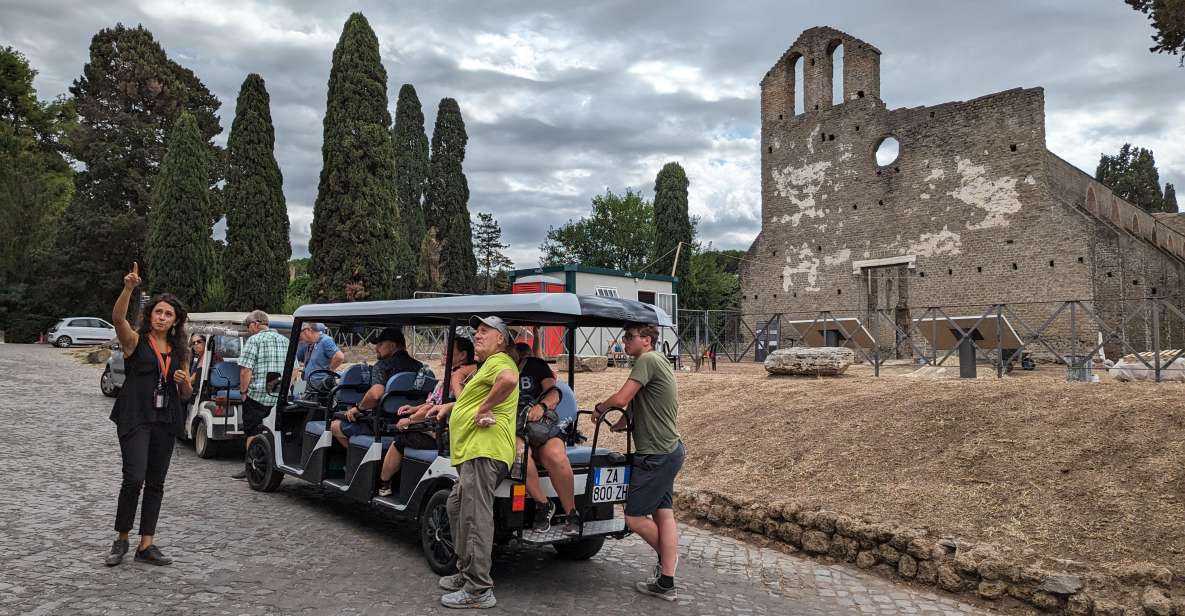
- Small group (max 5) means more chances to ask questions without competing for attention
- Catacombs are guided for 50 minutes, but they’re also stair-heavy and not wheelchair-friendly
- Domine Quo Vadis adds a strong early-Christian layer to an ancient route
- You pass major power-era sites like the Tomb of Cecilia Metella and Villa dei Quintili, even if not all are long stops
- Water is included, which matters when you’re cruising Rome’s countryside for three hours
Why This Appian Way Golf Cart Tour Beats the Usual Rome Plan
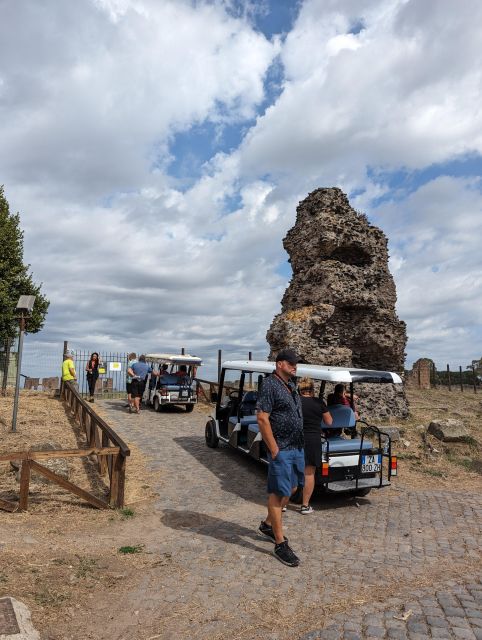
Rome’s center is packed with lines, crowds, and the same few angles. This tour changes the rhythm. You spend time on the Appian Way inside a protected area tied to emperors, rebels, and religious communities, and the pacing feels calmer because you’re not constantly weaving through dense streets.
What makes it work is the structure. You get a guided ride along the Appian Way for the scenic part, then you hit three “big idea” stops: early Christian story at Domine Quo Vadis, the underground world of the Catacombs, and then the political theater of the Circus of Maxentius. That mix is what turns “archaeology sightseeing” into a connected story you can actually follow.
There’s also something practical here: a golf cart share lets you cover more ground in three hours without feeling like you’ll be dragging yourself back to your hotel.
You can also read our reviews of more tours and experiences in Rome.


Meeting at Via Appia Antica 60: The Setup That Keeps It Smooth
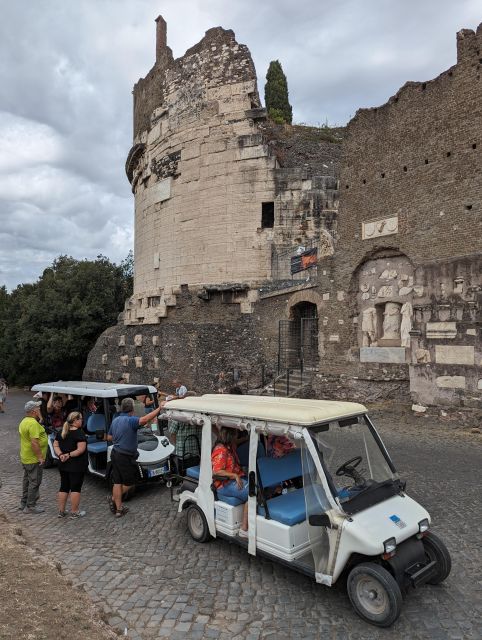
You meet at Via Appia Antica, 60, and the instruction is simple: arrive about 10 minutes early and check in at the desk. Because the group is capped at five participants, delays tend to matter less. You’re not stuck waiting behind a busload.
The timing also helps your brain. The total tour is about 3 hours, with the itinerary structured so you’re not doing all the walking upfront. The route includes a guided Appian Way portion (about 10 minutes), then the catacombs (about 50 minutes), plus additional guided time at Circus of Maxentius and Capo di Bove. Other sites are pass-by moments, which is good if you like a “highlight sweep” style.
One small note: the catacombs are roughly 16°C, and you’ll be moving down and up. Even if it’s warm above ground, you’ll want a layer you can tolerate indoors.
Domine Quo Vadis: The Christ-and-Peter Encounter in a Real Setting

The Domine Quo Vadis stop is one of those places where a story you’ve heard before becomes physical. The church is linked to the encounter between Christ and Saint Peter, and your guide frames it in a way that connects to the wider religious world forming under Roman power.
Here’s why I think this stop is valuable for you: it changes how you read the Appian Way. The road isn’t just a scenic relic; it’s a stage where spiritual ideas, burial practices, and authority all overlap. Even if you’re not a deep-theology person, the storytelling gives you a handle for what you’re seeing later underground.
It’s also a breather point in the itinerary. After being outside and moving by cart, you shift into a more focused, interpretive moment. You’ll usually come away with a better sense of why Romans built communities that could survive the political storms of their era.
Catacombs of Rome: Law, Faith, and Stairs You Need to Respect
The catacombs stop is the centerpiece. You’ll take a guided tour for about 50 minutes, going underground into a world shaped by faith and a community need for structure—your guide talks about that parallel world where identity and belief were managed carefully, even in a space that was physically challenging.
The practical part first: this experience is not wheelchair-accessible. There are about 50 irregular steps down and as many to climb back, and there’s no lift. You also can’t sit down comfortably along the route. If you have any doubt about stair stability or endurance, you should treat this as a hard constraint.
Now the fun part. This is where attention to detail pays off. One of the standout moments you might get is when your guide points out trilobites in the marble floor—small fossil reminders that the site holds both human and geological time. Even if your tour focuses more on inscriptions and burial space, you’ll likely be taught to notice things most people rush past.
Also, plan your clothing. It can feel cool—around 16°C—and the surfaces below can be uneven. Bring something that won’t make you fidget. Your feet will thank you, and your guide can keep the story flowing without you stopping every minute.
Quick reality check on catacombs expectations
This is not a luxury, sit-and-stare museum moment. It’s a guided walk through a fixed set of spaces. If you like history that has texture and rules, you’ll enjoy it. If you’re expecting an easy, flat stroll, you’ll be disappointed.



Circus of Maxentius and Capo di Bove: Politics in Brick and Stone
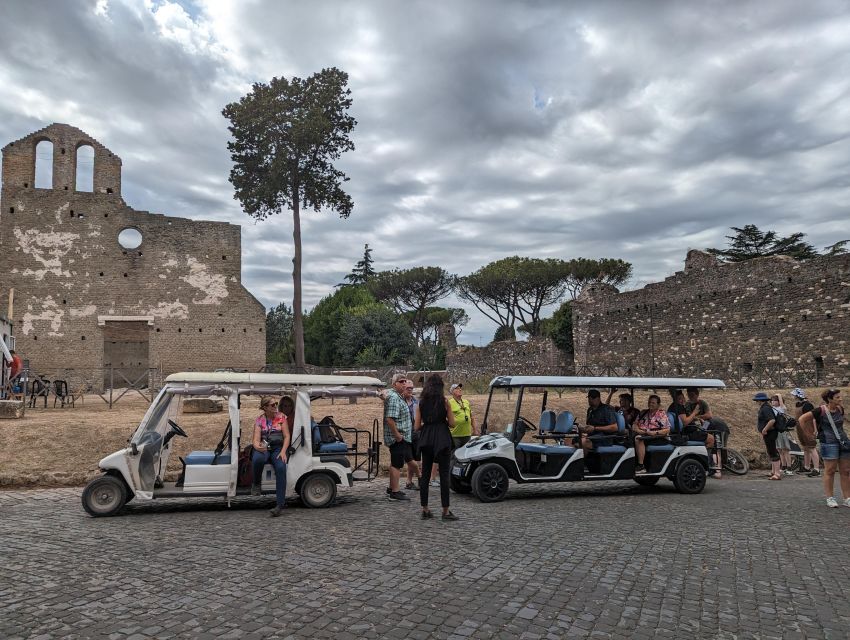
After the underground world, you switch to the power-display world of the Circus of Maxentius. Your tour includes a guided look here, and the point is more than size or architecture. This is a lesson in how Roman rulers used mass events—sports and spectacle—to signal control.
The Circus of Maxentius is the kind of site that rewards listening. Your guide helps you connect it to how people actually lived and gathered, and it’s often framed as the kind of setting that inspired the feel of entertainment in later popular culture. You’ll also get a sense of scale in a way that photos alone don’t give you.
Next comes Capo di Bove, another guided stop. Even if you don’t linger for a long block of time, it’s a chance to reset your eyes and connect the ruins to the surrounding setting. Think of it as the itinerary’s way of keeping your brain from getting stuck only on one type of site.
Tomb of Cecilia Metella and Villa dei Quintili: Elite Life and Imperial Trouble
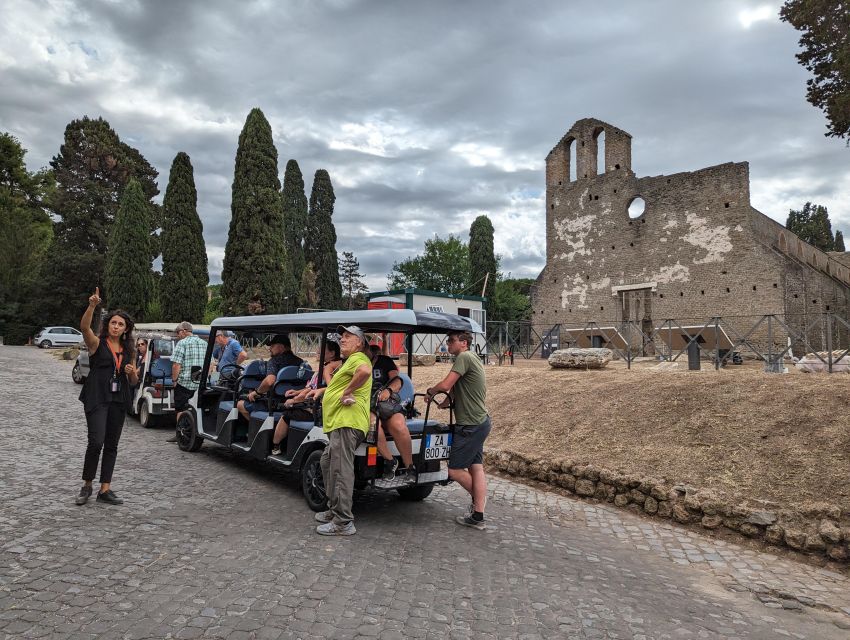
Not every stop is a long guided session. Some sites are pass-by moments, and that’s okay—if you’re paying attention, the “fast” parts still teach you what mattered.
Tomb of Cecilia Metella
The Tomb of Cecilia Metella is one of those monuments that instantly signals wealth and social standing. The connection your guide highlights matters too: it’s tied to a woman related to the richest man of Rome. That’s a useful framing, because it pushes you to read the tomb as a political object as much as a family marker.
If you’re the type who likes to understand who had influence, this is where the Appian Way starts to feel like a power corridor.
Villa dei Quintili
Villa dei Quintili is another pass-by stop, but you get the key storyline: it ties into plots against emperor Commodus. Even when you’re not walking the grounds as a deep visit, the guide’s explanation can give you a mental map of what you’re seeing and why it survived—or didn’t.
If your travel style is “tell me what I’m looking at and why it matters,” this part should land well. If you want a longer, in-depth villa visit, you might wish for more time here, but the tour is built around keeping the three-hour flow.
Price and Value: What You’re Really Buying for $95
At $95 per person for a 3-hour shared experience, you’re paying for three things:
- Transportation and access in a protected archaeological area
- A real guide who can connect the stops into a story
- Catacombs entry with a guided visit (that’s a major value driver)
You’re also getting half a liter of water per person, which sounds small until you’re moving in the countryside heat or doing stair work later.
What’s not included is also important for your planning. Aqueducts area is not part of this tour, and there’s no hotel pickup/drop-off. Food and drinks aren’t included either. If you want aqueducts, plan a separate add-on. If you want lunch, eat before or after, not during.
One more value detail: the group size stays small. That generally means the guide can pace the conversation and answer questions without ignoring half the group.
A quick guide-style tip
English-speaking guides can have different teaching styles. I’ve seen names like Federico and Shannon associated with this route, and both have been praised for making the material click. At the same time, if you care a lot about animated, emotionally driven storytelling, go in knowing that delivery style can vary from guide to guide.
Who This Tour Fits Best (and Who Should Skip It)
This is a strong pick if you want a connected Appian Way story in a short time, with the catacombs included. It’s also a good match if you like small groups and prefer not to spend your day in crowds.
It’s not a fit for everyone. It’s not suitable for children under 2, pregnant women, wheelchair users, and pets aren’t allowed. The catacombs stair requirement alone is a dealbreaker for some people—around 50 irregular steps down and 50 up, no lift, and little room to pause.
If you’re physically able and you enjoy guided history (especially when it connects religion, politics, and daily life), you’ll likely feel like you got more out of three hours than you would with a scattershot self-guided plan.
Should You Book This Rome Appian Way & Catacombs Tour?
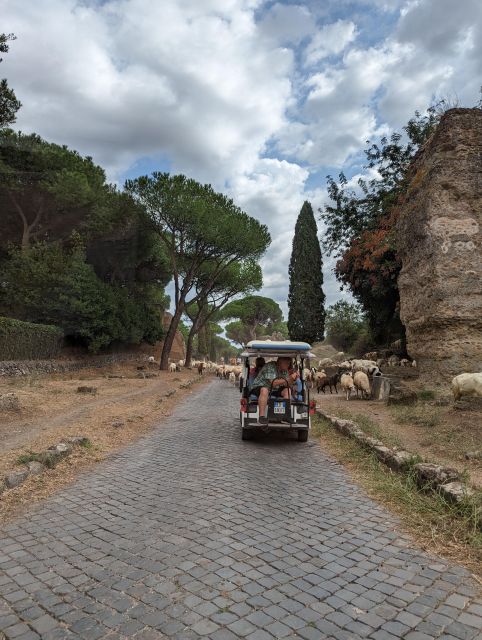
Yes—if your priority is value through storytelling and you’re comfortable with the catacombs’ stair layout. The best reason to book is the structure: you get the early Christian Domine Quo Vadis connection, then the guided catacombs experience, then a shift into the political spectacle of Circus of Maxentius and the elite power signals of Cecilia Metella and Quintili.
Skip it (or swap plans) if you specifically want aqueducts, need wheelchair access, or you’re not comfortable with stair-heavy underground sites. Also, if you’re the type who gets frustrated by a pass-by stop, know that Villa dei Quintili and Tomb of Cecilia Metella are more “see it while we talk” than long walk-through visits.
If you can handle that, this tour gives you a side of Rome that feels quieter, more layered, and easier to navigate than the usual must-see checklist.
FAQ
How long is the Appian Way & Catacombs golf cart tour?
The tour lasts 3 hours.
Where does the tour start and where do I check in?
You meet at Via Appia Antica, 60. You should arrive about 10 minutes early to check in at the desk.
What’s included in the price?
It includes an English-speaking local expert guide, a golf cart tour of the Appian Way, half a liter of water per person, and the catacombs entrance fee with a guided tour.
Are aqueducts included in this tour?
No. The aqueducts area is not included.
Is the catacombs stop wheelchair accessible?
No. Wheelchairs are not permitted in the catacombs due to architectural barriers, including about 50 irregular steps down and about 50 steps up, with no lift.
Is this tour suitable for young children or pregnancy?
It’s not suitable for children under 2 and not suitable for pregnant women. Pets are also not allowed.