REVIEW · DAY TRIPS FROM ROME
Ostia Antica: Small group tour from Rome
Book on GetYourGuide →Operated by Estaalia · Bookable on GetYourGuide
Roman ruins that feel like street life.
This small-group Ostia Antica tour gets you out of the city and into a working port town—complete with a licensed guide and skip-the-line entry—so you can read the stones like a story. I like the way the sights are chosen for variety: temples and houses, plus the big public spaces people actually used every day.
My two favorites are the chance to see the outdoor theater (where performances and even gladiatorial fights took place) and then head to the Square of the Guilds and public baths, which make the economy and daily routine feel real. The one thing to consider: it’s about 4 hours of moderate walking, and it’s not set up for wheelchair users or people with mobility impairments.
In This Review
- Key things to know before you go
- How the Ostia Antica day really starts at Roma Ostiense
- Skip-the-line tickets and why the guide matters here
- Ostia Antica’s port-city setting: the story behind the stones
- The outdoor theater: performances, crowd energy, and scale
- The Square of the Guilds: where business dreams got made
- Public baths: work out, lounge, and clean up the Roman way
- The House of Diana: the comfort side of ancient life
- Transport and timing: what 4 hours feels like on your feet
- Price and value: what $113.17 buys you
- Group size, languages, and the kind of guidance you want
- What’s included vs. what you’ll plan yourself
- What to bring (and what not to bring)
- Who should book this Ostia Antica tour
- Should you book this Ostia Antica tour?
- FAQ
- Where is the meeting point for the Ostia Antica small-group tour?
- How long is the tour?
- How do you get from Rome to Ostia Antica?
- What’s included in the price?
- Are food and drinks included?
- What languages are offered for the live tour guide?
- What should I bring, and is a passport required?
- Is luggage allowed?
- Is there a cancellation policy?
- Is the tour suitable for wheelchair users or mobility impairments?
Key things to know before you go
- A simple Rome-to-Ostia route by train: meet at Roma Ostiense and ride the local train roundtrip
- Skip-the-line access to the archaeological park so you spend more time looking and less time waiting
- Guided stops you can picture: outdoor theater, Square of the Guilds, public baths, and the House of Diana
- Port-city context: learn how Ostia grew as Rome’s harbor, then why it was buried and preserved
- Small-group pace: easier questions, tighter focus, and a more human-sized tour
- Practical extras from the guide: clear site guidance plus help with local connections you might want later
How the Ostia Antica day really starts at Roma Ostiense
You begin at Roma Ostiense Train Station, in front of the Roma Ostia Lido station at Piazzale Ostiense, 9. Plan to arrive 15 minutes early so you’re not doing that last-minute scramble with a ticket and a full water bottle.
From there, the tour takes you by local train to the archaeological park. It’s a big advantage: you’re not stuck negotiating buses or taxis in a new place when your day is already moving. Also, this is the kind of outing that feels more like a short excursion than a full-day production.
You can also read our reviews of more tours and experiences in Rome.


Skip-the-line tickets and why the guide matters here
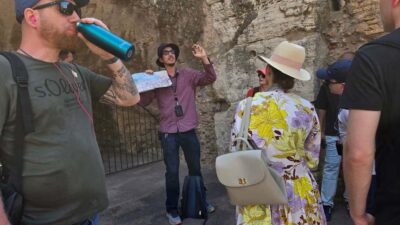
Ostia Antica is spread out. Without context, it can turn into a lot of “cool ruins” with no clear sense of what you’re seeing. With a licensed English tour guide (also offered in Spanish and French), you get a guided storyline as you walk.
I love that the tour includes skip-the-line tickets, because it protects your time. Instead of spending the early part of the experience standing around, you’re out on the paths looking at the town itself—temples, houses, and public buildings—while the guide ties the pieces together.
Ostia Antica’s port-city setting: the story behind the stones
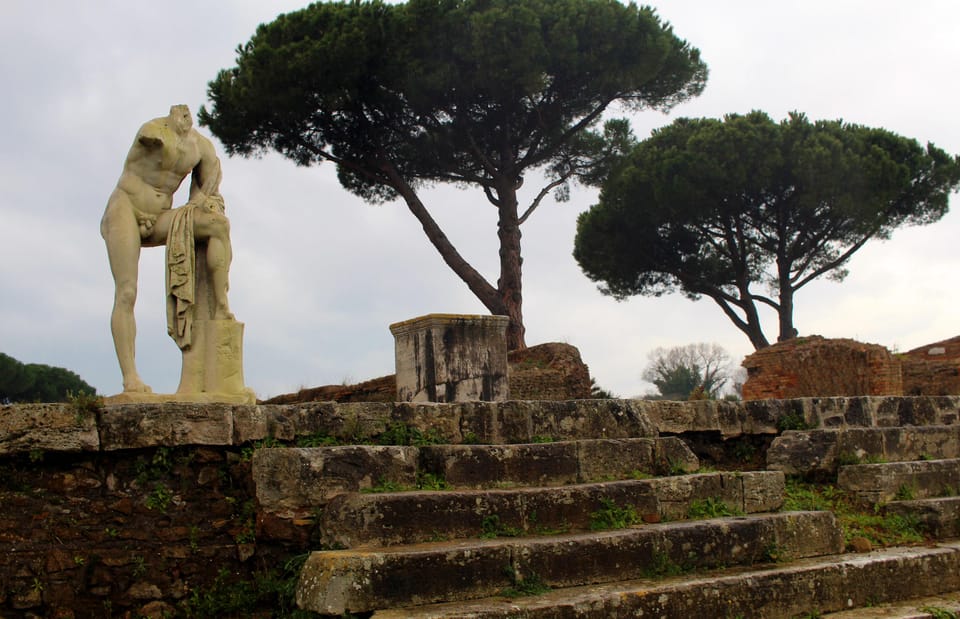
Ostia Antica was Rome’s thriving port city, built to serve a huge commercial system. As the Roman Empire declined, the city was eventually abandoned. Later, as the river changed course, Ostia got covered in silt and mud, which helped protect the ruins until excavation.
That background changes how you look at everything. When you understand this was once a working harbor hub—not just a pretty ruin—you start noticing how the layout supports movement: trade, gatherings, and the daily routines of residents and visitors.
The outdoor theater: performances, crowd energy, and scale

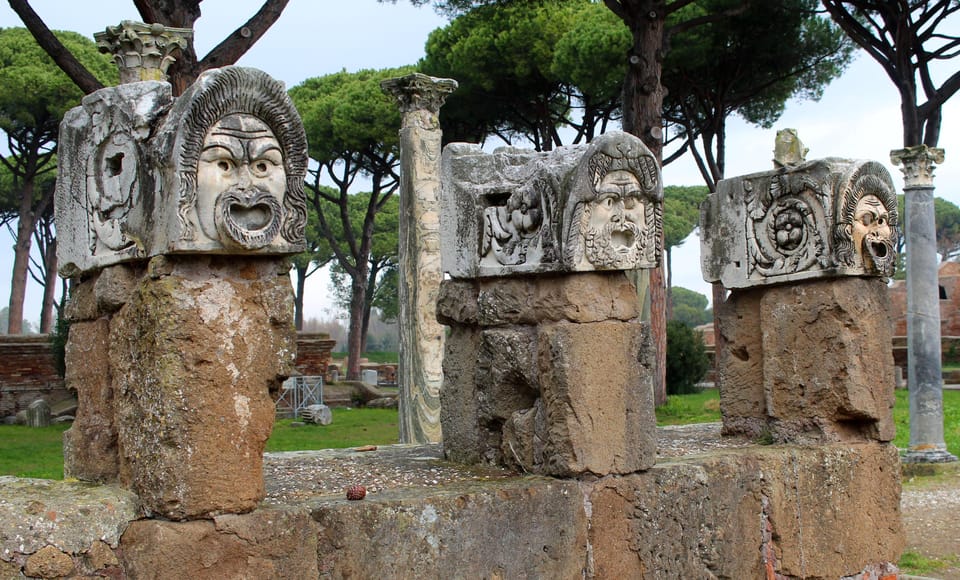
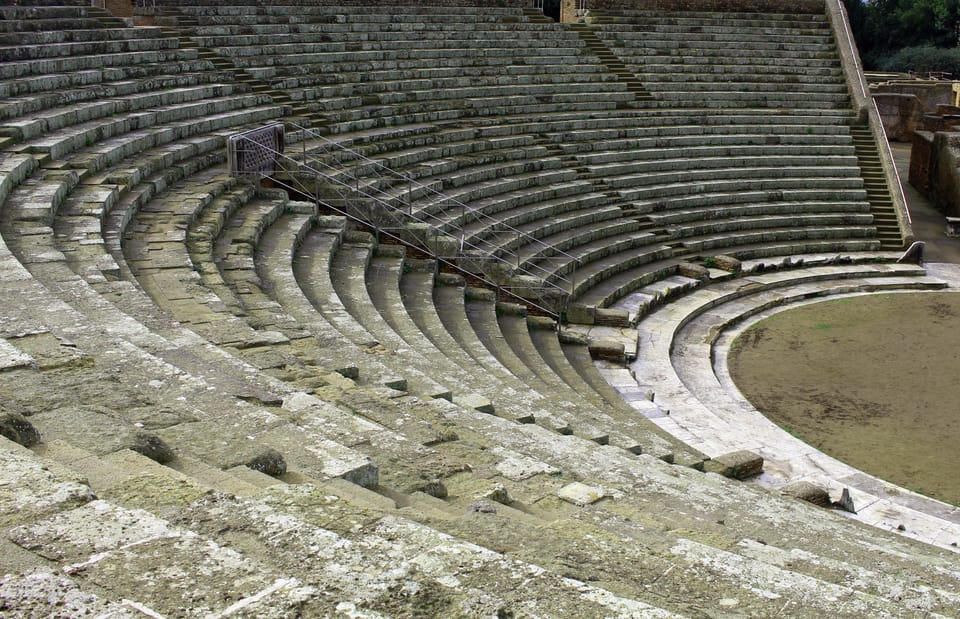
One of the headline sights is the grand outdoor theater. This was a major public venue where plays happened—and yes, gladiator fights too. Seeing it on a guided walk helps, because the guide’s explanation gives you the “why” of the place, not just the “what.”
The theater is also a good reality check on scale. You can feel how Rome organized entertainment for crowds in the open air, rather than hiding it behind indoor walls. You’re standing in a place designed for sound, sightlines, and mass attention—pretty different from modern theater habits.
The Square of the Guilds: where business dreams got made
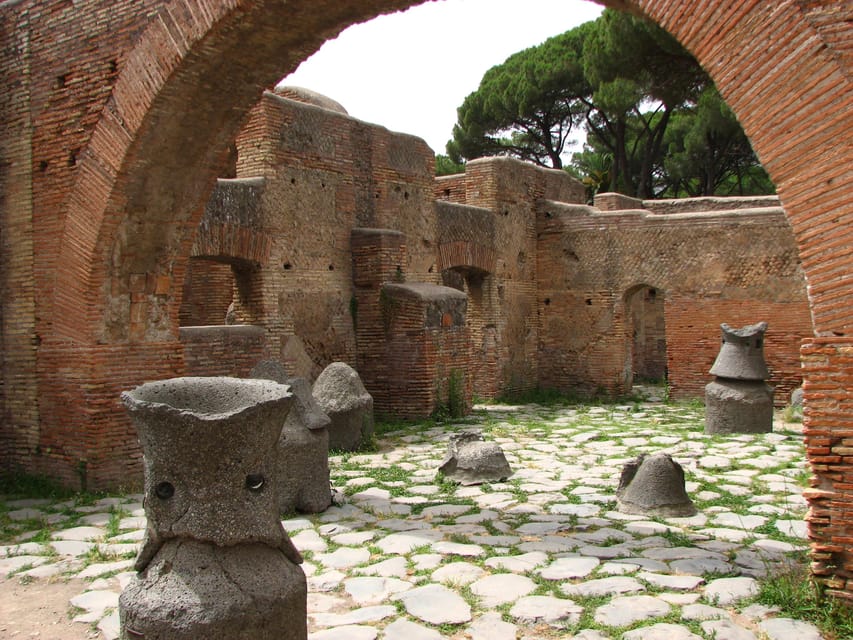
Just down the way is the Square of the Guilds. This is the part of Ostia where commerce takes center stage: ship owners and merchants tried to make their fortune here.
If you like history that connects to everyday money and work, this stop clicks. It’s not just monuments; it’s the idea of networks—people trading goods, building reputations, and trying to profit from Rome’s steady demand for imports and exports. You’ll probably find yourself thinking more like a merchant than a tourist, which is exactly the point.


Public baths: work out, lounge, and clean up the Roman way
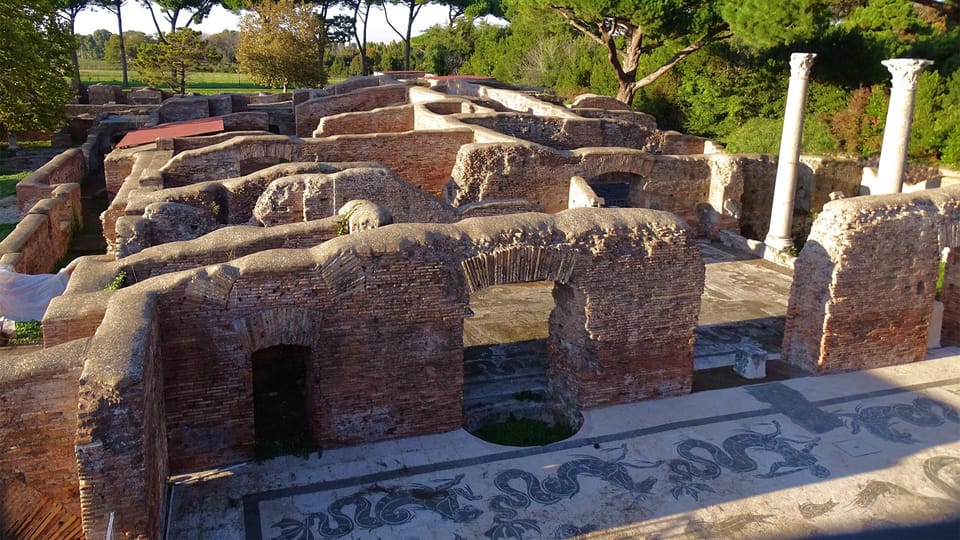
Next comes the public baths. These were places for more than washing—people would relax in pools, work out, and clean themselves using olive oil.
The baths are valuable for two reasons. First, they show how social life worked: the body, the conversation, and the routine all together. Second, they help you understand why Ostia matters. A port city needed services for residents and travelers, not just warehouses and docks—and the baths were a major piece of that.
The House of Diana: the comfort side of ancient life
Then you walk to the House of Diana, where you can see the living spaces connected to sleep and home life. This is where Ostia shifts from public buildings to private experience.
It’s a strong counterbalance after the theater and baths. You start the tour thinking about large crowds and trade, then you end up looking at the rooms where someone actually lived and rested. Even with ruins, there’s something grounding about imagining a daily rhythm: wake, work, socialize, and eventually go home.
Transport and timing: what 4 hours feels like on your feet
This tour runs about 4 hours total. That’s a compact amount of time for an archaeological site, and it works best if you show up ready to walk. The tour includes moderate walking, and the grounds aren’t set up for slow strolling with lots of optional detours.
If you’re visiting in hot weather, treat hydration seriously. Bring a water bottle, plus a hat and sunscreen. Wear comfortable shoes—Ostia Antica is not the place to test out new sandals or fashion sneakers.
Price and value: what $113.17 buys you
At $113.17 per person, you’re paying for convenience plus expertise. Based on what’s included, you’re not just buying entry tickets—you’re getting a roundtrip train ticket, skip-the-line access, and a licensed guide for the full walk.
That combo is usually where value lives on tours like this. If you were doing it on your own, you’d have to manage transport to Ostia, line up for entry (or at least figure out the timing), and then create your own “what am I looking at?” explanations while walking the site. Here, the guide handles the connections so you can focus on seeing.
Group size, languages, and the kind of guidance you want
This is a small-group tour, with private or small-group options. A smaller group matters because it’s easier to ask questions and stay aligned with the guide’s pace when you’re reading ruins that can look similar from different angles.
The tour offers a licensed English guide and also lists Spanish and French options. One review highlighted how the guide offered a lot of information and even added practical help for other plans—plus local bus information. That’s the kind of guidance that turns a good tour into a useful travel tool.
What’s included vs. what you’ll plan yourself
Included:
- Roundtrip train ticket
- Skip-the-line tickets to the Ostia archaeological park
- Licensed English tour guide (Spanish and French options also available)
- Small group tour
Not included:
- Food and beverages
So you’ll want to plan a water-and-snack strategy for yourself. Since food isn’t included, don’t count on buying something at the last second if you’re hungry. If you’re sensitive to heat or walking, pack accordingly.
What to bring (and what not to bring)
Bring:
- Comfortable shoes
- Hat
- Sunscreen
- Water
- Passport or ID card (a copy is accepted)
Not allowed:
- Luggage or large bags
That luggage rule matters more than it sounds. If you’re traveling with bigger bags, you may need to store them before you meet at the station. Keep your day light so you can move between train and ruins without friction.
Who should book this Ostia Antica tour
This tour is a great fit if you want a guided, structured visit to a site that’s bigger than it looks from the outside. It’s especially useful for first-timers who prefer learning as they go, rather than trying to interpret every site stop alone.
It’s not a good choice if you need wheelchair access or have mobility impairments. Also, if you hate walking or want a long, sit-down pace, you’ll probably feel rushed.
Should you book this Ostia Antica tour?
I’d book it if you want a smart, time-efficient day: train there and back, skip-the-line entry, and a guide who can connect what you see to how the city worked. At this price point, the inclusion of transport and guided interpretation makes it feel like more than a basic ticket-and-walk.
I’d skip it if you’re traveling with large luggage, you don’t do well with walking, or you’re looking for an entirely self-directed experience with no guide. For most visitors who want the “Rome port city” story told clearly while you’re walking through it, this one makes sense.
FAQ
Where is the meeting point for the Ostia Antica small-group tour?
You meet in front of the Roma Ostia Lido Train Station at Piazzale Ostiense, 9.
How long is the tour?
The duration is 4 hours.
How do you get from Rome to Ostia Antica?
You take a local train from Ostiense Train Station to the archaeological park, and the tour includes a roundtrip ticket.
What’s included in the price?
The tour includes a roundtrip train ticket, skip-the-line tickets to the Ostia archaeological park, a licensed English tour guide (Spanish and French are also listed), and the small-group tour.
Are food and drinks included?
No. Food and beverages are not included.
What languages are offered for the live tour guide?
The guide is listed as available in English, Spanish, and French.
What should I bring, and is a passport required?
Bring comfortable shoes, a hat, sunscreen, and water, plus a passport or ID card (a copy is accepted).
Is luggage allowed?
No. Luggage or large bags are not allowed.
Is there a cancellation policy?
Yes. There is free cancellation up to 24 hours in advance for a full refund.
Is the tour suitable for wheelchair users or mobility impairments?
No. It is listed as not suitable for people with mobility impairments and wheelchair users.