REVIEW · COLOSSEUM, FORUM & PALATINE TOURS
Colosseum Arena Tour, Palatine Hill and Roman Forum
Book on GetYourGuide →Operated by P.M.K. Leisure S.R.L · Bookable on GetYourGuide
Walk the arena path Romans once knew.
This tour lines up Colosseum arena floor time with the route gladiators used through the Gladiator’s Gate, then carries you uphill to Palatine Hill and into the political heart of Rome at the Roman Forum. I like how the storytelling connects the physical places to what life in the empire could feel like—power, punishment, pageantry, and survival.
Two things I really like: the licensed local guide and the fact you get a guided flow across all three sites without you having to stitch the visits together yourself. A former archaeologist guide with decades in Rome, plus guides like Paola (Whatsinitaly.com), are the kind of pairing that turns ruins into something you can actually picture. The radio guide also helps you hear details clearly in the busiest moments.
One drawback to plan around: there’s no food stop included. You may have stretches with no chance to sit down and eat, so bring snacks and water and don’t count on a break showing up at just the right time.
In This Review
- Key highlights to look for
- Entering the Colosseum from the Arch of Constantine
- Colosseum arena floor through Gladiator’s Gate
- What the Colosseum story actually adds to the ruins
- Palatine Hill: from Romulus legends to imperial palaces
- Roman Forum: where empire ran on meetings, markets, and power
- Timing, pacing, and what you should bring
- Price and value: is $50 actually a deal here?
- Who should book this Colosseum–Palatine–Forum tour?
- Should you book? My honest call
- FAQ
- Where is the tour meeting point?
- How long does the Colosseum Arena Tour, Palatine Hill, and Roman Forum take?
- Is the tour in English?
- Does it include skip-the-ticket-line entry?
- What sites are included?
- Do I need a passport or ID?
- Is the arena floor included?
- Are food and drinks included?
- Are hotel pickup and drop-off included?
- Is the tour wheelchair accessible?
- What can’t I bring?
Key highlights to look for
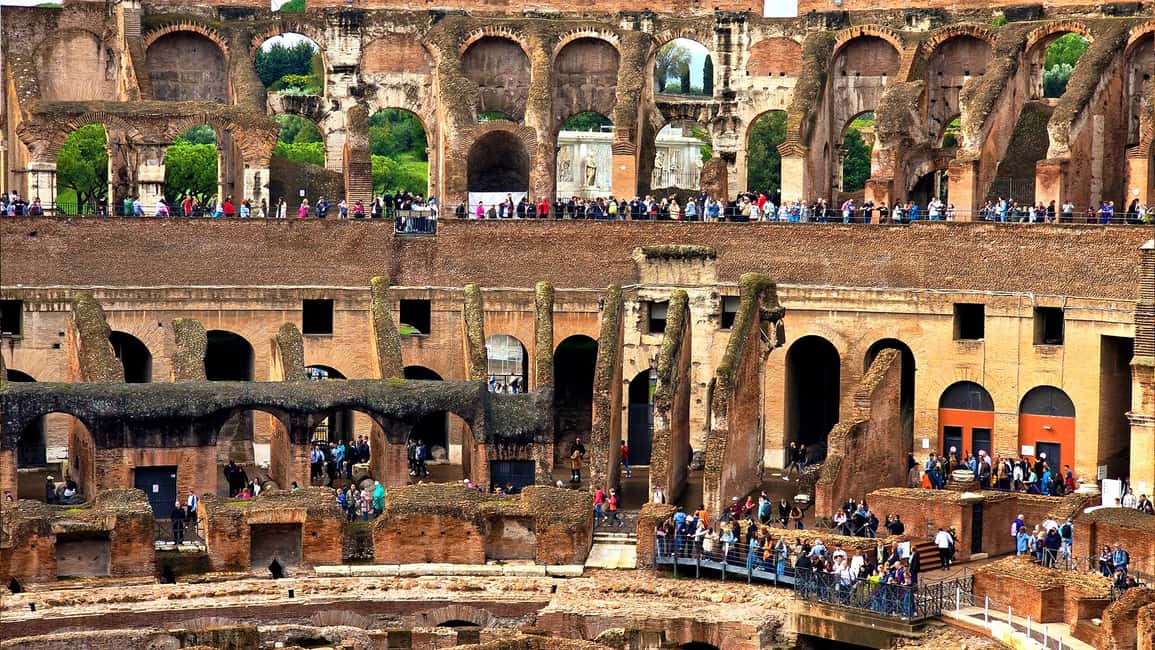
- Arena floor via Gladiator’s Gate: walk the level where games and pageantry played out
- Palatine Hill founding myths and imperial power: Hut of Romulus area to the Imperial Palace zone
- Roman Forum as the daily machine of empire: markets, law courts, temples, and speeches
- Small-group pacing: easier for photos and questions than big bus tours
- Radio guide for clear narration: helpful in loud, crowded ruins
- Includes major entrance fees: Colosseum, Palatine Hill, and Roman Forum in one package
Entering the Colosseum from the Arch of Constantine
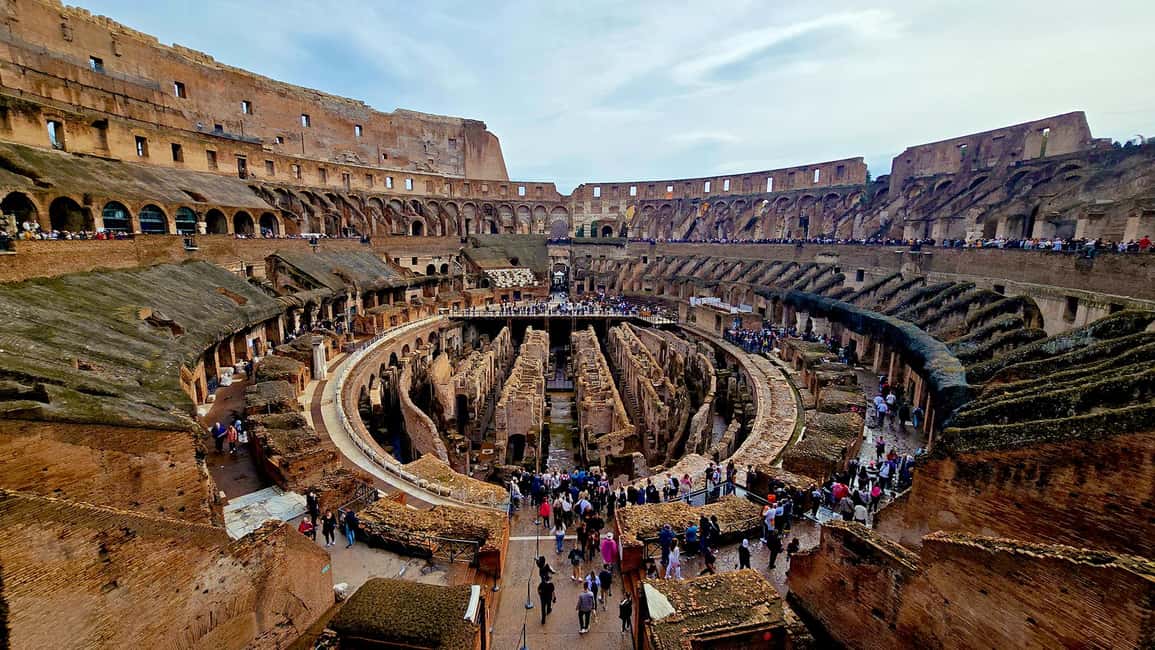
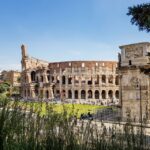
Most people think of the Colosseum as a single landmark. This tour starts you in the right mindset by meeting at the Arch of Constantine, the three-arch monument that sits by the Colosseum on the Palatine side. It’s a smart warm-up: before you even step into the arena area, you’re already surrounded by Roman “layers,” with older stone reused in later periods.
You’ll then move from meeting point to guided entry, with skip-the-ticket-line included. That matters here, because the Colosseum can be slow even when you arrive early. Getting into the site smoothly gives you more time where it counts: inside the building and on the floor level.
Keep an eye on details like ticket name matching your ID. The Colosseum uses nominative tickets, so your document name needs to match what you book. Also expect security checks when entering the Colosseum and the Palatine/Forum area.
You can also read our reviews of more tours and experiences in Rome.
Colosseum arena floor through Gladiator’s Gate
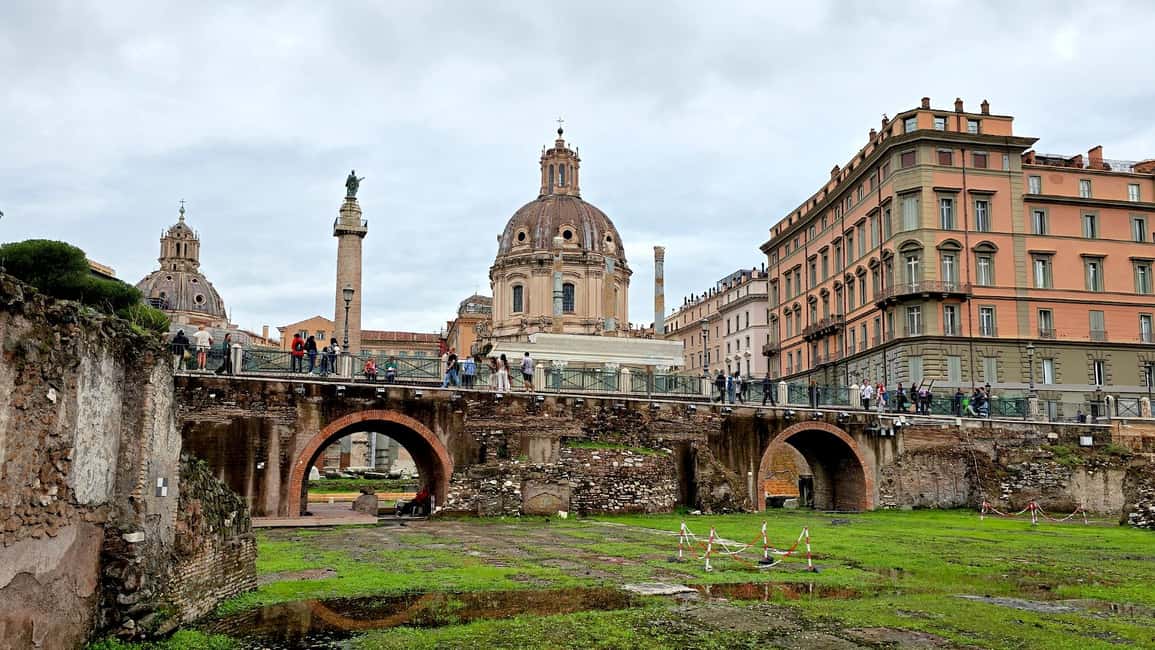
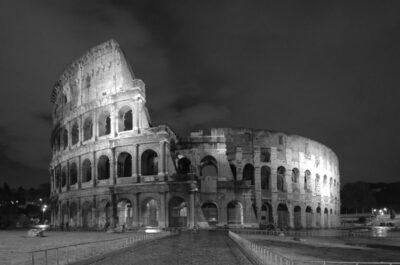
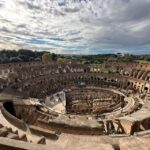
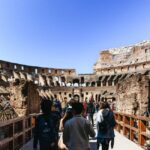
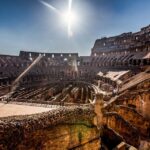
The headline is the arena access. You’ll go straight into the amphitheater and out onto the arena floor, reaching it through the Gladiator’s Gate route. That’s the exact kind of detail that makes the visit feel less like looking at a photo and more like walking the same path that people once used.
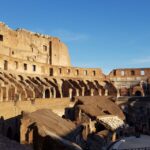
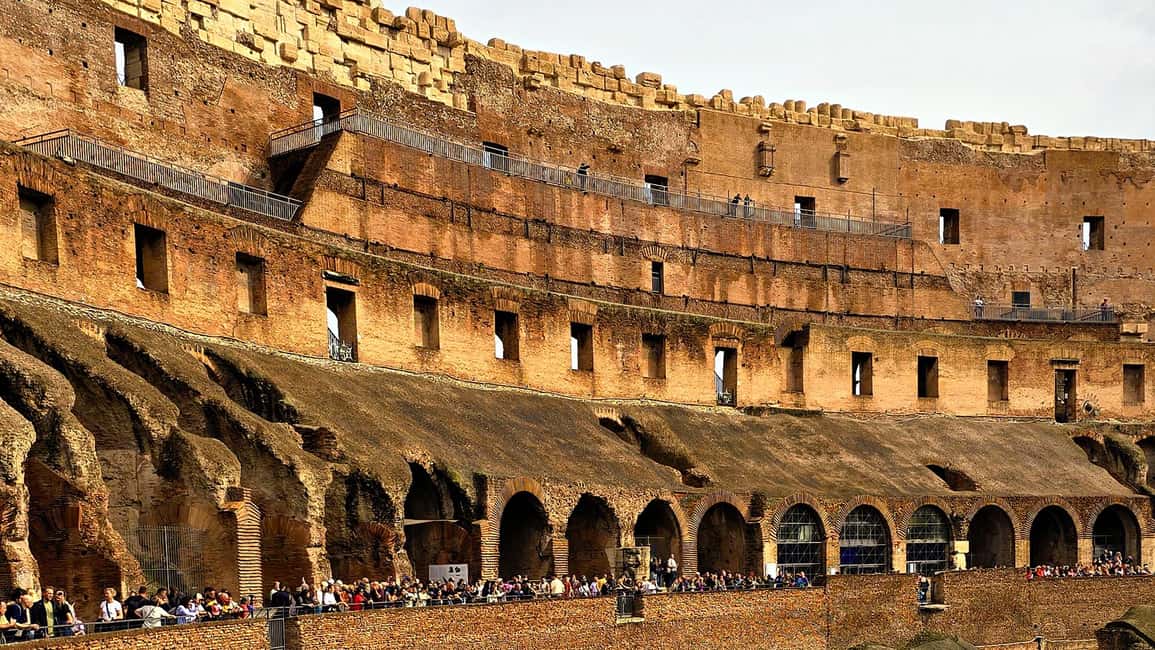
Standing on the arena floor helps you understand scale fast. You see where the action centered, where crowds would have looked down from above, and how the structure shaped sound, movement, and spectacle. It’s also a great place to learn what the Colosseum actually was: a performance space engineered for drama—sometimes cruel, sometimes controlled, and always political.
The tour is designed as a guided experience with a live English speaking guide and a radio guide. In practice, this means you don’t have to guess what you’re looking at, and you don’t have to compete with other groups to hear explanations. If you’re traveling when it’s busy, this clarity is a quiet luxury.
There’s also an optional exclusive access to the arena floor. The wording suggests you may choose a version that includes a more specific or upgraded arena experience. When you book, make sure the option you select matches what you want—because this is the part most people consider the “worth it” moment.
What the Colosseum story actually adds to the ruins
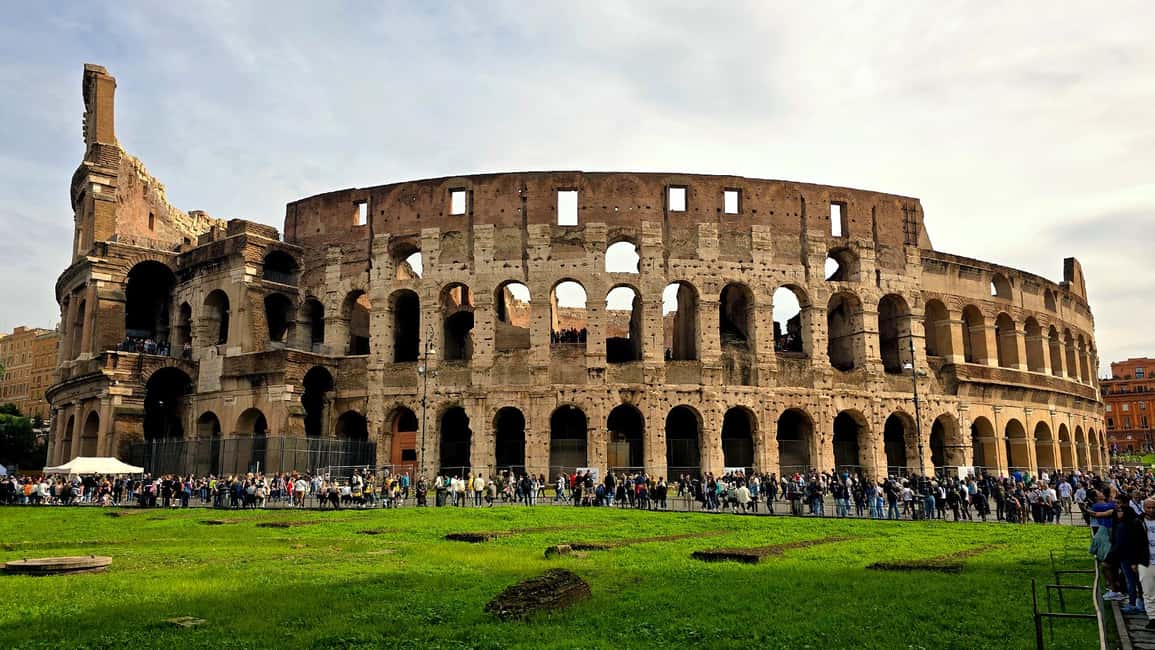
The Colosseum isn’t just stone and arches. This tour leans into the human side of the site: stories of cruelty, discipline, and clemency in ancient Rome. That framing matters, because it keeps you from treating the arena as only a horror museum or only an engineering marvel.
You’ll be walked through the Colosseum in a “follow the steps” style, tied to how the spectacle would have moved people—along corridors, toward the arena, and into the larger theater of the empire. The guide’s job is to connect the route to the culture: emperors with big agendas, audiences hungry for entertainment, and officials managing order.
This approach is especially useful if you’ve seen other ancient sites before. The Colosseum can feel repetitive if you only focus on the exterior. With the arena route and guided interpretation, the inside starts to make sense as a system—designed for performance, control, and visibility.
One more practical point: the tour keeps you in motion. Even though there are opportunities for photos, you shouldn’t plan on long sit-down pauses. If you like slow wandering, you’ll still get your fix, but you’ll likely appreciate the guide’s pace because it prevents you from losing time in the wrong spots.
Palatine Hill: from Romulus legends to imperial palaces
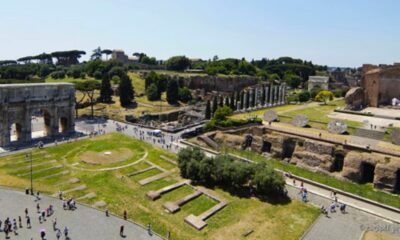
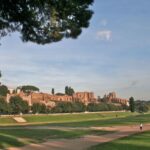
Next comes Palatine Hill, which is more than a viewpoint. It’s the area people associate with the early foundations of the city—settlements that run across centuries, including the Iron Age through later periods. Standing here, you start to understand why rulers cared about this hill: it links myth, power, and the physical center of early Rome.
You’ll visit famous areas such as the Hut of Romulus—the legendary founder’s mythic home—and then move toward the zones associated with the Imperial Palace. Even if you don’t memorize every detail, you’ll feel the shift: from origin stories to the spaces where emperors staged authority through ruling, politicking, and complicated family power.
Palatine can be tiring because it’s uneven and exposed in spots. That’s why it helps that the tour is small-group. Smaller groups typically mean fewer bottlenecks at key viewpoints, and it’s easier for the guide to adjust to the pace of the group.
If you like context, Palatine is where the day starts to click. The Colosseum shows you spectacle; Palatine shows you why that spectacle mattered to Rome’s leaders and identity. It’s the “why here” part of the story.
Roman Forum: where empire ran on meetings, markets, and power
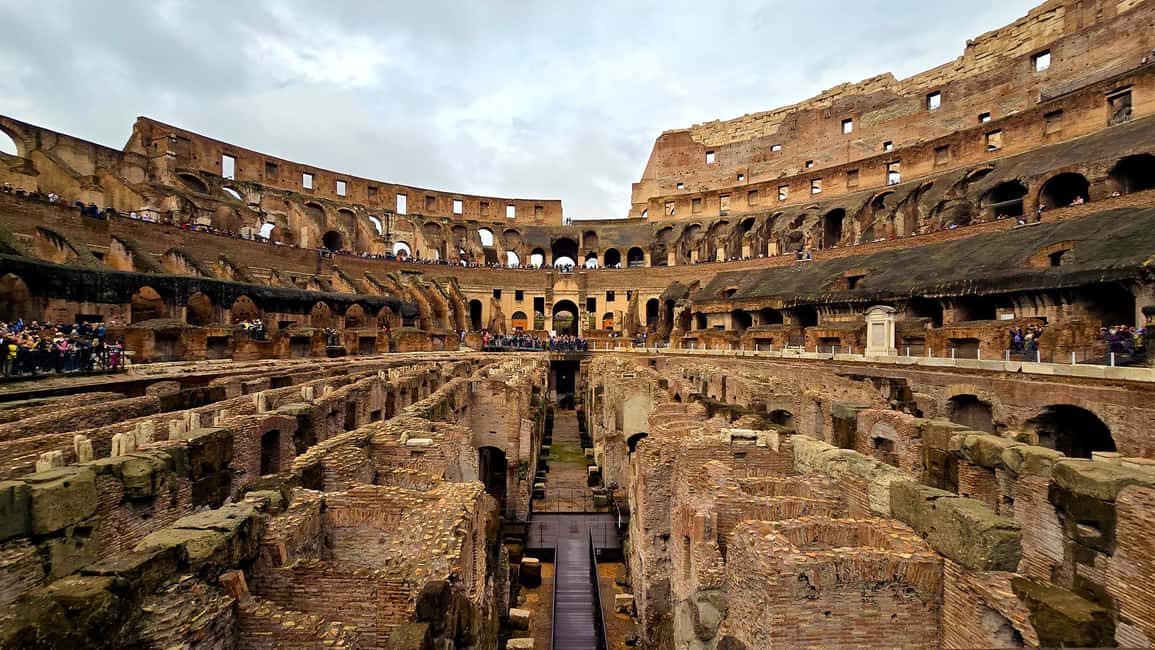
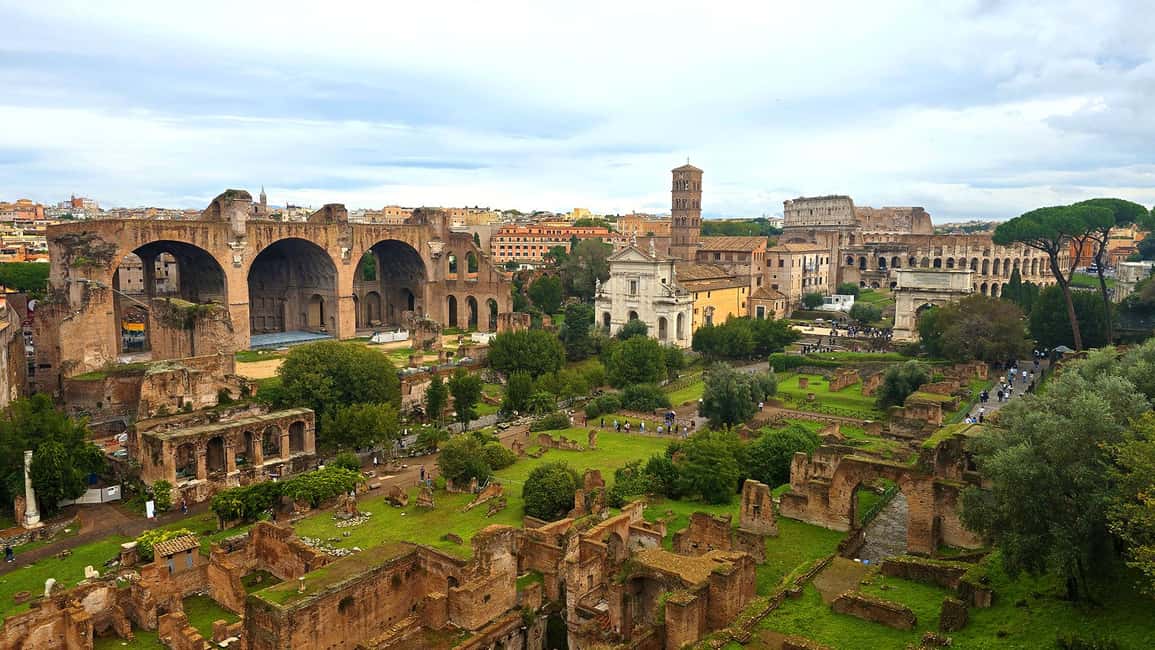
The final stop is the Roman Forum, the beating heart of ancient Rome. This is where daily life, politics, and religion collided—markets, law courts, temples, and the constant churn of people trying to influence outcomes.
The tour connects key moments to the space. You’ll hear about places tied to Julius Caesar’s cremation, the Triumphs where victorious generals marched with spoils, and dramatic power shifts such as the murder of two disgraced emperors in 69 AD. You’ll also get the thread of rhetoric through Cicero’s speeches, which shaped Western political language for centuries.
What I like about guiding the Forum is that it’s easy to wander here without direction. The Forum is big, with fragments scattered across the ground. A guided route helps you understand what you’re seeing: what was public, what was official, what mattered for law, and what mattered for ceremony.
At the end, you can explore at your own pace. That’s useful because the Forum rewards curiosity. If you want to linger by certain ruins or take extra photos, you’ll have the freedom to do it without fighting the group’s forward motion.

Timing, pacing, and what you should bring
The advertised duration is about 3 hours, but plan for the real world: security checks and how quickly your group moves can shift things. On at least one morning, the visit stretched longer with substantial time at each major stop. The big takeaway is simple: treat the day as a focused block, not a quick hit.
For what to bring:
- Passport or ID card (mandatory for entry)
- Water and snacks if you’re the type who gets hungry while walking
- Wear shoes that handle uneven ground and lots of standing
Also note what’s not allowed: luggage or large bags, handcarts, and alcohol and drugs. Keep your bag light. If you’re traveling with a lot of gear, plan to store it before you head here.
There’s also no hotel pick-up/drop-off and no food and drinks included. So if you need coffee, a snack, or lunch later, you’ll need to plan that yourself.
Price and value: is $50 actually a deal here?
At $50 per person, the value depends on what you’re optimizing for: guided time, skip-line entry, and whether you really care about arena access. Here’s what the package gives you that makes the price feel more reasonable:
- Entrance fees included for the Colosseum, Palatine Hill, and Roman Forum
- A licensed local guide leading the full route
- A radio guide, so you’re not straining to hear
- Skip the ticket line
- On-site assistance, which helps when security or routing gets slow
- Arena floor access as the centerpiece (with an option for exclusive access)
If you priced this out separately—tickets plus a guide plus the time savings—it can add up fast. The tour is especially cost-effective if you want one coherent route instead of piecing together tickets and meeting points on your own.
So yes, $50 can be a good buy if arena access and guided interpretation are your priorities. If you only want the exterior views, you’d be paying for more than you’ll use.
Who should book this Colosseum–Palatine–Forum tour?
This tour is a great fit if:
- You want arena floor time and a guided route through the main sites
- You like stories that connect stone locations to human behavior in the empire
- You’d rather follow an expert than worry about which ruin matters most
- You travel with a small group mindset, where questions and photos are manageable
It may not be a fit if you:
- Need wheelchair access (it’s listed as not suitable for wheelchair users)
- Want frequent long breaks for eating or a slow, stop-everywhere pace
- Are traveling with large bags or luggage
Should you book? My honest call
Book it if you want the day to feel like a connected walk through Rome’s power center—Colosseum spectacle, Palatine origins, and Forum politics—led by a guide who can connect details to meaning. The arena floor access is the big reason to choose this format, and the radio guide is the kind of practical feature that improves the experience more than people expect.
Skip it (or switch to a different style) if your priority is casual wandering only, or if you know you’ll be stressed by security checks and packing restrictions. For most visitors aiming to get real value in limited time, this is one of the smarter ways to tackle all three major sites without losing half your day figuring out logistics.
FAQ
Where is the tour meeting point?
The tour meets at the Arch of Constantine, next to the Colosseum on the Palatine side. It’s recognizable by the three arches.
How long does the Colosseum Arena Tour, Palatine Hill, and Roman Forum take?
The duration is listed as 3 hours. Security checks and on-site conditions can affect timing.
Is the tour in English?
Yes, the live tour guide is English.
Does it include skip-the-ticket-line entry?
Yes. Skip the ticket line is included.
What sites are included?
Entrance fees are included for the Colosseum, Arena (arena floor access as part of the experience), Palatine Hill, and the Roman Forum.
Do I need a passport or ID?
Yes. You must bring passport or ID card, and your ticket name must match your document.
Is the arena floor included?
The tour includes arena floor access as part of the experience, with optional exclusive access to the arena floor mentioned. Check what option you select when booking.
Are food and drinks included?
No. Food and drinks are not included.
Are hotel pickup and drop-off included?
No. Hotel pick up and drop off are not included.
Is the tour wheelchair accessible?
No. It is listed as not suitable for wheelchair users.
What can’t I bring?
You can’t bring luggage or large bags, handcarts, and alcohol and drugs.