REVIEW · COLOSSEUM, FORUM & PALATINE TOURS
Ancient Rome with Archaeology – Small Group Only
Book on GetYourGuide →Operated by LeonardoDC · Bookable on GetYourGuide
Rome reads better with archaeology. This Ancient Rome small-group walk turns big-name ruins into a clear story of how power and everyday life shaped the city over time. I especially love the archaeology-led explanations that make the monuments feel connected, and the way the route ends at the Theatre of Marcellus archaeological area with more context than the usual quick photo stop. One drawback to consider: it does not include tickets or entry inside the monuments, so you’re there for understanding the sites from outside and from key vantage points.
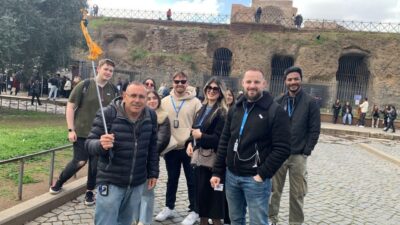
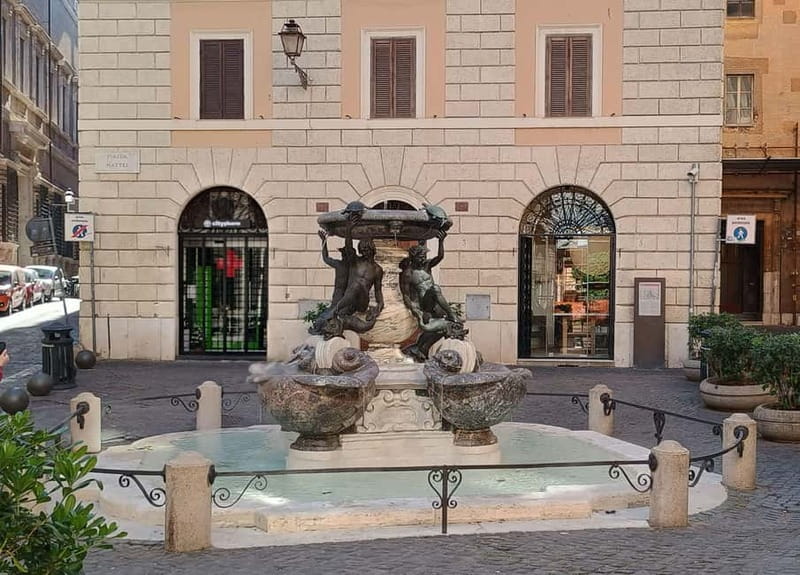
You’ll meet at Piazza Mattei 1 (right by the Fountain of the Turtles) and then spend about 2.5 hours moving through central Rome at an easy pace. The guide, Leonardo (LeonardoDC), starts with a timeline introduction either in a café area or while you’re walking, so the rest of the route makes sense fast. If you prefer a slow, do-not-rush experience where you can set the pace to your interests, the small size (up to 6 people) is a big plus.
Plan for a “see it and understand it” outing rather than a “go inside everything” day. The tour is described as a light walking experience suitable for all ages, and it’s wheelchair accessible through the city route, but you still will be on your feet for multiple stops.
In This Review
- Key things I’d watch for on this archaeology-focused Rome route
- Why this tour works: archaeology turns ruins into a timeline
- Stop-by-stop: Piazza Mattei to the Colosseum area in a smart sequence
- Imperial Fora: reading Rome’s power project instead of just naming ruins
- The Roman Forum and Palatine Hill: why vantage points matter
- Capitoline Hill square and the Theater of Marcellus finish: a strong closing arc
- Outside viewing only: what you gain and what you shouldn’t expect
- The pace and the small group advantage: better questions, less noise
- Languages, guide style, and why Leonardo’s approach clicks
- Price and value: $36.08 for a 2.5-hour archaeology narrative
- Who should book this Ancient Rome archaeology tour?
- Should you book this tour?
- FAQ
- Where does the tour start, and where does it end?
- How long is the Ancient Rome with Archaeology tour?
- What is included in the tour?
- Does this tour include entry tickets or going inside monuments?
- Is the tour a small group?
- What languages does the guide speak?
- Is the tour wheelchair accessible?
- Is it a lot of walking?
- What stops or areas will I see?
- How much does it cost?
- Can I cancel or reserve without paying right away?
Key things I’d watch for on this archaeology-focused Rome route
- Archaeology-first storytelling: the guide connects the why, when, and how behind what you see
- Small group size (max 6): easier questions and a pace that can bend to your interests
- Outside viewing from key vantage points: you get layout and meaning, not just photos
- Imperial Fora + Capitoline Hill context: the monuments are explained as part of a system
- The Theatre of Marcellus archaeological area finish: a strong closing scene with added layers
Why this tour works: archaeology turns ruins into a timeline
What makes this experience different is the format. You’re not just given a list of monuments. You’re guided through a chronological way of seeing Rome, starting with an intro to the timeline and the role of art and architecture in the city’s growth.
That matters because Rome can feel like a pile of stones until someone explains the logic behind the building choices. Here, the guide focuses on why the monuments were built, how their design developed, and what historical change looks like when you read it through physical remains. The result is that the Forum, the Colosseum area, and the imperial building projects don’t feel random. They start to feel like chapters.
I also like that the explanations are tied to archaeology and history rather than just legend or vague “this is ancient Rome” commentary. If you’re the type who likes to understand what you’re looking at, this tour gives you that mental map.
You can also read our reviews of more tours and experiences in Rome.
Stop-by-stop: Piazza Mattei to the Colosseum area in a smart sequence
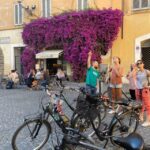
You begin at Piazza Mattei, 1, right in front of the Fountain of the Turtles. It’s a handy start point because you’re in an open, recognizable area before heading into the heavier cluster of monuments.
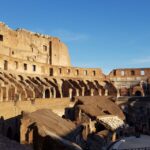
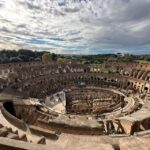
From there, the first big focus is the Colosseum zone. Your time at this stop is about 30 minutes with a guided walk and guided tour elements. Even without entering the monument, you can still learn a lot if the guide points out how the structure fits into the bigger story of Roman power and public spectacle.
What I like about placing the Colosseum early is how it helps you set expectations. You can see the Colosseum area as more than a famous backdrop. The guide’s job becomes clearer: to explain what this kind of architecture meant and how it changed as Rome grew.
Practical note: since the tour does not include tickets or inside visits, don’t plan on using this time for museum-style exploration. Plan for viewpoints, street-level context, and interpretive explanations.
Imperial Fora: reading Rome’s power project instead of just naming ruins
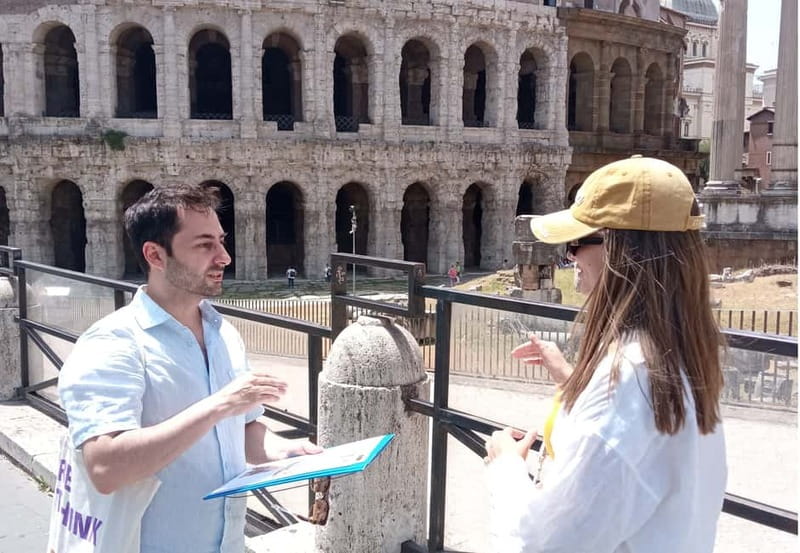
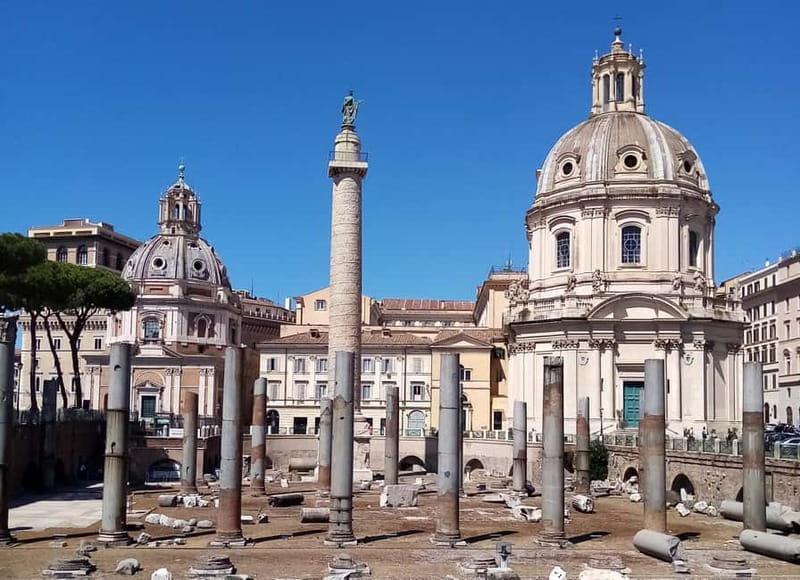
Next comes the Imperial Fora stop, also about 30 minutes. This section is valuable because “Imperial Forums” can sound like one big thing, but you’ll get a sense of how these areas functioned as political and cultural engines.
You’ll visit and tour the Imperial Fora with sightseeing and walking. The experience is described as focusing on architecture and archaeology, so you’re not just spotting big elements. You’re learning how the monuments relate to each other and what that relationship tells you about Roman priorities.
A useful detail here: the tour includes the idea of the five Imperial Forums. Even if you’re not aiming to memorize the exact list, hearing them framed as part of a broader urban plan makes the area feel less chaotic. You can also understand why so much effort went into building and rebuilding around these political centers.
If you tend to get lost in big sites, this stop should help. The guide is built for connecting dots, and this is where that approach starts paying off.
The Roman Forum and Palatine Hill: why vantage points matter
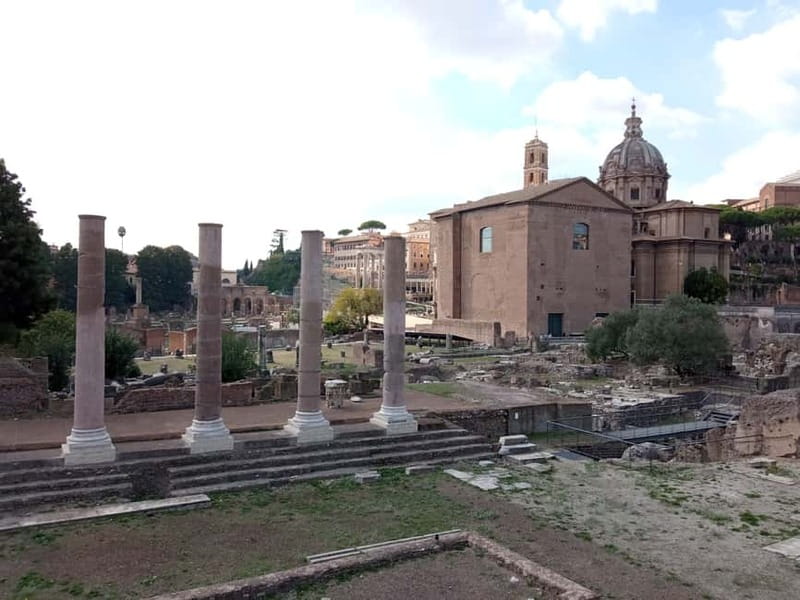
Then you move to the Roman Forum stop, again around 30 minutes. This is the heart of the “read the city through archaeology” idea.
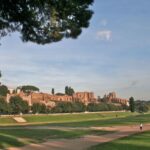
You’re guided through the Roman Forum with sightseeing and walking, and you’ll also cover the connection to Palatine Hill as part of the overall monument context. The way this is framed matters. Instead of treating the Forum as one location, you’re encouraged to see how different areas relate through elevation, sight lines, and the evolution of structures.
From the description, you’ll get vantage points designed to help you see temples, basilicas, and other major features in context. That’s key. At street level, ruins can feel like isolated fragments. From the right angles, you start to see the urban logic: what people would have seen, where activity concentrated, and how the city organized public life.
This is also a place where archaeology-based explanations can change your whole impression. You begin to understand what you’re looking at as layers of change, not a single snapshot.
Capitoline Hill square and the Theater of Marcellus finish: a strong closing arc
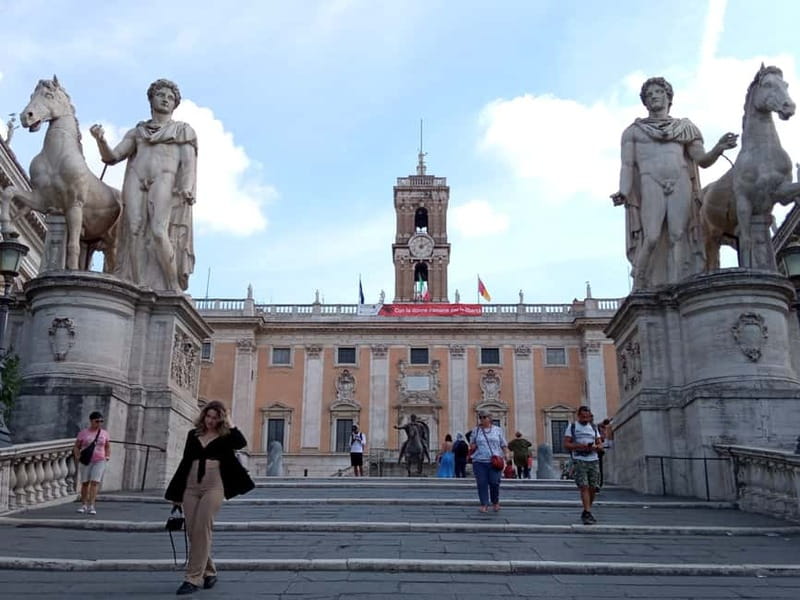
After the Forum and Palatine context, the tour takes you to Piazza del Campidoglio (Capitoline Hill square). This stop is about 30 minutes as well, with guided tour, sightseeing, and walking. It’s a smart transition because Capitoline areas help you feel the civic and symbolic side of Rome, not only the utilitarian and political.
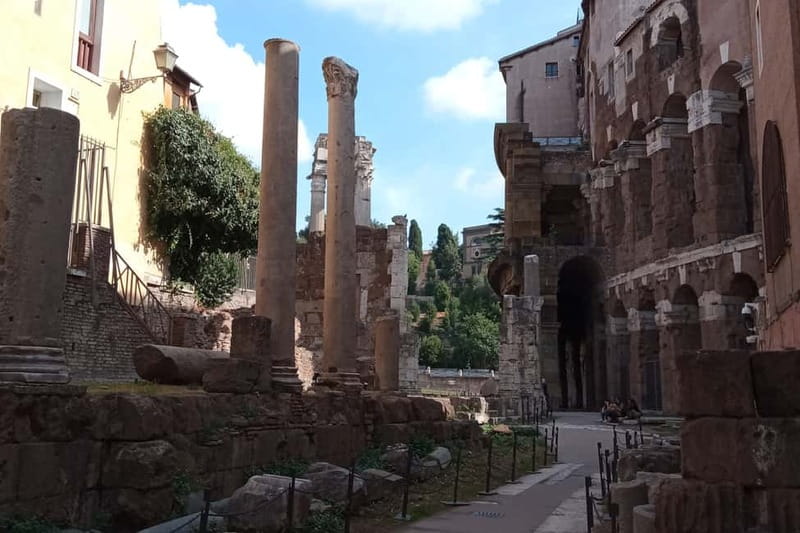
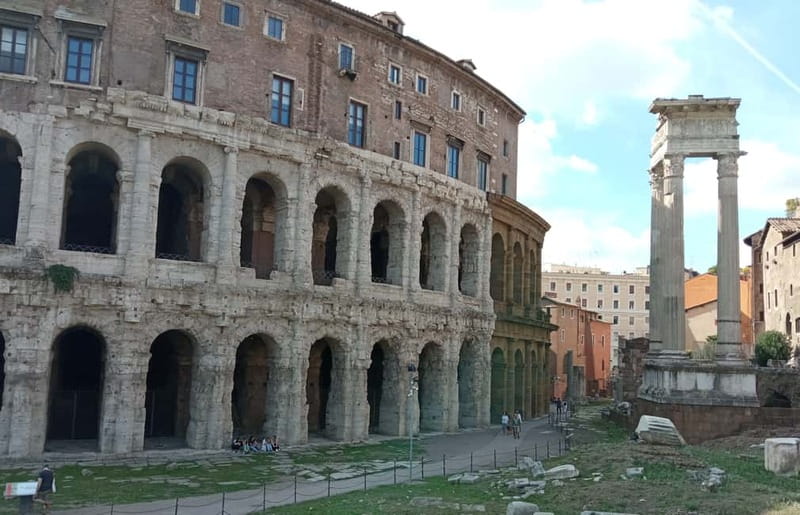
Then you end at the Theatre of Marcellus stop, again around 30 minutes, finishing with stops at the Temple of Apollo and the Porticus of Octavia as part of the archaeological-area route. The description also highlights that this ending area is a free-entry archaeological zone connected to the former Jewish Ghetto area.
Why I think this finale works: it shifts your attention away from the most relentlessly photographed monuments and toward a quieter kind of Roman storytelling. The Theatre of Marcellus area, plus the Temple of Apollo and the Porticus of Octavia, gives you a sense of how entertainment, worship, and public architecture sat next to each other in daily Roman life.
It’s a chance to end on meaning, not just fame. And the tour’s style matches that: the guide keeps the archaeology and history thread going to help you understand what those remains contributed to the city’s evolution.

Outside viewing only: what you gain and what you shouldn’t expect
This tour is very clear about one thing: it does not include going inside the monuments or buying tickets for them. That choice shapes your experience.
What you gain:
- You spend your time on context, not ticket lines.
- You learn how different monuments fit into Rome’s changing plan.
- You get the guide’s art-history and archaeology framing as you look.
What you should expect instead of inside visits:
- Street-level and viewpoint-level learning.
- A focus on interpreting layout, function, and evolution from what’s visible around you.
If you’re hoping for an interior visit to the Colosseum or an inside Forum experience, this won’t be that day. But if you want to walk, look, and understand the monuments as a connected system, this route is built for exactly that.
The pace and the small group advantage: better questions, less noise
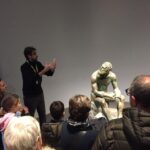
This is a small group tour limited to 6 participants. That size matters more than you might think in Rome. When you’re in a crowd, it’s hard to ask why something was built or what a specific architectural detail means.
Here, the format supports a personalized feel. The tour description says the pace and time can be adjusted to your interests. That usually means less rushing, more chance to connect explanations to what you care about, and a smoother flow through stops.
It also helps that the day is packaged into about 2.5 hours. The route is designed around multiple 30-minute segments, so you get rhythm without turning it into an all-day slog. The overall walk is described as light and suitable for all ages, so the physical demands should feel manageable for most visitors who can handle a few hours of walking in central Rome.
One more plus from the guide’s style: the historical intro is designed to get you oriented quickly. In the reviews, this type of setup shows up as a big reason the time felt to “fly by,” because you know what you’re looking at as you go.
Languages, guide style, and why Leonardo’s approach clicks
The tour is offered with live guiding in Portuguese and English. If you’re one of those travelers who really wants the details in your own language, that’s a strong practical point.
As for the guide, LeonardoDC runs the experience. Reviews point to Leonardo being able to connect an art-and-architecture introduction to what you’re seeing on the ground. People also mention that the historical framing helps them appreciate the beauty of the ancient buildings more than they expected.
That’s the best kind of guide skill for Rome: not just facts, but making the monument feel legible. You leave with a sense of how Rome developed from its early form into the city-scale machine we recognize today.
Price and value: $36.08 for a 2.5-hour archaeology narrative
At $36.08 per person for a 2.5-hour small-group walk, the value comes from what’s included: guided archaeology explanations and a route that covers multiple major areas in a tight, organized arc.
You’re not paying for ticket access to inside monuments. You’re paying for the interpretation that helps the outside ruins make sense. For many visitors, that’s the better deal. The Colosseum and Roman Forum can be overwhelming on your own, and an archaeology-focused guide turns “I saw it” into “I understood it.”
So the real question is your travel goal:
- If you want interior access and museum-style time, look elsewhere.
- If you want to learn how the monuments evolved and how Rome worked, this price feels like a fair exchange for guided time with a small group and a clear route.
Who should book this Ancient Rome archaeology tour?
This tour is a good fit if you:
- Want to understand how and why Roman monuments evolved, not just where they are
- Enjoy walking tours but prefer a manageable, light outing
- Prefer smaller groups where it’s easier to ask questions
- Like art-history and archaeology explanations that connect architecture to history
- Want a structured route that covers major areas in a short window around Lazio
It’s also a solid choice if you’re visiting Rome for the first time and want a mental framework that makes later self-guided exploring easier.
Should you book this tour?
I’d book this if your top priority is understanding Rome through archaeology while you see the big names: the Colosseum area, the Imperial Fora, the Roman Forum, Capitoline Hill, and the Theatre of Marcellus finish. The small group limit, the 2.5-hour time box, and the guide-led timeline approach are strong signals that you’ll come away with clear connections between monuments instead of a list of sights.
Skip it if you’re specifically hunting for inside monument access or ticket-included experiences. This is a “look closely with a guide” tour, not an “enter everything” package.
If you want your Rome day to feel smarter, not just longer, this one has a good chance of doing that.
FAQ
Where does the tour start, and where does it end?
The tour starts at Piazza Mattei, 1, right in front of the Fountain of the Turtles. It ends back at the meeting point, and the listing also provides two drop-off locations near Via Nicola Salvi, 65, and Piazza del Colosseo.
How long is the Ancient Rome with Archaeology tour?
It lasts 2.5 hours.
What is included in the tour?
You get a guided walk and talk covering the Roman Forum area, Colosseum area, Imperial Fora, Capitoline Hill (Piazza del Campidoglio), and the Theatre of Marcellus archaeological area plus the Temple of Apollo and Porticus of Octavia. You also get time at each stop for guided sightseeing.
Does this tour include entry tickets or going inside monuments?
No. The experience does not include going inside the monuments or tickets for them.
Is the tour a small group?
Yes. It is limited to 6 participants.
What languages does the guide speak?
The live guide speaks Portuguese and English.
Is the tour wheelchair accessible?
Yes, it is described as wheelchair accessible.
Is it a lot of walking?
It’s described as a light walking tour suitable for all ages, and it does not require effort. You will still be walking between stops for about 2.5 hours.
What stops or areas will I see?
You’ll cover the Colosseum, Imperial Fora, Roman Forum, Piazza del Campidoglio (Capitoline Hill), and the Theatre of Marcellus area, including the Temple of Apollo and the Porticus of Octavia. The route finishes in a free entrance archaeological area.
How much does it cost?
The price is listed as $36.08 per person.
Can I cancel or reserve without paying right away?
There is free cancellation up to 24 hours in advance for a full refund, and you can reserve now and pay later (book your spot and pay nothing today).