REVIEW · GOLF CART TOURS
Rome: Guided Golf Cart Tour
Book on GetYourGuide →Operated by Romeismylove Group · Bookable on GetYourGuide
Rome looks different when the lights turn on. I love the easy open-air ride through illuminated landmarks, and I also love that you get photo breaks at major stops without spending your whole night walking. One thing to plan for: this tour is for seeing the sights from the outside, and it does not include monument tickets or inside guided visits.
The best part is how quickly you can get oriented. With a small group (limited to 3 participants) and a live guide in English, Italian, or Turkish, you spend less time figuring out where to go and more time enjoying the views and the stories behind them. Guides such as Karim or Fabio are often praised for going beyond the basics, including tailoring the route to what you want to see.
If you want to chase every ticketed interior and do the slow, on-foot version of Rome, you may feel a bit constrained. If your goal is a first-night hit of the city’s most famous landmarks plus a few quieter corners, this cart tour is a strong fit.
In This Review
- Key points to know before you book
- Why a Golf Cart Works So Well for Rome at Night
- Pickup and the Small-Group Advantage (Up to 3 People)
- Colosseum at Night: Your First Major Photo Stop
- Circus Maximus and Mouth of Truth: Quick Pass-By Stops That Add Character
- Piazza Venezia, Spanish Steps, and the Trevi Fountain Timing
- Pantheon and Piazza Navona: Two Stops That Make Rome Feel Real
- Two Route Options: Trevi-Focused or the Vatican-Area Loop
- What’s Included vs What You Need to Arrange Yourself
- Price and Value: Is $76.47 for 2 Hours Fair?
- Who This Tour Suits Best (And Who Should Skip It)
- Tips to Get the Most From Your Night Stops
- Should You Book This Rome Night Golf Cart Tour?
- FAQ
- How long is the Rome guided golf cart tour?
- What is the price per person?
- Does this tour include entrance tickets to monuments?
- Is hotel pickup included?
- What languages does the guide speak?
- What size is the group?
Key points to know before you book
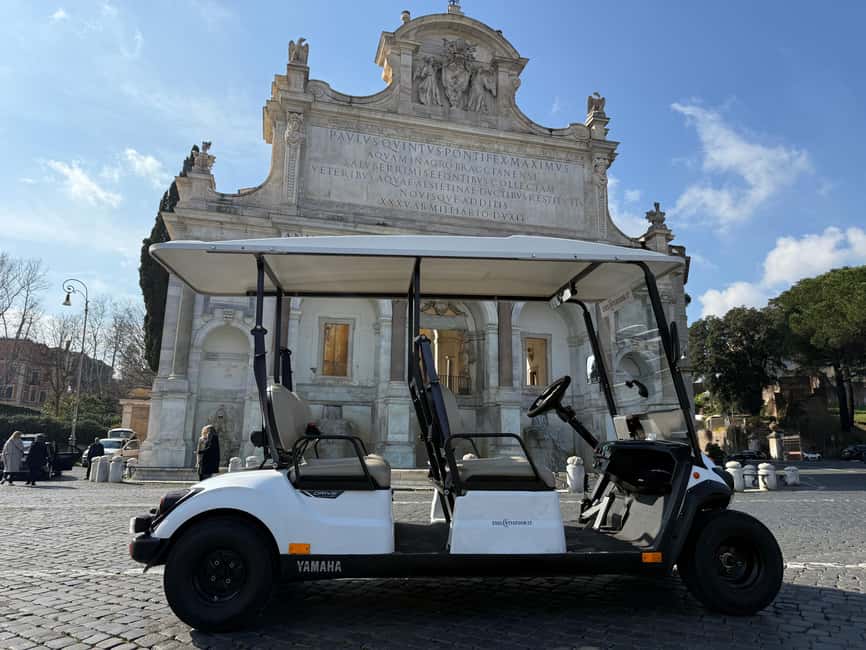
- Small group (max 3): more attention, fewer awkward pauses, and easier photo stops.
- Outside-only sightseeing: no monument tickets and no guided entry inside stops.
- 2 hours of night views: a fast, high-impact introduction to Rome after dark.
- Multiple route options: choose between a Trevi-centered loop or a Vatican-area loop.
- Hotel or city-center pickup: convenience built in, with meeting points if you’re outside the center.
Why a Golf Cart Works So Well for Rome at Night
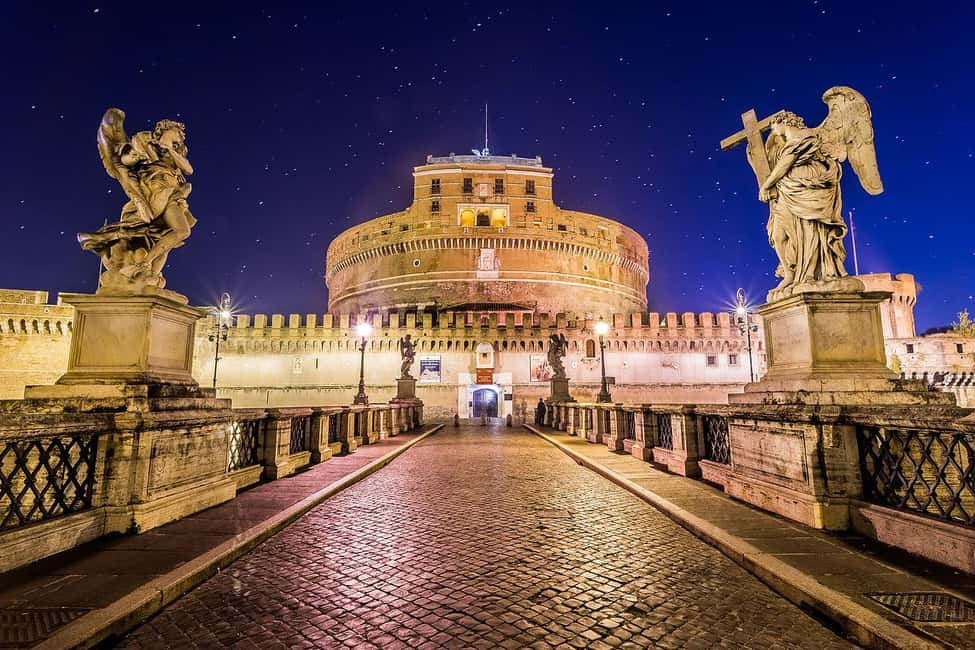
Rome at night has a different feel. Daytime is for crowds and heat. Night is for drama: warm lights on stone, long shadows, and landmarks that look made for photos. The golf cart helps you keep that mood going. You’re not fighting traffic on foot for every transfer, and you’re not wasting your limited evening time on getting from one famous spot to the next.
I like that the tour is set up like a guided loop rather than a checklist you sprint through. You ride, you stop, you take photos, and you get back in the cart. That rhythm matters because Rome’s most famous sights are close enough to see quickly, but not close enough that you’ll want to connect them all on foot at night.
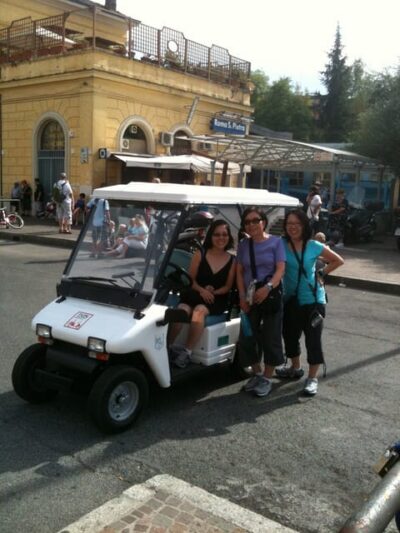
And since the cart is open-air, you actually feel like you’re part of the night streets. You’ll notice the changing scenery as you pass squares, fountains, and major landmarks. It’s sightseeing with motion—without the strain.
You can also read our reviews of more guided tours in Rome
Pickup and the Small-Group Advantage (Up to 3 People)
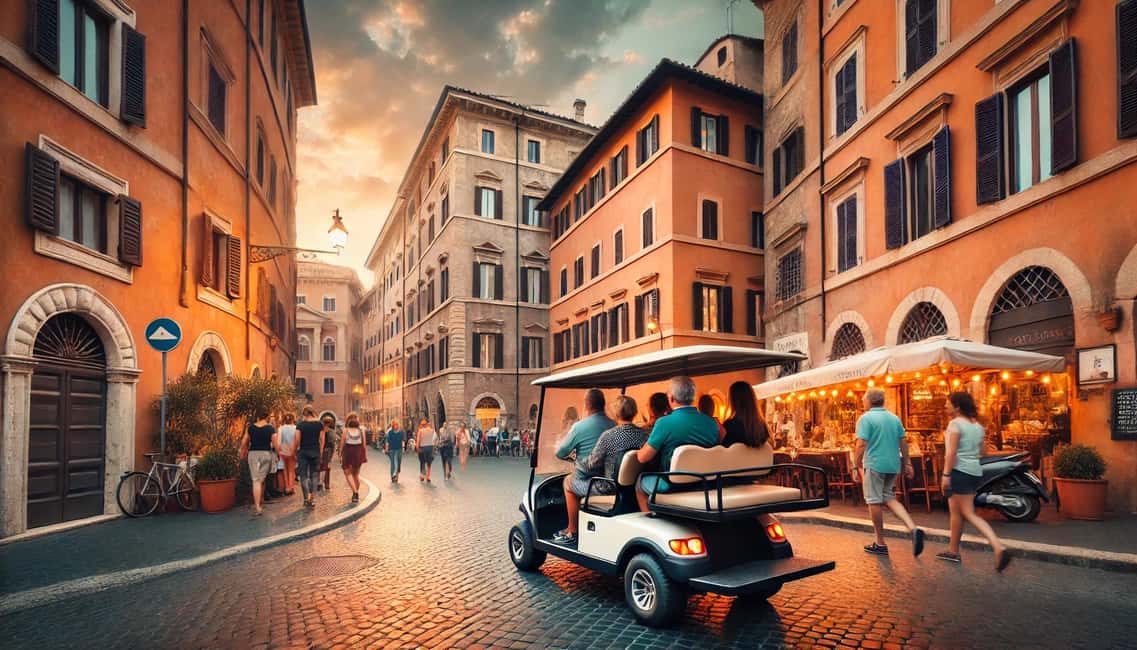
This tour includes pickup from city center hotels, which is a big deal in Rome. Trying to coordinate meeting points in the dark can turn a fun evening into a scavenger hunt. If your hotel isn’t in the city center, you’ll meet at another spot like a monument or restaurant, so it’s worth checking the exact pickup point ahead of time.
The group limit to 3 participants is what really changes the experience. When there are fewer people, your guide can adapt. It’s easier to ask questions, easier to pause for an extra photo, and easier to slow down if something catches your eye.
You’ll have a live guide speaking English, Italian, or Turkish. That matters because the stories and practical context (what you’re seeing, why it matters, what to look for) can transform the photos into something more meaningful. Even if you don’t memorize every detail, you’ll come away with a clearer picture of how Rome fits together.
Colosseum at Night: Your First Major Photo Stop
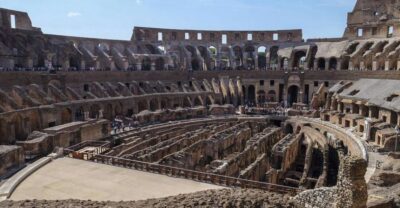
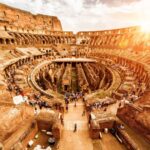
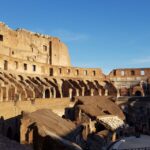
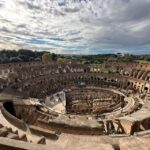
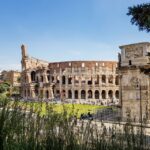
The tour typically starts with pickup and then moves to the Colosseum, one of the easiest places to understand Rome’s scale. At night, it looks less like a daytime monument and more like a giant stage set—lit from below and around so the structure pops against the sky.
You’ll get a break with photo time and free time (about 15 minutes). That’s long enough to grab the classic angles without feeling rushed, and short enough that you’re still moving through the rest of the evening while the best light is still working.
A practical note: you’ll be seeing the Colosseum from outside, not touring inside. The value here is the night atmosphere and orientation. If you want interior access, you’ll need to plan a separate ticketed visit.
Circus Maximus and Mouth of Truth: Quick Pass-By Stops That Add Character
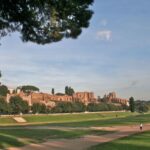
After the Colosseum, you’ll glide through some of Rome’s most atmospheric areas. Stops like Circus Maximus (passed by for about 10 minutes) and the Mouth of Truth (also a pass-by) help you connect the famous names to the places.
Even though they’re not long stops, these sections can still feel worthwhile because they fill in the Rome you don’t always get if you only bounce between major ticket entrances. Circus Maximus is big and open in a way that makes you understand how large-scale Roman life was. The Mouth of Truth is instantly recognizable and has that pop-culture energy—seeing it in the evening streets makes it feel both iconic and slightly mysterious.
These pass-by moments also help you appreciate the cart ride itself. You’re moving through the city’s layout, not just collecting postcard stops. That’s a big part of why this works as an introduction tour.
Piazza Venezia, Spanish Steps, and the Trevi Fountain Timing
Next up is Piazza Venezia, passed by around 10 minutes. It’s one of those squares that feels like a traffic circle until you realize it’s a gateway to multiple directions and stories. Seeing it at night gives it a more cinematic feel, and it helps you orient to the broader geography of central Rome.
Then comes the Spanish Steps, where you’ll get another photo stop and break (about 15 minutes). The steps are one of the places people try to visit, then forget because the daytime crowd can be intense. At night, it’s easier to enjoy the shapes and take photos without playing dodge-and-step all evening.
From there, you reach the Trevi Fountain. You’ll have time to visit and also a separate free period of about 15 minutes. Trevi at night is a whole mood. The water, the lighting, and the crowd energy can make it feel like the fountain is the center of the city’s pulse.
One consideration: the Trevi stop includes visiting time, but it still fits into a tight 2-hour experience. If you’re the kind of person who wants to linger for a long stretch, plan for that limitation and be strategic with your photos and time.

Pantheon and Piazza Navona: Two Stops That Make Rome Feel Real
After Trevi, the tour often heads to the Pantheon for a break with photo time, free time, and a visit. The exact timing can vary by route, but it’s built to give you enough time to experience the space and still keep momentum.
The Pantheon is special because it doesn’t just look famous—it feels important in a way you can sense even from the outside view. Seeing it at night helps you focus on the building’s presence rather than the usual daytime distractions.
Then you end at Piazza Navona, with time for photos, visiting, and a free period (again designed to let you enjoy without rushing). Piazza Navona is one of those squares where you immediately understand why Rome works as a lived-in city. At night it feels like a stage where people gather, look around, and make evening plans.
Even if you never enter any monuments during this tour, these squares make you feel the city’s “surface level” appeal—and its everyday charm. That’s what you want from a night intro: the feeling, not just the facts.
Two Route Options: Trevi-Focused or the Vatican-Area Loop
You don’t have one single script here. There are two main route options, plus the flexibility of additional stops in between.
Option 1 centers on big hits like the Colosseum and then continues through spots such as Circo Massimo, Mouth of Truth, Piazza Venezia, Trevi Fountain, Spanish Steps, Pantheon, and Piazza Navona. It’s a classic “greatest hits” arc through the heart of Rome.
Option 2 starts similarly with the Colosseum and then follows a different storyline, including Aventine hill (the Key hole view), Orange garden, Fontana dell’Acqua Paola, Janiculum Hill, and Castel S. Angel (plus other attractions in between). This version can be appealing if you like viewpoints and want a route that feels like a mix of landmarks and scenery.
If you’re planning your Rome trip, think of this decision as matching your mood. Want pure iconic central Rome? Pick the first option. Want more elevation and the feel of Rome stretching out into the distance? The second option is likely a better fit.
What’s Included vs What You Need to Arrange Yourself
Here’s the part you need to be clear about. This tour does not include ticket entrance to any monuments, and it doesn’t include guided tours inside monuments. You’ll see the highlights from outside.
That can actually be a plus, because it protects the pace of the tour. You’re not spending your night waiting for timed entry or moving through lengthy interior lines. Instead, you focus on the outside views, the streetscape, and the guide’s context.
The tour does include pickup from your hotel (or a city center meeting point) and the sightseeing ride by golf cart. You also get a live guide and the small-group attention that goes with it.
So if your dream Rome evening is all about interiors and long museum time, this isn’t that tour. If your dream is a guided night circuit that makes you fall in love with the city fast, it’s well aligned.
Price and Value: Is $76.47 for 2 Hours Fair?
At $76.47 per person for a 2-hour experience, the first question is what you’re paying for. You’re not paying for monument access. You’re paying for three things that are expensive in Rome evenings: convenience, transportation, and guided time.
Convenience comes from hotel pickup in the city center. Transportation comes from the cart ride itself, which saves you energy and time versus transferring everywhere on your own. Guided time comes from having a real person narrating and coordinating photo stops so you’re not guessing what’s worth your attention.
The small-group cap to 3 participants also adds value. You get a more personal feel than you would in a bigger bus-style tour, and your guide can adjust the pace or emphasis if you’re more interested in photos, viewpoints, or specific landmarks.
So is it worth it? For most first-timers and anyone with limited time, yes—especially if this is your first evening and you want orientation fast. If you already know Rome well or you’re aiming for interior monument time, you might prefer ticketed day tours or a more flexible self-guided evening plan.
Who This Tour Suits Best (And Who Should Skip It)
I’d point you toward this tour if:
- You want a first-night introduction to central Rome
- You’d rather ride and take photos than connect everything on foot
- You like having a guide help you spot what matters in each area
- You’re traveling in a small group and want attention, not crowd management
I’d be more cautious if:
- You strongly want inside access to monuments during this specific trip window
- You’re expecting a walking-heavy experience (this is more about riding with stop-and-see breaks)
- You need a tour that’s designed for very young infants; it’s not suitable for babies under 1 year
Also, it’s a great fit for couples and friends, because night carts feel social and relaxed. And the open-air ride is part of the fun, not just transport.
Tips to Get the Most From Your Night Stops
Even with a guided route, your choices at stops make the difference between good photos and great ones.
Bring a charged phone or camera and take a moment to decide your shot before you rush. The tour gives photo time, but you’ll enjoy it more if you don’t waste it fiddling.
Wear shoes you’re comfortable standing in. Many stops involve short breaks and visiting time around famous places. You’ll be moving between cart and sidewalk and back again.
If you care about a specific emphasis—like more time at Trevi or extra viewpoint stops—pick the route option that matches your interest. And once you’re with the guide, speak up early. Guides can adjust the emphasis, especially in small groups.
Should You Book This Rome Night Golf Cart Tour?
Book it if you want a fast, guided way to see Rome’s biggest landmarks in their night lighting, with pickup convenience and a small-group feel. The outside-only format isn’t a dealbreaker here—it’s actually part of the reason the timing works so well.
Skip it if your priority is monument interiors and long museum-style visits during this same evening. In that case, you’d likely get more satisfaction from a ticketed, inside-focused tour.
If you want a night that helps you understand the city quickly—plus gives you photos you’ll actually remember—this is a very solid choice for your first or second evening in Rome.
FAQ
How long is the Rome guided golf cart tour?
The tour duration is 2 hours.
What is the price per person?
The price is $76.47 per person.
Does this tour include entrance tickets to monuments?
No. The tour does not include ticket entrance to any monuments, and it does not include guided tours inside monuments.
Is hotel pickup included?
Yes, pickup is included from city center hotels. If your hotel is outside the city center, you’ll meet at another city-center location such as a monument or restaurant.
What languages does the guide speak?
The live guide is available in English, Italian, and Turkish.
What size is the group?
The group is small, limited to 3 participants.