REVIEW · ROME
Rome: Basilica of St Mary Major Catholic Pilgrim Tour
Book on GetYourGuide →Operated by Crucis Tours · Bookable on GetYourGuide
If Rome feels like a test of endurance, this one feels like a guided lesson. A small-group Catholic tour of St Mary Major turns the basilica’s art into something you can actually read: Holy Door symbolism, the crib relic wood, and mosaics that connect Old and New Testament themes.
Two things I really like: the chance to see the Holy Door up close before you enter, and the way the guide explains the basilica’s key objects (especially the icon tradition around Salus Populi Romani). One consideration: this is a faith-focused tour, so if you prefer strictly secular sightseeing, you may want a different style of visit.
In This Review
- Key highlights to look for
- Why St Mary Major is a Jubilee stop worth your time
- Meeting at the fountain: quick logistics that prevent stress
- The Holy Door before you enter: where symbolism starts
- Inside St Mary Major: five names and a guided sense of place
- Relics you can actually see: crib wood, the icon, and Pius V
- Relic of the crib of the baby Jesus
- Salus Populi Romani and the St Luke tradition
- The glass sarcophagus of Pope St Pius V
- The mosaics behind the altar: how to read the Bible in images
- How the tour usually moves: timing, pace, and where it ends
- Guides Wen and Tom: what makes the explanations click
- Price and value: what $65 buys you in real terms
- Who this tour suits best (and who should think twice)
- Quick practical tips before you go
- Should you book this St Mary Major Catholic Pilgrim Tour?
- FAQ
- Where is the meeting point for the tour?
- How long is the St Mary Major Catholic Pilgrim Tour?
- What is the price per person?
- What language is the live guide offered in?
- How big is the group?
- What is included in the tour price?
- Is there an express security line?
- What clothing is not allowed?
- Is the Holy Door included in the visit?
Key highlights to look for
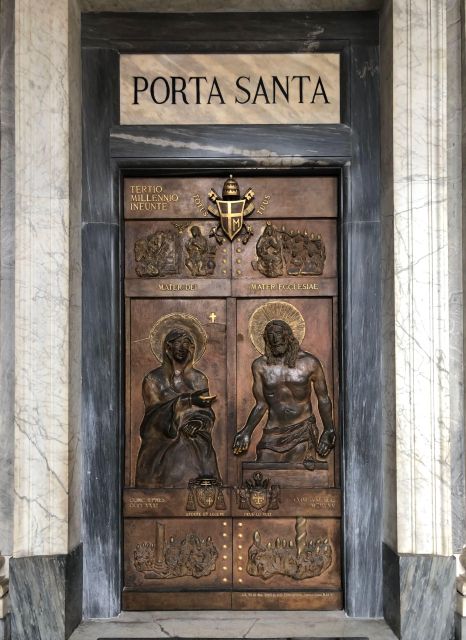
- Holy Door at a Jubilee site: get oriented on why it matters during a Holy Jubilee Year and how the Plenary Indulgence idea fits in.
- Crib of the baby Jesus relic wood: a physical object tied to Catholic veneration of Christ’s life.
- Salus Populi Romani by St Luke the Evangelist: you’ll be shown the icon that Catholic tradition attributes to St Luke.
- The mosaics behind the altar: biblical symbolism with catechesis that links Old and New Testament themes.
- Small group, practical control: limited to 10 participants, with radio headsets for groups of 7 or more.
Why St Mary Major is a Jubilee stop worth your time
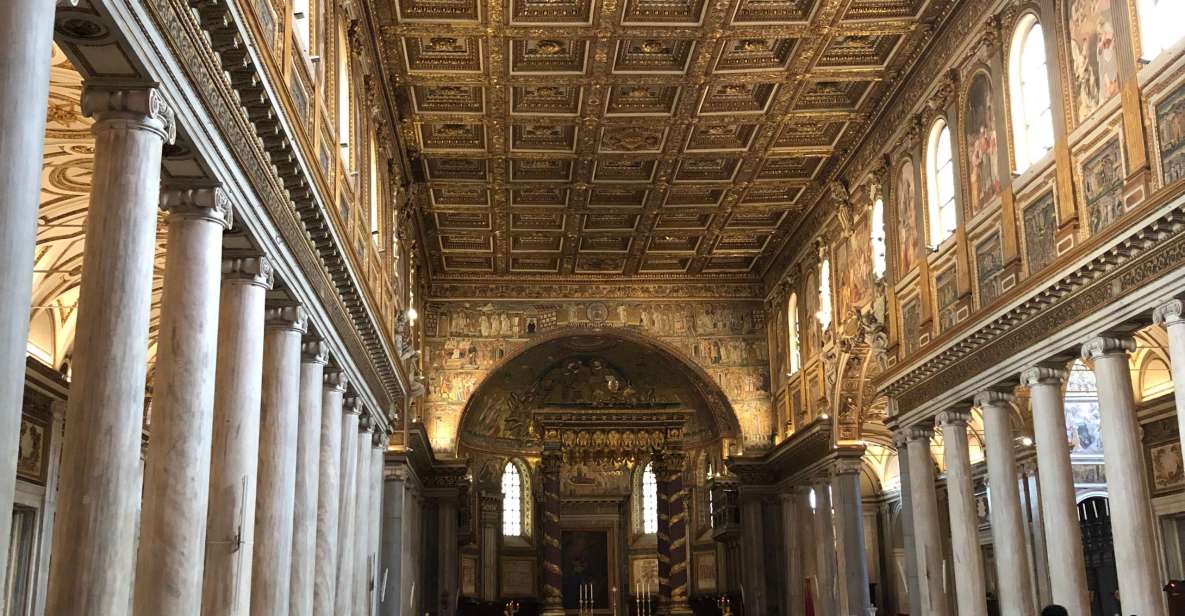
St Mary Major (Santa Maria Maggiore) is one of Rome’s four Major Papal Basilicas, which already puts it in a different category than the typical “nice church” stop. It’s also tied to Jubilee tradition through the idea of Holy Doors: during a Holy Jubilee Year, these special doors open for pilgrims seeking a Plenary Indulgence.
What I love about tours like this is that they don’t treat the building like a museum label. They treat it like a teaching tool. You’ll see and hear the layers: architecture, relics, and religious meaning all working together. Even if you’re not Catholic, you can still appreciate the discipline here—how icons, mosaics, and sacred objects are presented with purpose.
The basilica is also locally famous for age and devotion. Santa Maria Maggiore vies with another Marian church in Rome for the title of the oldest church dedicated to Our Lady, which adds a sense of continuity. This isn’t just about what you can photograph; it’s about why Rome repeats certain stories in stone and glass year after year.
You can also read our reviews of more tours and experiences in Rome.
Meeting at the fountain: quick logistics that prevent stress
You meet at the fountain right in front of Basilica Papale di Santa Maria Maggiore (Santa Maria Maggiore). This matters more than you’d think. The front of the basilica faces onto Piazza Santa Maria Maggiore, not Via Cavour, so it’s easy to end up one street off if you’re relying on memory.
The tour includes a way to keep group flow smooth: skip the line through an express security check, and for groups of 7 or more, you get radio headsets. That combination is a win in a place where entrances can bottleneck and where you’ll want to hear every explanation.
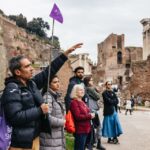
You’ll also be speaking to a live guide in English or Chinese. The group is limited to 10, which keeps it human-sized—close enough for questions, not so big that you’re stuck listening from the back forever. If you’re doing multiple sites in a day, this short format is easier to plug into your Rome schedule without losing half your afternoon to logistics.
The Holy Door before you enter: where symbolism starts
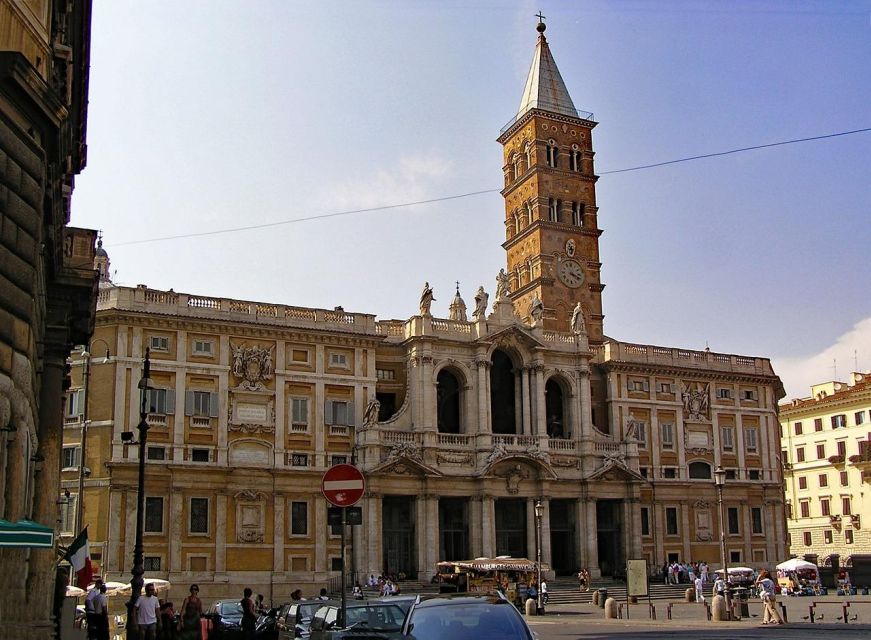
Most church tours rush inside and hope you’ll figure out what matters later. Here, you’ll take a close look at the Holy Door before entering the basilica.
That’s important because the Holy Door isn’t just a decorative feature. It’s part of the Jubilee structure in Rome. The tour frames the four Major basilicas as sites where the Holy Door opens during a Jubilee Year, so pilgrims can pursue a Plenary Indulgence. In practical terms, you’re getting context early—so once you step into the interior, the story isn’t disconnected from what you saw outside.
Even if you’re there outside a Jubilee season, the tour’s explanation gives you a way to interpret what you’re looking at. You start thinking like a pilgrim: this isn’t random religious architecture. It’s intentional ritual design built into the city’s major church network.
Inside St Mary Major: five names and a guided sense of place
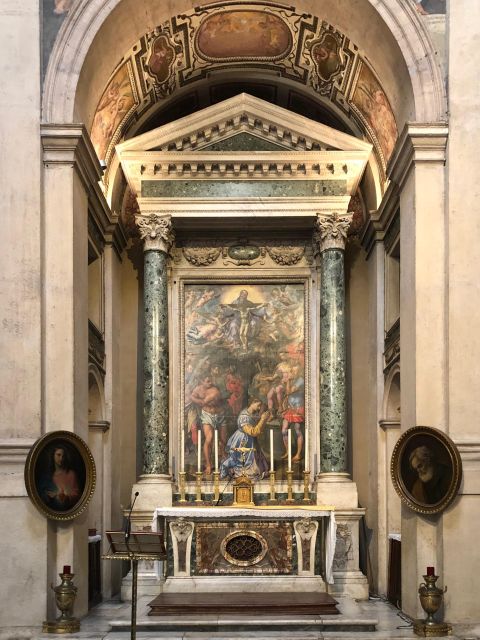
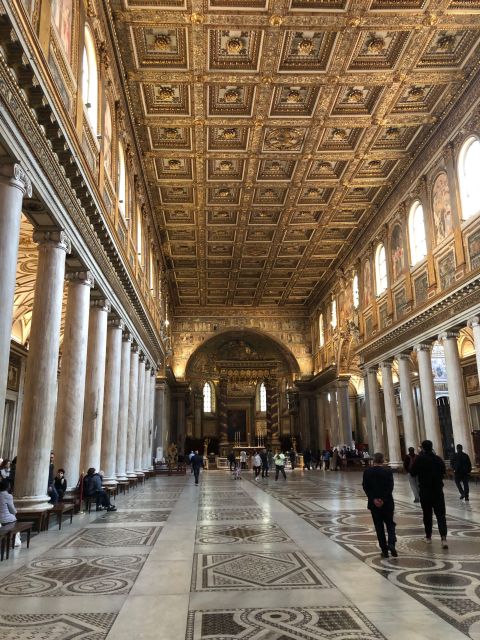
Once inside, the experience is set up like a guided orientation. You’ll learn that the basilica has had five different names, each tied to its eventful history. That kind of detail does two useful things for you.
First, it keeps the basilica from feeling like a single label you memorize and forget. Second, it gives you a mental map for what you’re seeing—how devotion and institutions evolve, and how that evolution leaves traces in what people call the church.
You’ll also notice that this tour pays attention to what’s often missed by casual visitors. Mainstream tours can skim the highlights and move on. This one slows down in the places where symbolism lives: behind the altar area, around relic displays, and in the storytelling connected to the mosaics.
Relics you can actually see: crib wood, the icon, and Pius V
This is where the tour becomes genuinely specific.

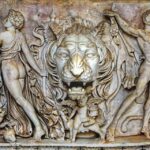
Relic of the crib of the baby Jesus
Inside, you can see wood associated with the crib of the baby Jesus. The tour explains it as one of the relics brought to Rome from the holy places in the east for pilgrims to venerate. That wording matters: it positions the relic as a bridge between Jerusalem-region holy sites and Rome’s role as a pilgrimage destination.
If you like tangible religious history—objects you can stand near—this section gives you that. It’s not abstract. It’s a physical artifact tied to devotion, and the guide’s job is to connect the object to the bigger story of pilgrimage and sacred memory.
Salus Populi Romani and the St Luke tradition
You’ll also see the miraculous icon Salus Populi Romani, which Catholic tradition holds was painted by St Luke the Evangelist. Whether you accept the tradition or simply admire it as history-of-devotion, the tour’s framing helps you understand why this icon matters in Catholic culture.
Icons can look similar if you’re moving fast through churches. Here, you’ll be pointed toward why this one is treated as special—enough so that it has its own long-running devotional identity.
The glass sarcophagus of Pope St Pius V
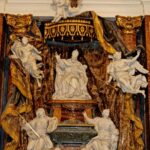
Another item on display is the glass sarcophagus of Pope St Pius V. This isn’t just a name on a wall. It’s a reminder that Rome’s basilicas are not only about biblical scenes—they also memorialize major church figures in ways that are meant to be seen.
This relic-and-object approach is a big part of what makes the tour feel different from a general art-and-architecture walk. The emphasis isn’t only what was built. It’s what was kept, shown, and venerated.
The mosaics behind the altar: how to read the Bible in images
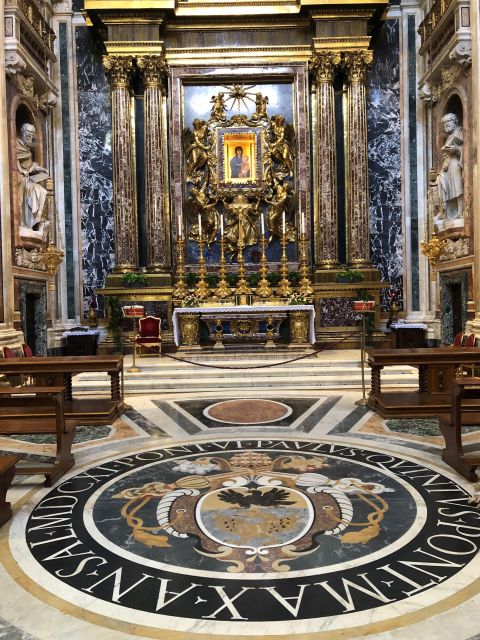
If you remember only one part of the basilica from this tour, make it the mosaics.
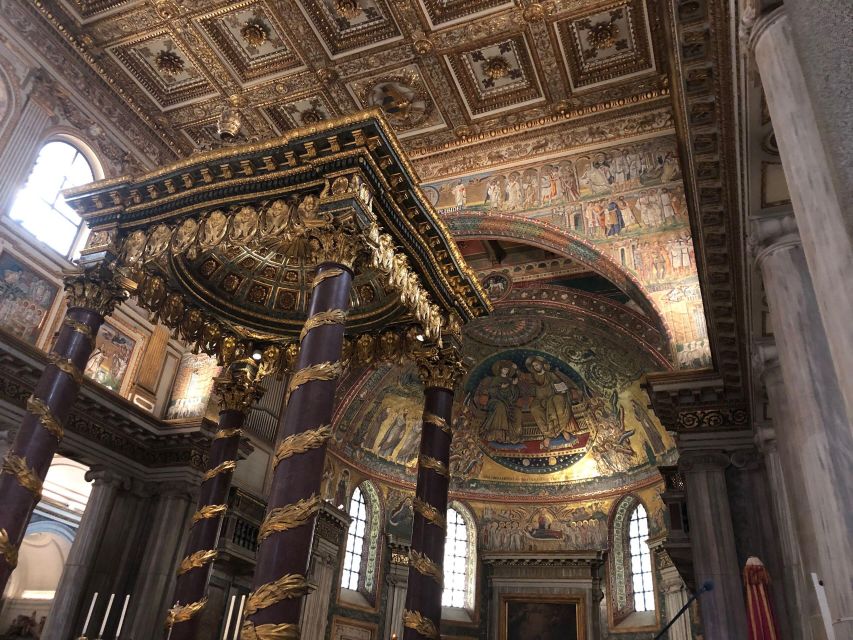
The mosaics behind the altar brimming with symbolism, and the guide provides catechesis regarding both the Old and New Testaments. That phrasing may sound formal, but the effect for you is simple: you’ll learn what you’re looking at, and you’ll understand why it’s arranged that way.
This is also where mainstream tours often drop the ball. If no one explains the theology or the narrative logic, the mosaic patterns can blur together. Here, the guide connects the scenes and symbols into a readable program.
So instead of walking through glittering art, you’ll walk through a visual story. You’ll also come away with the feeling that Rome repeats the same method across different churches: you’re taught through images, not just through sermons.
How the tour usually moves: timing, pace, and where it ends
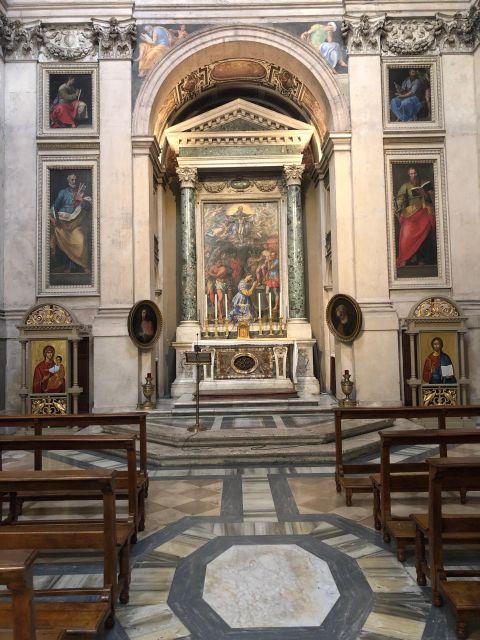
The tour runs between 60 and 90 minutes. That range is useful because it means you can plan your day without overcommitting. You’ll finish on the steps in front of the main entrance for the basilica-only option.
There’s also a longer option linked to a Via Crucis Pilgrim Tour, where the guide departs to see additional relics connected to Christ’s Passion and also the Major Basilica of St John Lateran among other stops. Even if you’re not joining the longer route, it helps to know the basilica stop is designed as a solid anchor point in a bigger pilgrimage logic.
Pace-wise, you’ll be walking inside, standing to look closely, and listening for symbolism. Since this is a small group, the guide can manage questions without losing the thread—something reflected in the way guides have been described by previous participants.
Guides Wen and Tom: what makes the explanations click
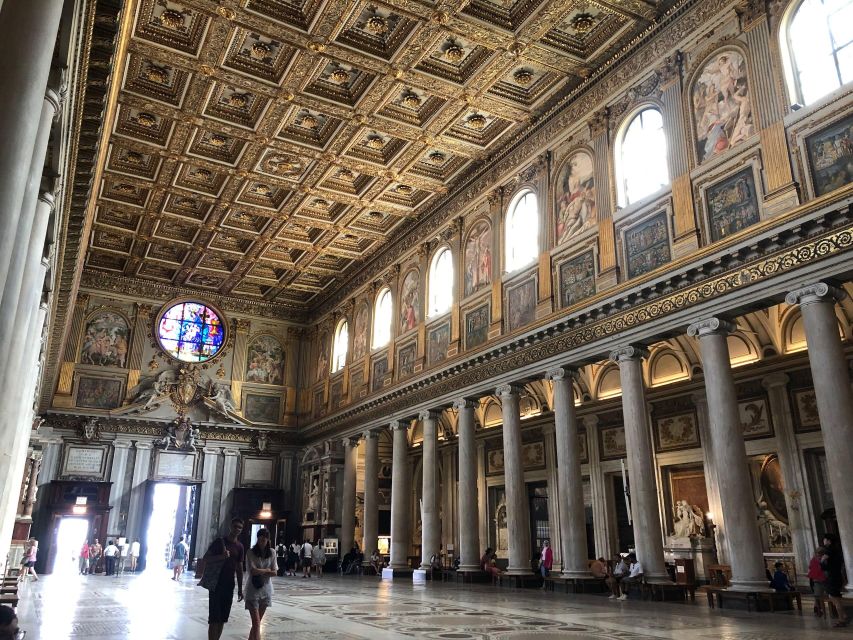
Two guide names stand out from the experience: Wen and Tom.
Wen has a reputation for being excellent—knowledgeable in the practical sense, professional, and clearly able to keep the group moving without losing the details. Tom’s style is described as easy to understand, with a dialogue approach. That matters for you because these kinds of basilica tours can become one-way lectures if the guide doesn’t invite questions.
If you like a conversation format, Tom’s approach sounds like your best fit: he answers questions and offers thought-provoking insight rather than just reciting facts. That can turn the mosaics section from a visual workout into something more personal and reflective.
Either way, you’re getting a devout Catholic guide, and the explanations are tuned to the objects and symbolism, not to general tourist curiosity.
Price and value: what $65 buys you in real terms
The price is $65 per person for about an hour. That isn’t the cheapest way to see a church in Rome, but it’s also not trying to sell you a flashy, distant tour bus experience.
Here’s what you’re really paying for:
- A live guide who can interpret relics, icons, and mosaic symbolism in a way you can’t easily replicate on your own.
- Express security and small-group handling, which saves you time and keeps your visit from turning into a waiting game.
- Radio headsets for groups of 7 or more, which improves comprehension in a place where people naturally cluster.
It’s also included with all taxes and fees. Guide tip is not included, so factor that into your budget if you want to leave something at the end.
In value terms, this makes sense if you care about understanding what you’re seeing. If you just want the fastest photos, you could do the basilica solo. If you want meaning—Holy Doors, relics, and mosaics explained—this is a fair use of your time and money.
Who this tour suits best (and who should think twice)
This tour fits you if you:
- want a guided Catholic interpretation of St Mary Major and its devotional objects
- enjoy learning how religious symbolism connects across Scripture themes
- like small groups where you can ask questions
- want a clear, structured visit that ends conveniently on the basilica steps
It might not fit you as well if:
- you strongly dislike faith-based context and explanation
- you’re hoping for a purely art-history style tour with minimal religious framing
- you can’t follow the dress expectations
And speaking of dress: shorts and short skirts are not allowed. That’s a simple rule, but it can mess up your day if you show up unprepared. Plan your outfit accordingly.
Quick practical tips before you go
A few smart moves will help you get the most from the hour:
- Wear something that meets the no-shorts, no-short-skirts rule.
- Plan to arrive a little early at the fountain in front of the main entrance so the group can start smoothly.
- Save your questions in your head before you step inside—this tour’s best moments come when you ask what you’re actually seeing.
- Since it’s 60 to 90 minutes, treat it like a focused stop, not a side quest.
If you’re in Rome during a Jubilee season, the Holy Door theme becomes even more relevant. Even outside that season, the tour’s explanation gives you context you can carry into other basilicas.
Should you book this St Mary Major Catholic Pilgrim Tour?
Book it if you want an hour in Rome that feels purposeful, not random. The combination of Holy Door context, visible relics (crib wood, Salus Populi Romani tradition, and Pius V’s sarcophagus), plus the guided reading of the mosaics behind the altar is exactly the kind of experience that’s hard to recreate on your own without missing the meaning.
Skip it if your main goal is a quick walk-through for photos, or if you don’t want a faith-centered explanation of symbolism. But for most people who enjoy learning while they look, this is a solid value: small group, short duration, and a guide who helps you see the basilica with new eyes.
FAQ
Where is the meeting point for the tour?
You meet at the fountain in front of the main entrance of Basilica Papale di Santa Maria Maggiore (Santa Maria Maggiore). The front faces Piazza Santa Maria Maggiore, not Via Cavour.
How long is the St Mary Major Catholic Pilgrim Tour?
The tour lasts about 60 to 90 minutes. The stated duration is 1 hour.
What is the price per person?
The price is $65 per person.
What language is the live guide offered in?
The live tour guide is available in English and Chinese.
How big is the group?
It’s a small group, limited to 10 participants.
What is included in the tour price?
It includes all taxes and fees, radio headsets for groups of 7 or more, and a homily on request.
Is there an express security line?
Yes. It includes skip-the-line access through an express security check.
What clothing is not allowed?
Shorts and short skirts are not allowed.
Is the Holy Door included in the visit?
Yes. You’ll take a close look at the Holy Door before entering, as it relates to Jubilee Years and the Plenary Indulgence.