REVIEW · APPIAN WAY BIKE & E-BIKE TOURS
Rome: Catacomb of St. Callixtus and Appian Way Guided Tour
Book on GetYourGuide →Operated by Enjoy Rome · Bookable on GetYourGuide
Rome’s underworld has rules and stories.
This Rome: Catacomb of St. Callixtus and Appian Way Guided Tour takes you beyond the city center for a rare look at how early Christians buried their dead. You’ll move by bus and on foot, heading into ancient tunnels where the setting itself changes your sense of time.
What I like most is the chance to see the Catacombs of St. Callixtus up close, including the Crypt of the Popes and the earliest examples of Christian art. Then the tour switches gears above ground with a walk on the Appian Way and time near the old aqueducts, so you get a calm, scenic break from the usual Rome hustle. The one big consideration: if you have severe claustrophobia, don’t gamble on this one—the catacombs are underground and tight.
In This Review
- Key points to know before you go
- Leaving the City Center: getting to Via Cavour and settling in
- Catacombs of St. Callixtus: what it feels like underground
- Crypt of the Popes: the emotional pivot point
- Cecilia Metella’s exterior: connecting the tunnels to the wider story
- Appian Way on foot: walking Roman road, not a theme park
- Aqueducts and Parco degli Acquedotti: the engineering break from crowds
- Transportation and pace: vans, buses, and the value of not planning
- Dress code and photo rules: the stuff that can trip you up
- Who should book this tour (and who should skip)
- Price and value: is $80 worth it?
- Practical tips for a smoother day
- Should you book the Catacombs and Appian Way tour?
- FAQ
- Where is the meeting point for the tour?
- How long is the Rome: Catacomb of St. Callixtus and Appian Way Guided Tour?
- What’s included in the price?
- Is lunch included?
- Do I need a hotel pickup?
- Can I take photos inside the catacombs?
- What should I wear?
- Is the tour suitable for wheelchair users?
- Is the tour recommended if I have claustrophobia?
- What are the rules about cancellations?
Key points to know before you go
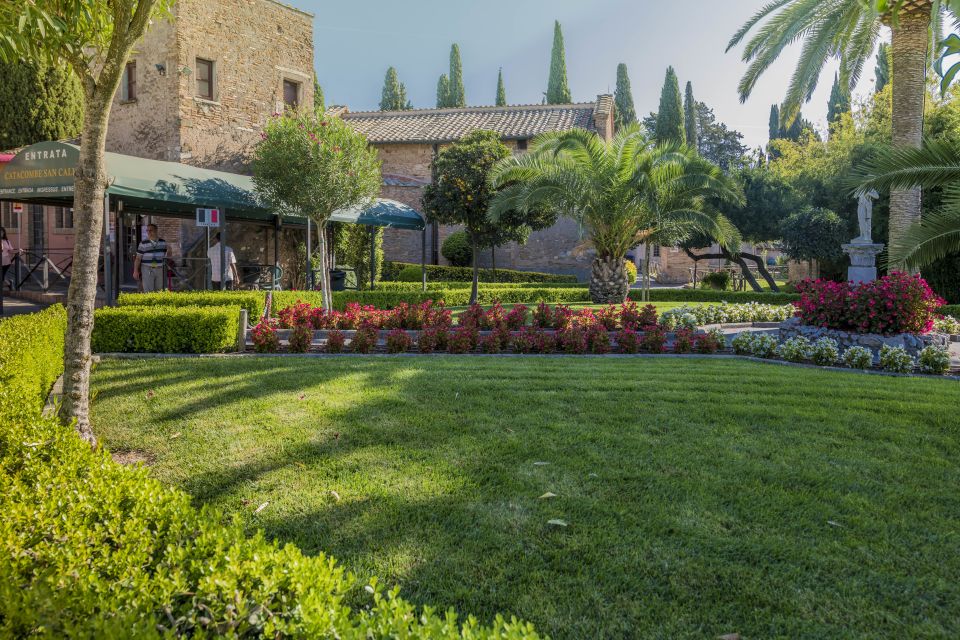
- Catacombs of St. Callixtus: burial niches, sarcophagi, and early Christian drawings (photo rules apply)
- Crypt of the Popes: one of the emotional highlights of the underground visit
- Appian Way walking time: a short stretch of the ancient road that still feels Roman underfoot
- Mausoleum of Cecilia Metella: you’ll see the exterior and connect it to the broader burial landscape
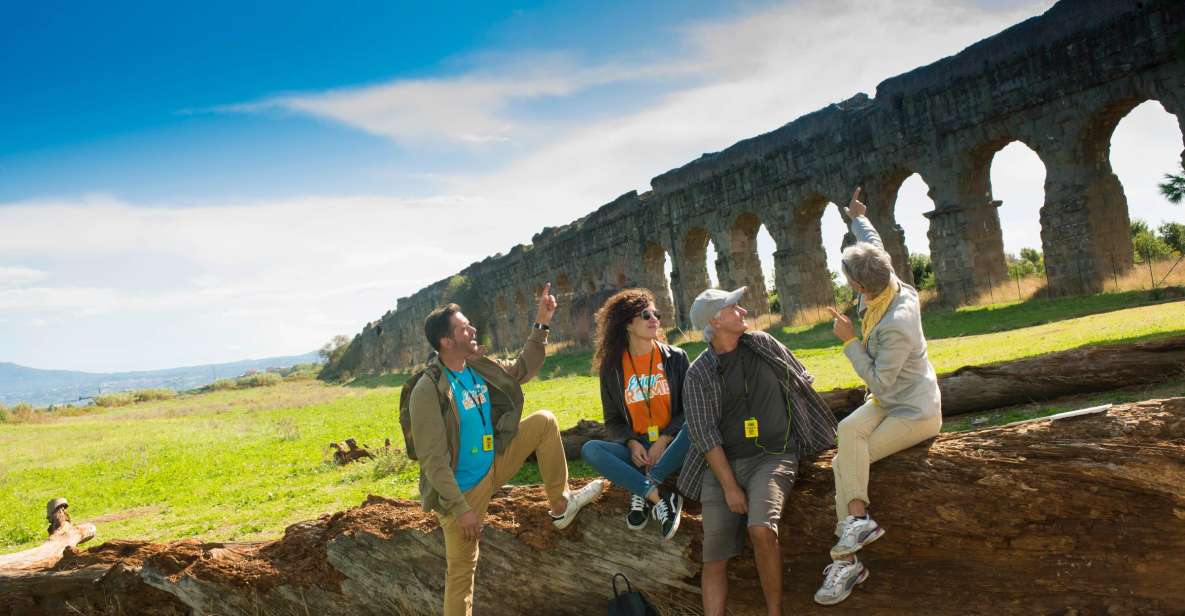
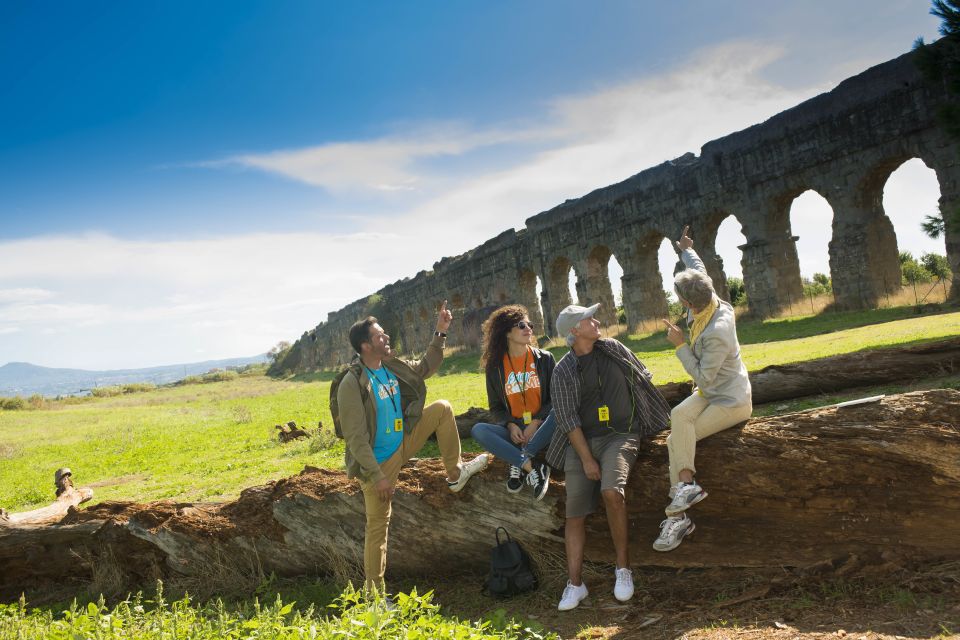
- Roman aqueduct views: arches and big engineering moments in the Parco degli Acquedotti area
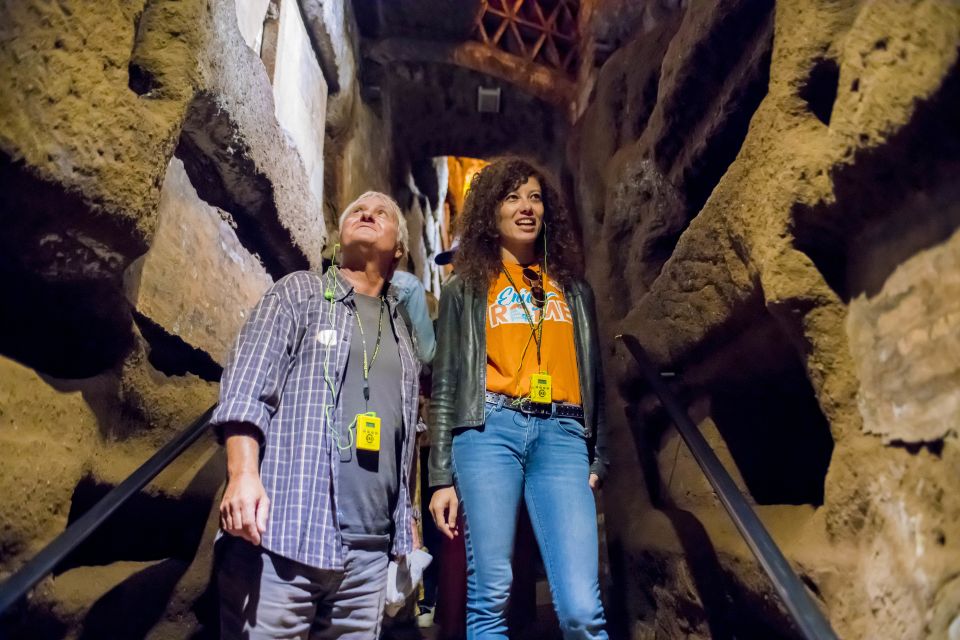
- Headsets included: especially useful for clear listening in English
Leaving the City Center: getting to Via Cavour and settling in
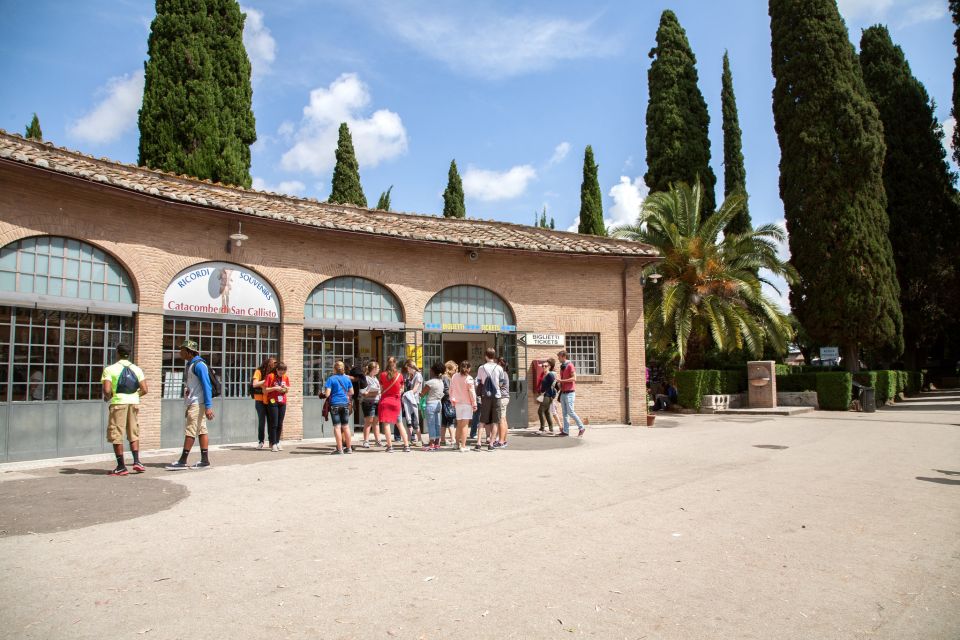
Your day starts at the bus stop at Via Cavour 224, with the nearest metro station Cavour (Line B). Show up 25 minutes early so you don’t feel rushed before boarding, especially since the group transitions from bus to walking and back again.
This is a 3-hour guided format with both driving and on-foot segments, so it works well if you want one planned outing without having to figure out transport on your own. You also get headsets, which is a real quality-of-life detail in outdoor areas and on the move, since the guide is giving nonstop context.
Catacombs of St. Callixtus: what it feels like underground
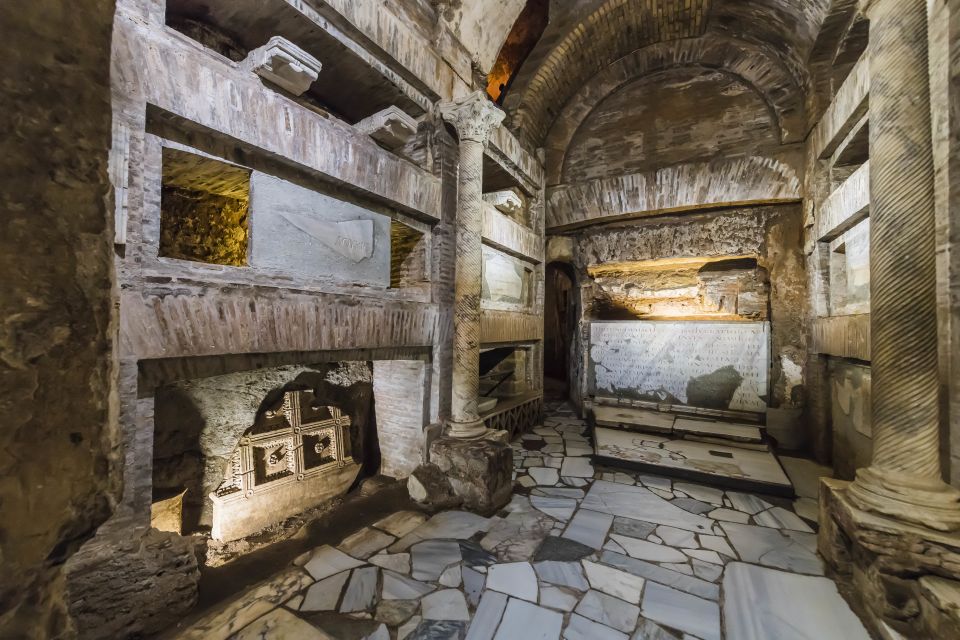
The main event is the Catacombs of St. Callixtus, built as burial space carved into the tufa rock around Rome. The tour doesn’t treat this like a creepy side quest—it explains why so many people needed an affordable, scalable burial system. Instead of marble tombs, you get something closer to real life: niches for the dead, carved chambers, and wall drawings.
Inside, you’ll see sarcophagi and ancient religious images—some of the earliest Christian art you can view in Rome. The guide also takes you through enough of the underground layout to help you grasp the scale: these complexes were dug over multiple centuries and arranged in layers.
A few practical realities to plan for:
- Photography isn’t permitted inside the catacombs.
- There are underground spaces that can feel confined, so this is not for anyone who struggles in tight quarters.
- Expect walking on uneven surfaces and doing the required moving-in/out rhythm that catacombs demand.
If you’re the type who likes history with texture—stone worn smooth by time, the smell of age, and the quiet feeling of someone else’s burial space—this is the part that sticks.
Crypt of the Popes: the emotional pivot point
Within the St. Callixtus complex, you’ll also visit the Crypt of the Popes. This is the moment where the tour shifts from architecture and logistics to meaning. The crypt setting makes the early Christian burial story feel less like museum talk and more like lived experience—people supporting each other with a shared faith and shared burial needs.
You may notice how the guide frames the difference between wealth and survival. As Christianity grew, burial practices needed to handle more people, including those who couldn’t pay for elaborate family mausoleums. That “scale problem” is exactly what the catacombs solved, and the crypt helps you feel why that mattered.
Cecilia Metella’s exterior: connecting the tunnels to the wider story
After the underground portion, you’ll see the exterior of the Mausoleum of Cecilia Metella. Even from outside, it’s a useful anchor point. Catacombs can feel like their own world, but this mausoleum reminds you that Rome’s burial culture spanned everything from grand monuments to utilitarian underground chambers.
Think of this stop as the tour’s “bridge.” It helps you connect early Christian burials to the older Roman landscape—why the Appian Way and nearby areas became such important corridors, not just for travel, but for memorializing people.
Appian Way on foot: walking Roman road, not a theme park
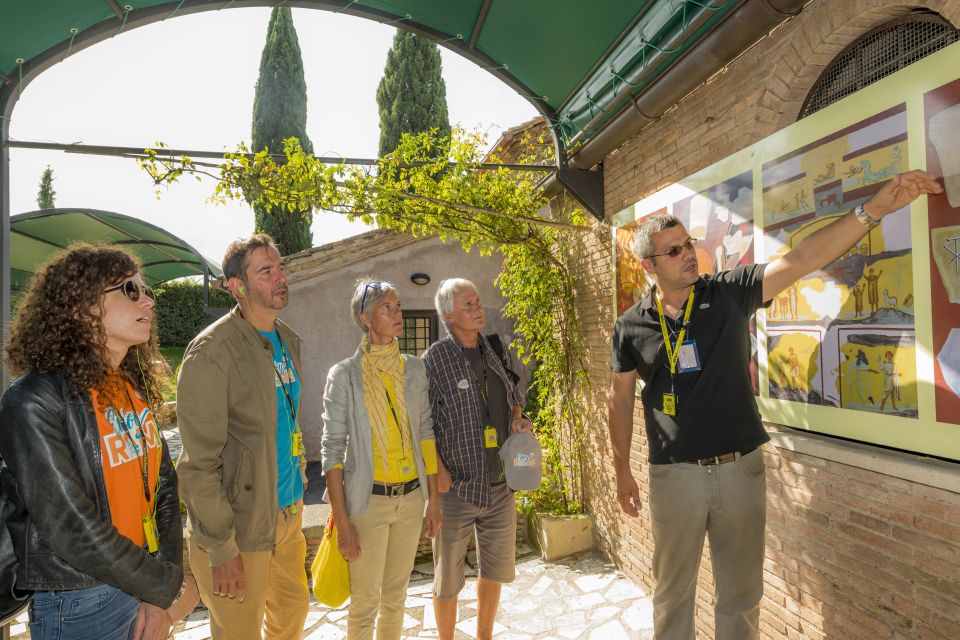
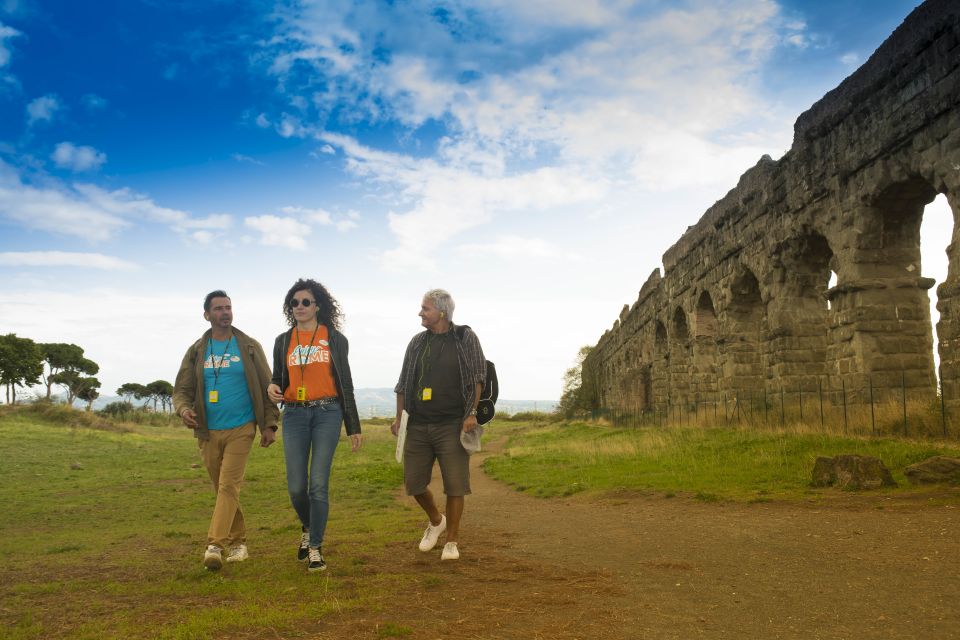
Then you step onto the ancient Appian Way for a walk along a portion of the old road. This is one of the biggest reasons I’d choose this tour over a pure city-center option. Rome is incredible, but the Appian Way gives you something Rome often doesn’t: a sense of distance and a quieter pace.
As you walk, the stone underfoot and the straight-line feel of the road do the work. You can imagine processions, supplies, messengers, and the daily logic of an empire that moved through roads like this. In at least one experience on this route, the tour is led in a way that even includes the fun idea of marching in columns to share the feeling of Roman order—small moments like that can make the history click.
Weather matters here. On a hot day, the catacombs may feel like relief, while the Appian Way portion can feel warmer and brighter. Bring water if you’re allowed to carry it with your group, and plan your own energy so the walking feels enjoyable, not forced.
Aqueducts and Parco degli Acquedotti: the engineering break from crowds
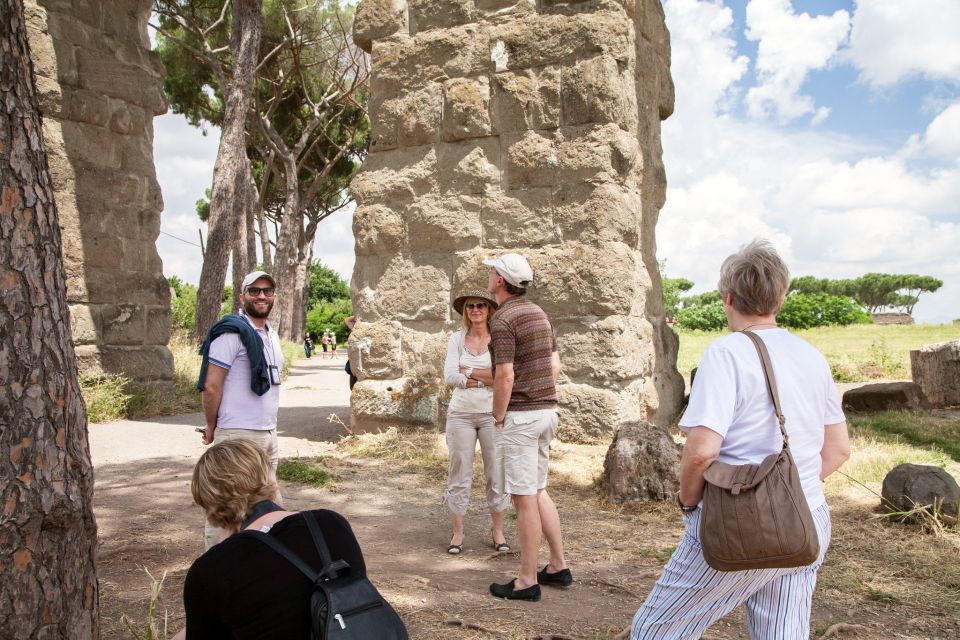
The final major visual payoff is near the Roman aqueducts, in the Parco degli Acquedotti area. This is where the tour becomes scenic in a big way: arches, stonework, and the sense of massive engineering built to feed a city.
The aqueduct portion also functions as a reset. After underground rooms and tomb imagery, looking at open sky and long stone lines helps you think clearly again. In at least one guided experience, the driver even handled tight space near the aqueducts in a way that made getting close feel like a mini performance—another reminder that transport outside central Rome has its own challenges and surprises.
If you love technical history—how people built systems that worked—this is the part that gives you a new respect for Roman planning.
Transportation and pace: vans, buses, and the value of not planning
Most of the tour time is structured so you’re not constantly fighting for directions. You’ll travel by bus and then walk between sites, with transfers included from and back to the meeting point.
A few comfort notes from real experiences:
- Some groups report that the small vans can have limited views for people sitting inside.
- Others praise the driver’s skill in handling Rome traffic, which matters if you want the outing to feel smooth rather than chaotic.
- The included headsets make it easier to follow the English narration without shouting over noise.
The pace is usually active but not frantic, and the walking segments are kept short enough for most people who can manage a basic outing. Still, there are steps and uneven ground, so if you know walking is an issue for you, plan on that.
Dress code and photo rules: the stuff that can trip you up
This tour follows a strict dress code because you’re entering places of worship and other sacred spaces. You’ll want to wear:
- No shorts or short skirts
- No sleeveless shirts
- For ladies, shoulders must be covered and skirts or trousers must be below knee-level
Also remember:
- No photos in the catacombs
It sounds minor until you’re standing at the entrance with nothing acceptable in your bag. I’d plan your outfit first, then worry about shoes second.
Who should book this tour (and who should skip)
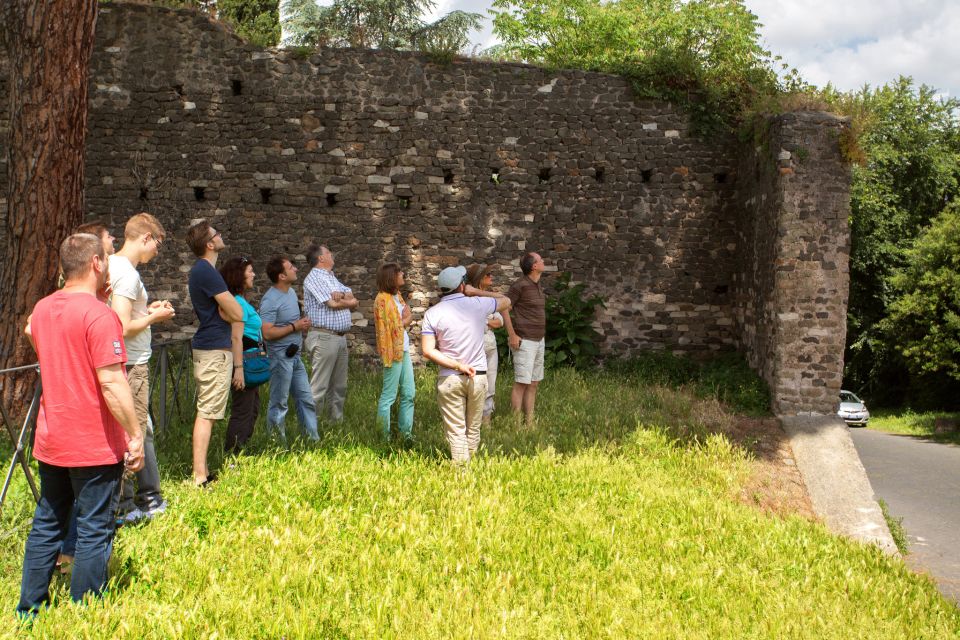
This is a great match if you want a contrast to typical Rome sightseeing. You’ll see early Christian burial space, plus you’ll walk on the Appian Way and look at aqueduct architecture—three different lenses on Rome’s past.
It’s also a good pick if you want more than “check the box” tourism. The guides on this route tend to tell the story with names, dates, and context, and you’ll get practical recommendations after the tour in many experiences—so you can keep using your brain on the rest of your trip.
Skip it if any of these apply:
- Severe claustrophobia
- Wheelchair use (the tour is not wheelchair accessible)
- You’re likely to be annoyed by rules like no photos underground and the dress code
Price and value: is $80 worth it?
At $80 per person for a 3-hour guided outing, you’re paying for more than the guide. You’re also getting:
- Transport from and to the meeting point
- Entry and booking fees for the catacombs portion
- Headsets
- A structured visit that reaches beyond the city center
If you were to do this on your own, you’d still spend time sorting transport, tickets, and timing. Here, the schedule handles the logistics, and you get expert narration while you’re in the sites. It’s not cheap, but it’s the kind of price that makes sense when you count “time saved” and “what you can’t easily replicate” once you’re underground.
Practical tips for a smoother day
Bring yourself back to basics. This is a tour with rules and underground walking, so a few prep moves can make it feel easy:
- Wear clothes that match the dress code from the start—don’t treat it as an afterthought.
- Comfortable shoes matter for stepping on old stone and uneven paths.
- Plan for a mix of cool underground and warmer outdoors depending on season.
- Go to the meeting point early at Via Cavour 224 so the day doesn’t start tense.
- If you need frequent breaks, choose your energy wisely; the guided pace includes transitions but still involves walking.
And one small but real listening tip: since English is the tour language and headsets are included, you’ll get more out of the story if you keep the headset on and quiet enough to hear the guide clearly.
Should you book the Catacombs and Appian Way tour?
If you want a Rome day that feels different from the usual Colosseum-Vatican circuit, I’d book it. The catacombs portion gives you early Christian art and the Crypt of the Popes in a way that’s hard to recreate solo. Then the Appian Way and aqueducts bring you up into open air with that rare feeling of Roman space rather than Roman crowds.
Book it with clear expectations: the underground setting is tight, the catacombs have a strict photo rule, and the dress code is real. If that fits your comfort level, this is a strong, well-paced use of a few hours in Lazio that adds a whole new side to your Rome story.
FAQ
Where is the meeting point for the tour?
The meeting point is at the bus stop at Via Cavour 224. The nearest metro station is Cavour (Line B). Please arrive 25 minutes before the tour departs.
How long is the Rome: Catacomb of St. Callixtus and Appian Way Guided Tour?
The tour lasts 3 hours.
What’s included in the price?
The price includes transport from and to the meeting point, a 3-hour guided tour, the guided tour to the Catacombs of St. Callixtus, entrance and booking fees, and headsets.
Is lunch included?
No, lunch is not included.
Do I need a hotel pickup?
No, pick up from hotels is not included.
Can I take photos inside the catacombs?
No. Photographs are not permitted in the Catacombs.
What should I wear?
The tour has a dress code: no shorts, no short skirts, and no sleeveless shirts. For women, shoulders must be covered and skirts or trousers must be below knee level.
Is the tour suitable for wheelchair users?
No. The tour is not wheelchair accessible.
Is the tour recommended if I have claustrophobia?
It is not recommended if you suffer from severe claustrophobia, since parts of the experience are underground.
What are the rules about cancellations?
There is free cancellation up to 24 hours in advance for a full refund. The tour may also be rescheduled or canceled if there are not enough participants (minimum of 5), with advance notice.