REVIEW · BOLOGNA
Bologna: Small-Group Tour with the Historic Archiginnasio
Book on GetYourGuide →Operated by Ways Tours | B Corp certified · Bookable on GetYourGuide
Bologna’s medicine lessons start with anatomy theater. I like the way this short tour turns the Teatro Anatomico into a real story about how students learned anatomy, not just a photo stop, and you’ll also get time to browse the Quadrilatero Market for local cheeses and meats. It moves quickly, but the route makes sense—monuments first, then the food streets, then the city’s medieval skyline.
One caution: if you’re sensitive to audio, note that some tours may rely on you hearing the guide without extra headsets. If communication is a deal-breaker for you, stand closer and be ready to ask for clarification during the talk, especially near louder outdoor spots like the Neptune Fountain area.
In This Review
- Key things to know before you go
- Starting at Piazza Maggiore and the Neptune Fountain
- Inside the Archiginnasio: why the Teatro Anatomico matters
- Quadrilatero Market: snack lanes and real Bologna shopping
- The Due Torri and the medieval skyline moment
- Santo Stefano: the seven churches and gallery-walk shortcuts
- Price and value: what $45 buys in 2 hours
- Guide quality: a real factor on this kind of tour
- Logistics that actually matter on meeting day
- Who this tour suits best
- Final verdict: should you book?
- FAQ
- How long is the Bologna tour with the Historic Archiginnasio?
- Where do I meet the guide?
- What is included in the price?
- Is the tour in English?
- Is hotel pickup and drop-off included?
- Is the tour wheelchair accessible?
Key things to know before you go
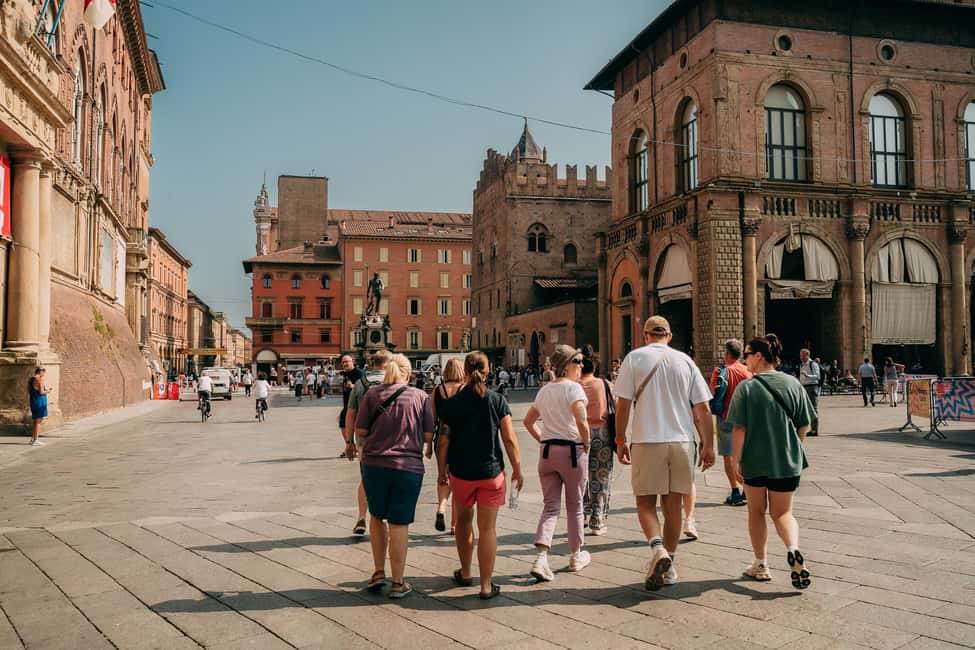
- Piazza Maggiore start: You begin at the square dominated by San Petronio and the Neptune Fountain.
- Archiginnasio + Teatro Anatomico: The indoor stop is the intellectual highlight of the whole 2 hours.
- Quadrilatero Market timing: You’ll have free time in the food lanes, good for grabbing snacks or small gifts.
- Due Torri skyline views: You’ll see Bologna’s leaning-tower identity markers in the same loop.
- Santo Stefano and seven churches: The tour connects medieval religious architecture to the street-level vibe of Bologna.
- Porticoes all along: Expect sheltered walking under the arches that make Bologna more walkable year-round.
Starting at Piazza Maggiore and the Neptune Fountain
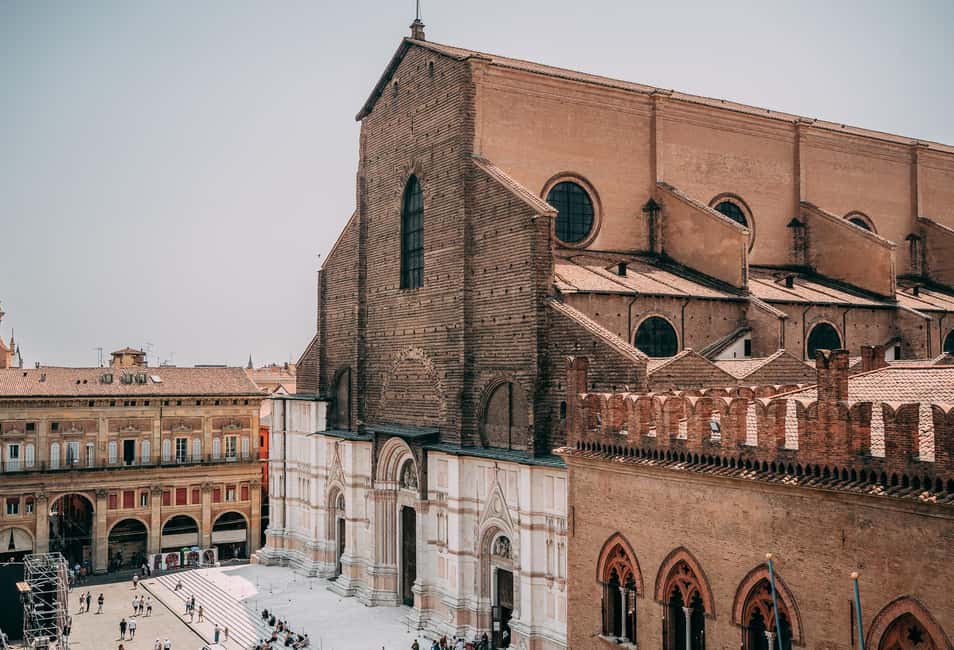
Your tour kicks off in Bologna’s main public square, Piazza Maggiore, a smart choice because you’re orienting yourself fast. From here, you can really see how Bologna’s power and pride were expressed in stone: the massive Basilica di San Petronio looms over everything, and it helps to understand why people treat this square like the city’s living room.
Right nearby, the Fountain of Neptune is your playful mythology break from all the architecture. The guide typically uses this moment to set the tone for the rest of the walk: Bologna isn’t just pretty buildings—it’s ideas, symbolism, and everyday street life all mixed together.
Practical tip: if the weather turns, take a second to plan your “where do we gather next” mindset. Because the rest of the route flows through streets that are easier to navigate once you’ve got your bearings from this central point.
Inside the Archiginnasio: why the Teatro Anatomico matters
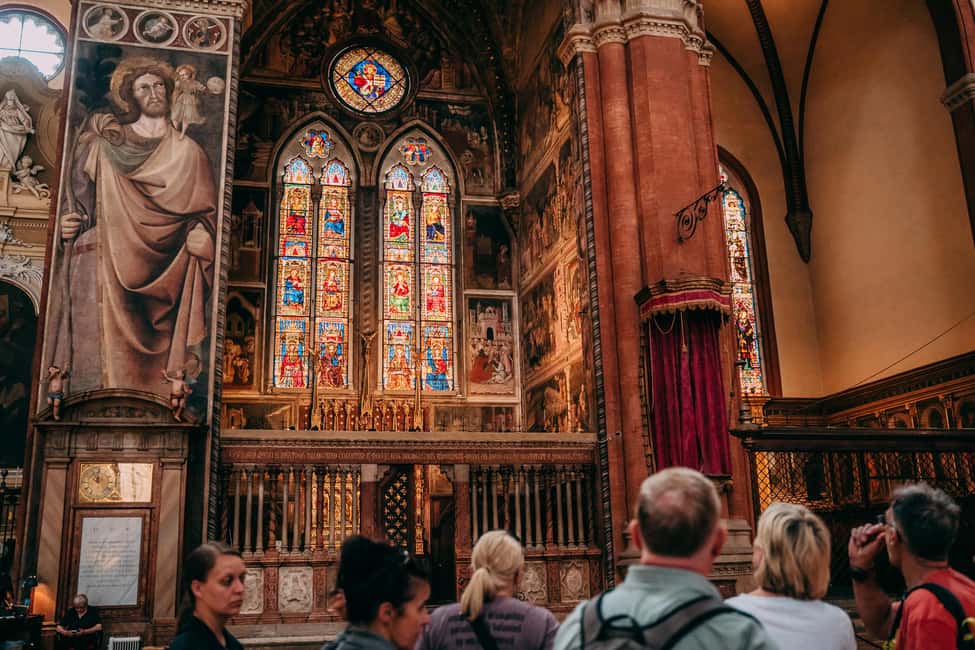
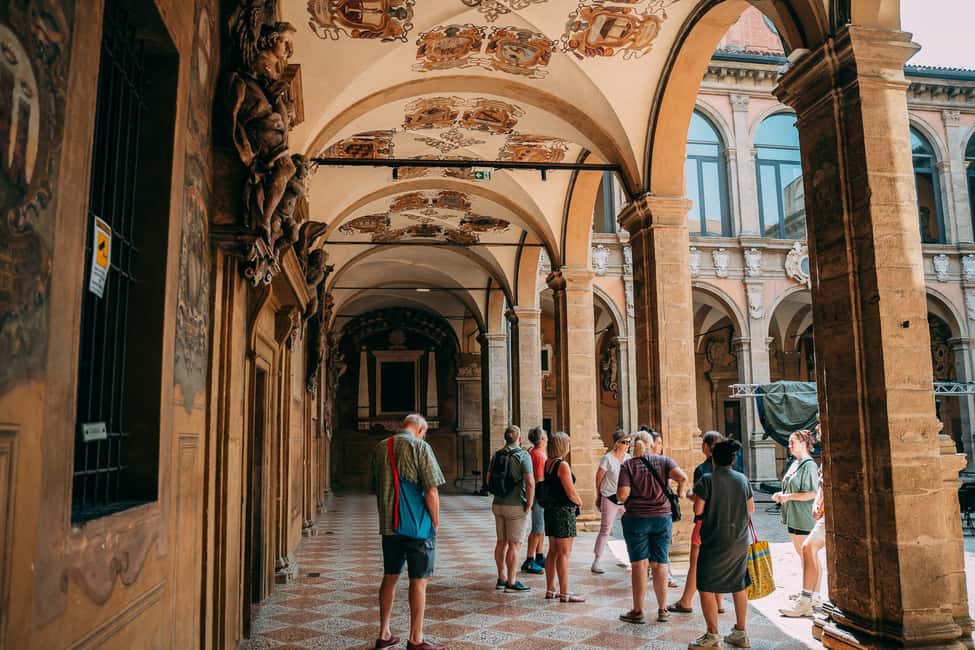
The route then shifts from the square to learning. You’ll head toward the historic Archiginnasio, a building strongly tied to Bologna’s reputation as a place where education had real muscle.
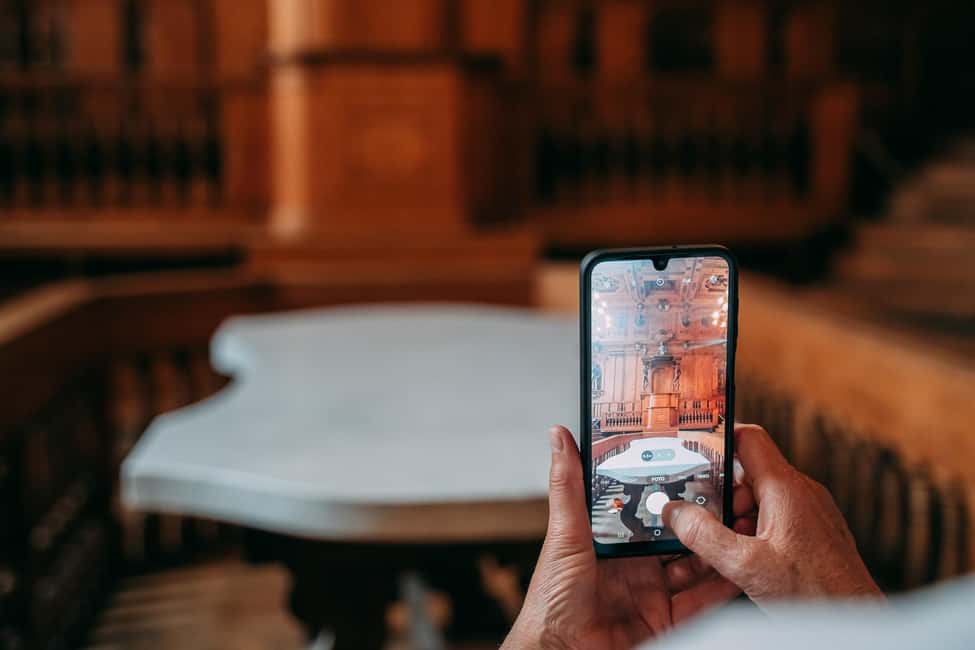
The star indoor stop is the Teatro Anatomico—an anatomical theater where medical students once studied the human body. What I like about this kind of stop is that it’s not abstract. Even if you’ve only got 2 hours total, this is the part that gives you a “wait, Bologna was a serious learning hub” feeling. The architecture supports the idea of shared learning: step into the space, see how it was designed for viewing and instruction, and suddenly the past stops being a vague timeline.
Value check: since the Archiginnasio and Teatro Anatomico entrance ticket is included, you’re not burning time later trying to figure out separate tickets or entry rules. You’re just walking in with a guide and getting the context on the spot.
What to watch for: this is an indoor visit, so if you want to photograph, do it quickly and respect any space rules the guide mentions. Also, be prepared for a bit of standing and slow crowd movement—an anatomical theater is made for viewing, not power walking.
Quadrilatero Market: snack lanes and real Bologna shopping
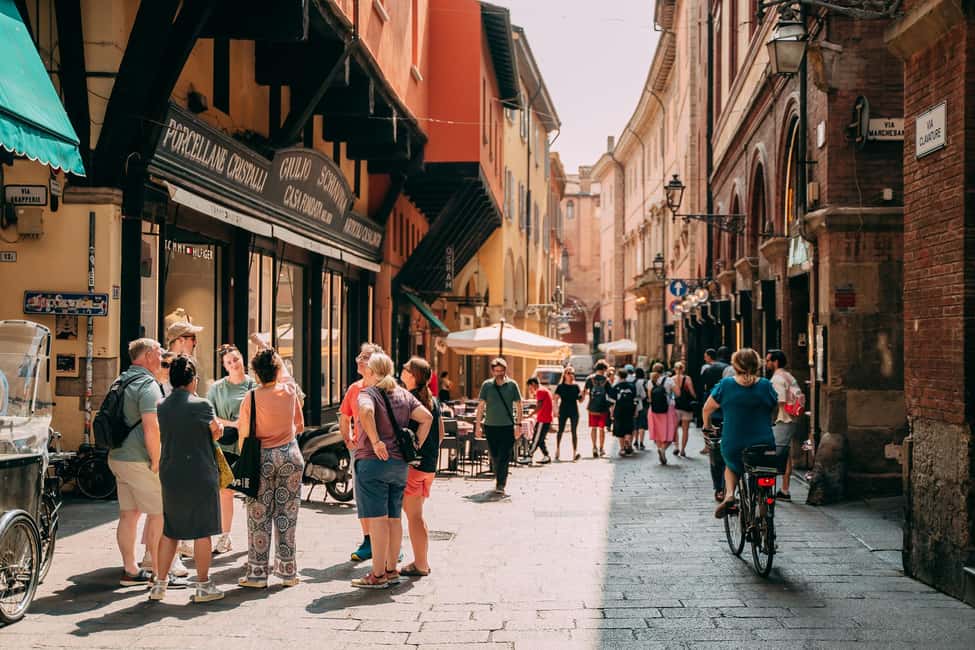
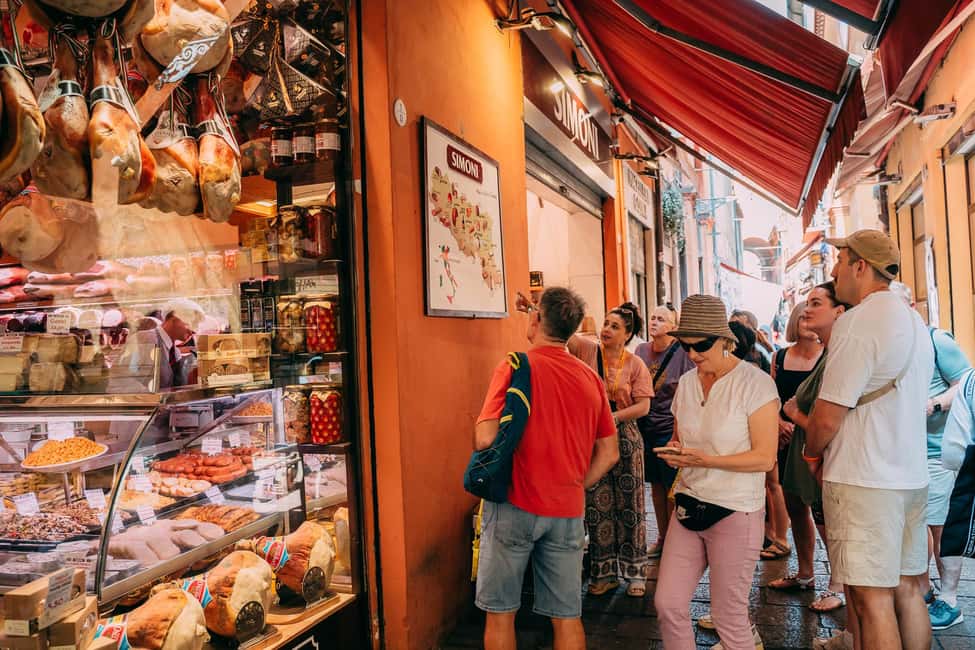
After the formal learning stop, the tour drops you into Quadrilatero Market, one of Bologna’s most well-known food areas. This part works because it’s sensory and practical. You’ll move through narrow lanes with stalls and counters selling the kind of items people actually buy here: cheeses, cured meats, and other local treats.
This is also the section where the guide’s job is mostly to set you up, then let you do your own thing. You get free time to buy local delicacies—perfect for a quick bite you can eat immediately or for packing food memories to take home.
How to use your free time well:
- If you’re buying cheese or meats, ask for a small, travel-friendly portion rather than trying to commit to a huge purchase.
- If you spot something you can’t identify, ask what it is and how people eat it locally.
- If you want a souvenir, food is an easy win because Bologna does it seriously.
Drawback to consider: the streets around the market can get busy, so if you prefer breathing room, plan to stay patient and follow the guide’s pacing.
The Due Torri and the medieval skyline moment
Next comes Bologna’s most recognizable skyline beat: the Due Torri. These towers—famous for their slightly leaning look—are a quick way to understand how medieval Bologna signaled status. It’s not just a view; it’s a reminder that city life once ran on fierce competition between families, and towers were the visible proof.
Even in a short tour, this stop hits because it changes your “Bologna lens” again. One minute you’re in food lanes, then you’re looking at stone silhouettes that shaped the city’s identity for centuries. It’s the kind of visual transition that makes the city feel connected instead of a list of isolated attractions.
Practical tip: towers are a photo magnet. If you care about getting a clean shot, move a few steps sideways and let others catch the first angle. The best views here are often the ones you notice after you stop fighting the crowd.
Santo Stefano: the seven churches and gallery-walk shortcuts
From the towers, the tour continues toward Santo Stefano, known for its collection of seven churches. This section is a good match for Bologna’s character because it’s walkable, layered, and full of street texture. You’re not just peeking into one building; you’re moving through a complex religious area that helps explain why the city’s architecture feels stitched together from different eras.
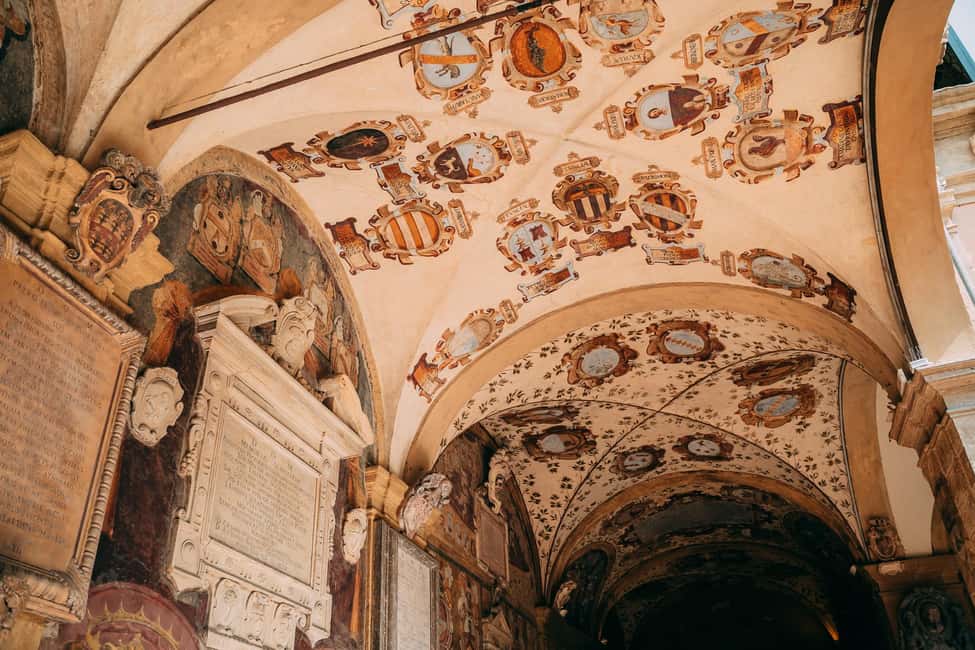
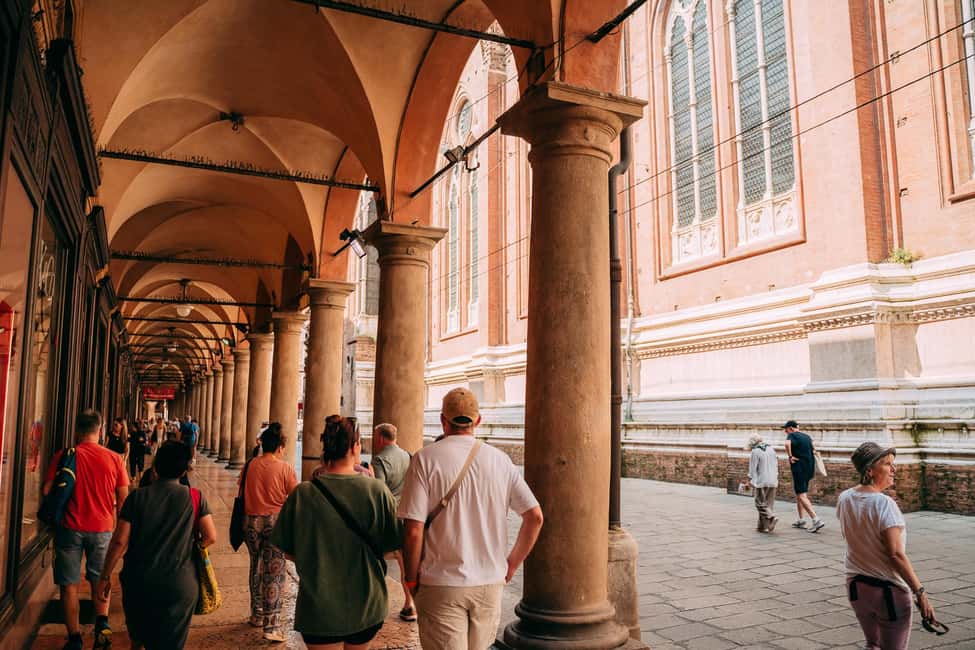
Along the way, you’ll also pass through well-known pedestrian corridors and covered passages such as Galleria del Leone and Galleria Cavour. These spaces aren’t only for aesthetics—they’re practical in how they move people through the city. And since your tour includes walking under Bologna’s porticoes, those covered stretches become a major part of your comfort.
Why this matters: a portico route is what makes Bologna one of Italy’s easiest cities to explore on foot. In rain, you stay dry. In sun, you get shade without needing to constantly hunt for indoor breaks.
A note on pacing: because everything is linked into one coherent walk, you may find yourself on the move more than you expect. The tradeoff is you get multiple signature neighborhoods without needing extra transport.
Price and value: what $45 buys in 2 hours
At $45 per person for a 2-hour experience, this tour competes in the sweet spot of short, meaningful sightseeing. The biggest reason it holds value is that it isn’t just a generic guided walk: you get a licensed local guide and the Archiginnasio + Teatro Anatomico entrance ticket included.
That matters because Bologna’s top indoor sites can cost extra or require separate planning. If you’re time-limited, a packaged approach often saves mental energy. And because the route connects education, food, and medieval architecture, you’re not paying for just one theme.
So who gets the best value?
- You want a quick orientation to Bologna’s center.
- You like guides who provide context, not only directions.
- You’re happy to trade a slower wander for a curated loop.
Who might feel it’s not enough?
- You want long time inside each major site.
- You prefer to roam without a schedule and meeting point rhythm.
- You’re hoping for heavy audio equipment or guaranteed small-group quiet (this tour is described as small-group, but hearing and group flow can vary).
Guide quality: a real factor on this kind of tour
This tour can feel like a home run when the guide is crisp and clear. A guide named Sofia has been praised for strong storytelling and clear English, which is exactly what you want when the stops shift from architecture to food to medieval street scenes.
But there’s also a flipside worth naming plainly. Some departures may be harder to follow if English is difficult to understand and if there aren’t audio aids like headsets. On a 2-hour tour, every moment counts—so clarity affects the whole experience.
My advice: if you struggle with hearing or accents, plan to position yourself closer to the guide at the start of the tour. And if the group is standing still at a major outdoor point like the Neptune Fountain, don’t be afraid to ask a brief question or request a repeat.
Logistics that actually matter on meeting day
Your meeting point is easy to miss if you don’t know what to look for: the guide stands in front of the red kiosk, holding a yellow sign that says TOUR.
Two more practical reminders:
- No hotel pickup/drop-off means you’ll want to arrive on time under your own steam.
- It runs rain or shine, so wear shoes that work for stone streets and plan for changing weather under those porticoes.
Who this tour suits best
This is a strong fit for first-timers who want a tight route and real context. It’s also good if you’re interested in the unusual side of Bologna’s past—medical education, not just churches and towers.
You’ll especially like it if:
- You enjoy learning moments that are tied to a physical space (the Teatro Anatomico).
- You want a food stop where you can buy something simple without overthinking it (Quadrilatero).
- You like walking through portico-covered streets as part of the experience, not as an afterthought.
Final verdict: should you book?
If you want a guided Bologna sampler that connects the Archiginnasio’s medical past, the food lanes of Quadrilatero, and the Due Torri skyline within 2 hours, this tour is worth strong consideration. The included entrance ticket is a real value piece, and the route is built for efficiency.
Book it with confidence if you’re okay with walking, you can hear the guide well in your chosen spot, and you want a structured loop rather than an unplanned day. Skip it (or at least adjust expectations) if clear audio is essential for you and you’re not comfortable relying on hearing the guide without extra headsets.
FAQ
How long is the Bologna tour with the Historic Archiginnasio?
It lasts 2 hours.
Where do I meet the guide?
Meet the guide in front of the red kiosk, holding a yellow sign with TOUR written on it.
What is included in the price?
The tour includes a local licensed tour guide and entrance tickets for the Archiginnasio and the Anatomical Theatre (Teatro Anatomico).
Is the tour in English?
Yes, the live guide speaks English.
Is hotel pickup and drop-off included?
No, hotel pickup and drop-off are not included.
Is the tour wheelchair accessible?
It is wheelchair accessible, but some parts may not be accessible for people with reduced mobility or certain disabilities. If you’re unsure, you can contact the operator for details.